
Table of Contents
- Why Is My Home Coffee Bitter? The Over-Extraction Answer
- How to Fix Bitter Coffee: A Step-by-Step Troubleshooting Flowchart
- Coffee Grind Size for Bitter Coffee: The First Dial to Turn
- Coffee Brewing Temperature and Time: The Numbers That Matter
- Coffee-to-Water Ratio, Dose, and Yield: Measuring Brew Strength
- Best Coffee Beans for Smooth Coffee: Freshness, Roast, and Origin
- Water Quality, Cleaning, and Equipment: The Overlooked Causes
- Method-Specific Fixes for Espresso, Drip, French Press, and Pour-Over
- Frequently Asked Questions
Last Updated: October 6, 2026
Why Is My Home Coffee Bitter? The Over-Extraction Answer
If your morning cup tastes harsh and drying, the culprit is almost always over-extraction. That's the short answer to why is my home coffee bitter.
Good news: the beans are rarely the problem. Your brew method is.
Over-extraction is the process of dissolving too much from coffee grounds. Water grabs the tasty acids first, then the sugars, then the bitter plant compounds.
What Over-Extraction Actually Does to Coffee Grounds
Coffee grounds hold hundreds of flavor compounds. Water pulls them out in a set order.
- First: fruity and bright acids
- Next: sweet, caramel-like sugars
- Last: bitter, dry, woody compounds
Pull the plug at the right moment and you get balance. Wait too long and the bitter stuff floods your cup.
How to Tell Bitterness Apart From Sour and Ashy Flavors
Not every bad cup is bitter. Sour and ashy tastes point to different problems.
- Sour means under-extraction. Water didn't pull enough out.
- Bitter means over-extraction. Water pulled too much out.
- Ashy points to old beans, dark roast, or dirty equipment.
Taste before you change anything. Your tongue is your best diagnostic tool.
How to Fix Bitter Coffee: A Step-by-Step Troubleshooting Flowchart
Learning how to fix bitter coffee comes down to one rule: change one thing at a time. If you adjust three variables at once, you'll never know which one worked. Follow the steps below in order.
Step 1: Taste, Then Change One Variable at a Time
- Brew a cup and taste it.
- Name the flaw: bitter, sour, or ashy.
- Change one setting only.
- Brew again and compare.
- Repeat until the cup tastes sweet and clean.
Write down each change. A simple notebook beats memory every time.
Step 2: Work Through Grind, Temperature, Time, and Ratio in Order
| Problem | Likely Cause | Fix | What You'll Taste |
|---|---|---|---|
| Bitter, dry | Over-extraction | Coarser grind | Sweeter, rounder cup |
| Sour, thin | Under-extraction | Finer grind | More body and sweetness |
| Weak and bitter | Too much water | Lower the ratio | Stronger, balanced flavor |
| Harsh and ashy | Stale or dark beans | Fresher, lighter roast | Cleaner, smoother taste |
| Metallic, flat | Dirty equipment | Clean and descale | Brighter flavor |
Coffee Grind Size for Bitter Coffee: The First Dial to Turn
Coffee grind size for bitter coffee is the first thing to adjust, and it's the fastest fix. A finer grind exposes more surface area to water.
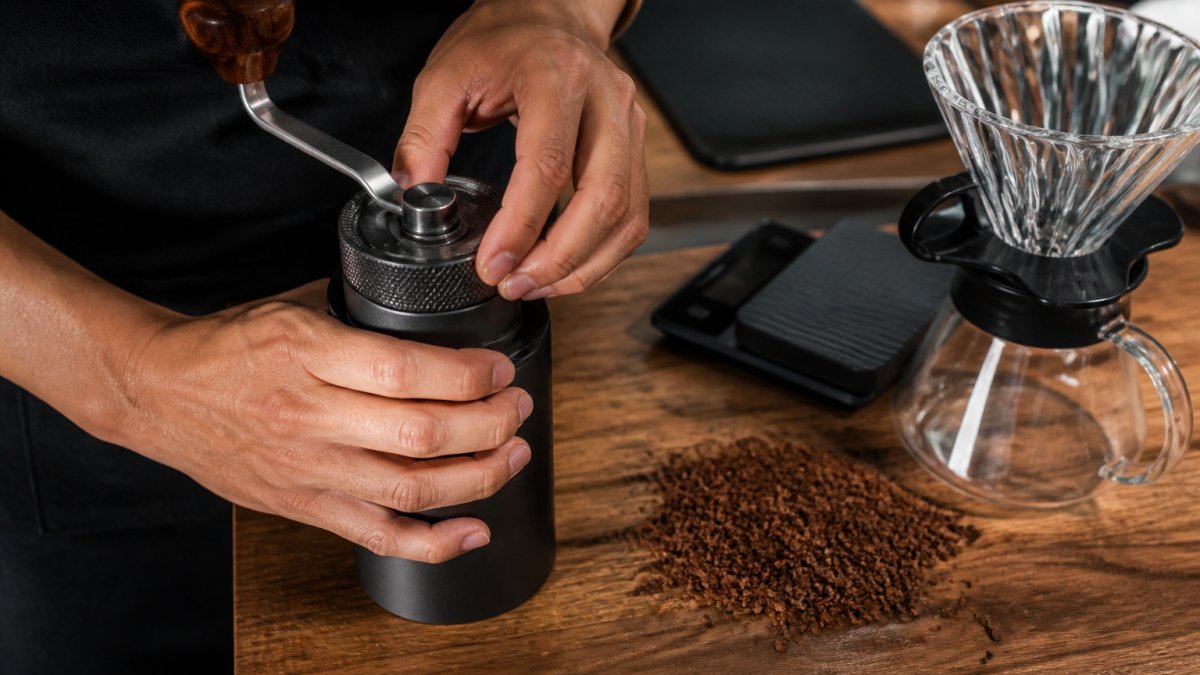
Grind is the biggest lever you have. A small change moves flavor fast.
- Fine grind extracts quickly. Great for espresso, risky for drip.
- Coarse grind extracts slowly. Ideal for French press.
- Medium grind suits most drip brewers and pour-over setups.
A common mistake is buying pre-ground coffee and blaming the beans. Pre-ground sits at one fixed size. You can't dial it in.
Coffee Brewing Temperature and Time: The Numbers That Matter
Coffee brewing temperature should sit between 195°F and 205°F for most methods. That range is not arbitrary. Below roughly 195°F, water lacks the energy to dissolve sugars and acids efficiently, so the cup tastes sour and thin.
Time is the other half of the equation. Temperature and time trade off against each other: a slightly cooler brew can run longer, and a hotter brew needs to finish sooner.
Method-Specific Starting Points
Use these as your first brew, then adjust one variable at a time.
| Method | Water Temp | Target Time | Grind Starting Point | Ratio |
|---|---|---|---|---|
| Drip (auto) | 195°F-205°F | 4-5 min total cycle | Medium | 1:16 |
| Pour-over | 195°F-205°F | 2.5-3.5 min | Medium-fine | 1:16 |
| French press | 195°F-205°F | 4 min steep, then press | Coarse | 1:15 |
| Espresso | 195°F-205°F | 25-30 sec | Fine | 1:2 (dose to yield) |
| Cold brew | Room temp or cold | 12-18 hr | Coarse | 1:8 concentrate |
If your cup is bitter, the fastest fix is usually to shorten the brew by 15-30 seconds or drop the water temperature by about 5°F. Change only one of those at a time so you can tell which one helped.
Why Boiling Water Ruins the Cup
Water straight off a rolling boil is around 212°F at sea level. Poured onto grounds, it flashes past the sweet-extraction window and pulls bitter compounds almost immediately. Let the kettle rest 30-60 seconds after it boils, or pour into a separate vessel first. At higher elevations, water boils at a lower temperature, so the rest time shrinks, a kettle at 5,000 feet boils near 203°F and needs almost no cooling.
Time Is Not Just Total Minutes
For pour-over and espresso, the shape of the brew matters as much as the total. A pour-over that finishes in 3 minutes but stalls for 90 seconds at the end is effectively over-extracting the last of the bed. Keep the bed even and the pour steady. For espresso, a shot that hits 30 seconds but dribbles the final 10 seconds is channeling, water is finding a path through one part of the puck and over-extracting it while under-extracting the rest.
Coffee-to-Water Ratio, Dose, and Yield: Measuring Brew Strength
The standard coffee-to-water ratio is about 1:16 by weight. That means 1 gram of coffee for every 16 grams of water.
Dose is how much dry coffee you start with. Yield is how much liquid you end up with. Track both if you want a repeatable cup.
- Start with 18 grams of coffee and 288 grams of water.
- Too weak? Drop to 1:15.
- Too strong and bitter? Move to 1:17.
Brew strength is personal. But the ratio gives you a fixed starting point instead of guessing.
Best Coffee Beans for Smooth Coffee: Freshness, Roast, and Origin
The best coffee beans for smooth coffee are fresh, recently roasted, and matched to your brew method. Bean quality sets the ceiling on how good your cup can get. No grind setting can rescue stale coffee, and no brewing trick can undo a roast that went too dark.
What Freshness Actually Means
Roasted coffee is not shelf-stable forever. Once beans leave the roaster, oxygen attacks the oils that carry sweetness and aroma.
A practical timeline most roasters use:
- Days 1-3 after roast: Resting. CO2 is still escaping. Espresso especially benefits from this rest.
- Days 4-14: Peak flavor window for most brew methods.
- Days 15-30: Still drinkable, but bright notes fade first. You may need to grind slightly finer to compensate.
Check the roast date, not the best-by date. A best-by date tells you nothing about when the beans were roasted. Whole beans stay fresher longer than pre-ground because the surface area exposed to oxygen is far smaller. Grind right before you brew.
How Roast Level Changes Bitterness
Roast level is a bitterness dial you set before you ever brew.
- Light roast: Higher acidity, more origin character, less roast-driven bitterness. Can taste sour or thin if under-extracted.
- Medium roast: Balanced. The most forgiving starting point if bitterness is your problem.
- Dark roast: Deeper, smokier, and more bitter by design. The longer roast develops bitter, charred compounds. If your dark roast tastes ashy, that is the roast, not your technique.
If bitterness is your problem, try a medium roast Arabica before you change anything else. If the cup suddenly tastes sweet and clean, the roast was the culprit all along.
Separating Bitterness From Other Bad Flavors
Not every unpleasant cup is bitter. Use this quick taste diagnosis before you touch any brewing variable.
| What You Taste | What It Usually Means | First Thing to Change |
|---|---|---|
| Bitter, dry, lingering | Over-extraction | Coarser grind or shorter brew |
| Sour, sharp, thin | Under-extraction | Finer grind or longer brew |
| Ashy, smoky, burnt | Dark roast or stale beans | Fresher beans or lighter roast |
| Rancid, cardboard, flat | Old beans or oxidized oils | New bag with a recent roast date |
| Metallic, chemical | Dirty equipment or bad water | Clean and descale; filter water |
| Salty, hollow | Severe under-extraction or very soft water | Finer grind; check water minerals |
Bitterness lingers on the back of the tongue and dries the mouth. Sourness hits the sides of the tongue and makes you salivate. Ashy flavors sit in the nose as much as the mouth. Learning to name the flaw is the single most useful skill in dialing in a better cup.
Water Quality, Cleaning, and Equipment: The Overlooked Causes
Water quality is the cause most home brewers never check. Coffee is 98% water, so off-tasting water makes off-tasting coffee.
Mineral content matters as well. Water that's too hard leaves scale in your machine and dulls flavor.
Cleaning is the other blind spot. Old coffee residue turns rancid and adds a bitter edge.
- Rinse your filter basket after every brew.
- Wash your carafe and portafilter daily.
- Descale your machine every one to three months.
- Clean your grinder burrs monthly.
A dirty drip coffee maker or espresso machine will sabotage even perfect beans.
Method-Specific Fixes for Espresso, Drip, French Press, and Pour-Over
Each brewing method has its own bitter-coffee fix.
Espresso: If your shot is bitter, coarsen the grind slightly or shorten the shot.
Drip coffee: Most drip makers run too hot or too long.
French press: The long steep time makes this method prone to bitterness.
Pour-over: Pour-over rewards control.
A repeatable dial-in process beats any single tip. Brew, taste, adjust one thing, and repeat.
Frequently Asked Questions
Can a grind that is too fine make coffee taste bitter?
Yes. A fine grind exposes more surface area to hot water, so the water pulls out bitter compounds faster. If your coffee tastes harsh and dry, move the grinder one or two steps coarser and brew again. For drip and pour-over, a medium grind similar to table salt is a reliable starting point. Espresso needs a finer grind, but going too fine there also causes bitterness along with slow, sputtering shots.
Can water temperature affect coffee bitterness?
It can. Water above 205 degrees Fahrenheit scorches coffee grounds and pulls out bitter, ashy flavors, while water below 195 degrees Fahrenheit leaves the cup sour and weak. Aim for 195 to 205 degrees Fahrenheit, which is just off a boil. If you do not have a thermometer, let a kettle rest for 30 to 45 seconds after boiling before you pour. This one change alone fixes bitterness for many home brewers.
What is the best coffee for smooth coffee with less bitterness?
Look for freshly roasted beans with a roast date on the bag, ideally within two to three weeks of roasting. Medium and light roasts tend to taste smoother than dark roasts, which carry more roast-driven bitterness. Arabica beans are generally less bitter than Robusta. Single-origin beans from regions like Colombia or Ethiopia often cup smoother than blends built for boldness. Freshness matters as much as origin, since stale coffee tastes flat and harsh.
Is it safe to drink bitter coffee?
Bitter coffee is not dangerous, but it usually signals over-extraction rather than a health issue. Compounds like caffeine and chlorogenic acid lactones do contribute natural bitterness, and some people are simply more sensitive to them. If the taste bothers you, adjust your grind, temperature, or brew time rather than adding sugar. If bitterness appears suddenly in a batch you have brewed the same way for months, check your grinder settings and clean your equipment.
Bitter coffee is a solvable problem, and it usually comes down to grind, temperature, time, or freshness. At The Last Sip Coffee Roasters, we roast every batch to order so you start with beans at peak flavor. Our carefully sourced beans and fast, reliable delivery mean your coffee arrives fresh, not sitting on a shelf. Start with great beans, dial in your brew, and enjoy a smooth, satisfying cup from the first sip to the last.