
Table of Contents
- The Bloom Test: Your First Freshness Check
- Visual Inspection of Beans
- Checking the Roast Date and Understanding Coffee Roast Date vs Expiration Date
- Aroma and Fragrance Assessment
- How to Store Coffee Beans for Maximum Freshness
- Signs of Stale Coffee Beans You Should Never Ignore
- Troubleshooting Brew Methods When Freshness Is Questionable
Last Updated: August 28, 2026
The Bloom Test: Your First Freshness Check
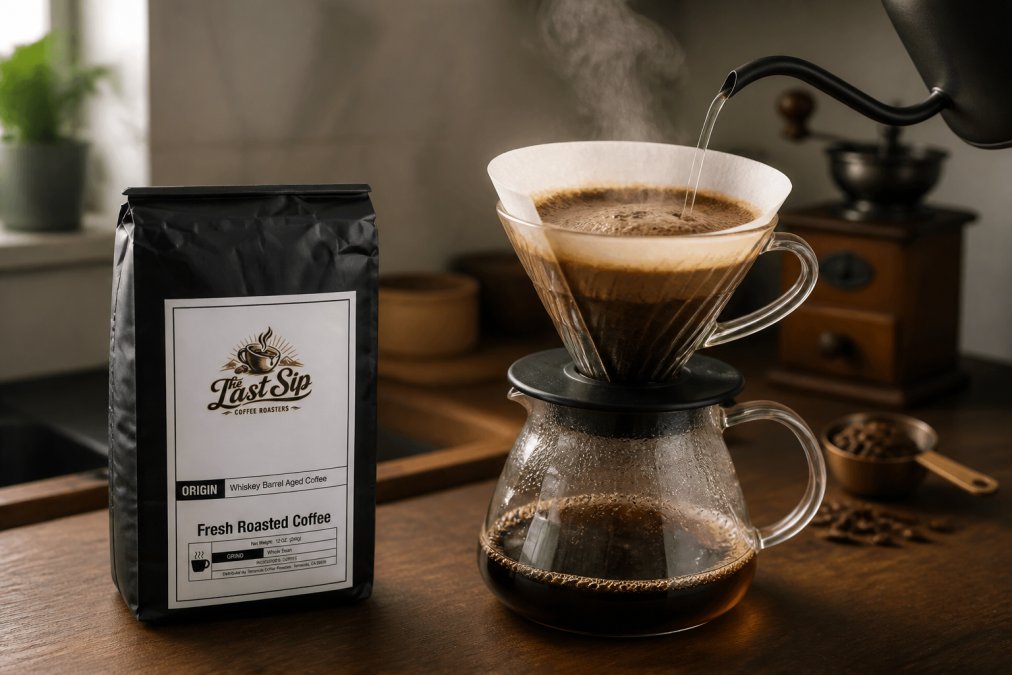
The bloom test is the quickest way to tell if coffee beans are fresh. When you pour hot water over freshly roasted grounds, they release carbon dioxide and visibly expand. This reaction signals that the beans contain volatile compounds still active from the roast.
Freshly roasted coffee continues degassing for days or weeks after roasting. The more vigorous the bloom, the more recently the beans were roasted. Stale coffee produces little to no bloom because most volatile compounds have already escaped.
To perform the bloom test, use a pour-over setup or French press:
- Grind your beans to a medium-coarse consistency
- Add grounds to your brewer without water
- Pour just enough hot water (around 200°F) to saturate the grounds
- Watch for 30-45 seconds as the grounds expand and bubble
- If bubbles rise noticeably and the grounds swell upward, your beans are fresh
The bloom test isn't foolproof on its own, but it's fast, requires no special equipment, and gives immediate feedback about bean freshness.
Visual Inspection of Beans
Fresh coffee beans have a glossy, slightly oily surface from natural oils that haven't yet oxidized. The color should be even across the batch, and beans should appear plump and dense. As coffee ages, it loses moisture and the beans begin to look shriveled or hollow, with a dull or papery surface rather than glossy.
Discoloration is a red flag. Beans with visible white spots, mold, or uneven patchy coloring indicate moisture damage or improper storage. Extremely dark or waxy beans may be over-roasted or stored in damaging conditions.
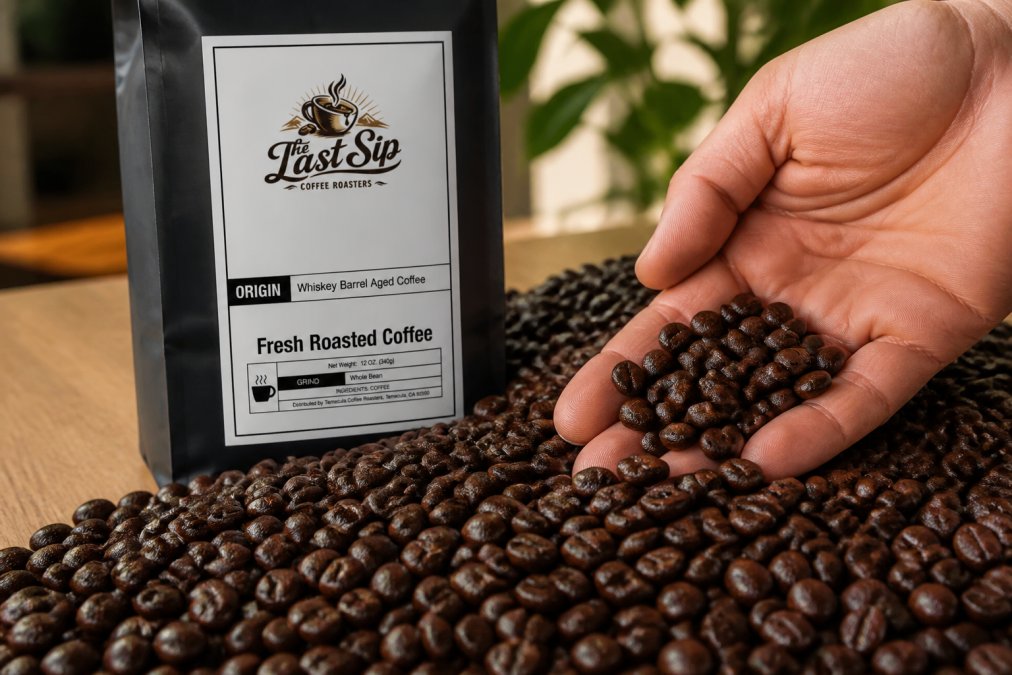
When inspecting beans, use natural light if possible and spread a small handful on a white surface to check for uniformity. One or two odd-looking beans is normal, but if a significant portion looks dull, shriveled, or discolored, the batch may be past its prime.
Checking the Roast Date and Understanding Coffee Roast Date vs Expiration Date
The roast date is the most important piece of information on a coffee bag. It tells you when the beans were roasted and determines freshness. If you don't see a roast date, that's a warning sign, reputable roasters always print this information.
Coffee roast date vs expiration date is a critical distinction. The roast date marks when the beans came out of the roaster. An expiration date (if listed) is often arbitrary and doesn't reflect actual freshness. Coffee is technically consumable for months after roasting, but it's best within the first 2-4 weeks (peer-reviewed research).
Here's the timeline:
- 0-3 days after roast: Peak bloom and degassing. Beans are extremely fresh and produce intense bloom when brewed.
- 3-14 days after roast: Optimal window for most brewing methods. Flavors are fully developed, bloom is vigorous, and the cup is smooth and balanced.
- 14-30 days after roast: Still good, but starting to lose brightness and complexity. Bloom becomes less dramatic.
- 30+ days after roast: Coffee is stale. Flavor becomes flat, acidity fades, and the cup tastes hollow or papery.
Check the roast date before you buy. If a bag doesn't have one, ask the seller when it was roasted. If they can't answer, choose a different roaster. Specialty coffee roasters who care about quality always roast to order and clearly communicate roast dates to customers.
Aroma and Fragrance Assessment
Your nose is one of your best freshness detection tools. Fresh coffee has a distinctive, complex aroma that changes as the beans age.
When you open a fresh bag, you should smell a rich, inviting fragrance. A fresh medium roast might smell bright and fruity, while a fresh dark roast might smell bold and chocolatey. The key is that the aroma is pronounced and layered.
As coffee ages, the aroma becomes flat and one-dimensional. The volatile compounds that create complex scent notes are the same ones that escape during degassing. Once they're gone, the coffee smells less interesting.
To assess aroma properly: open a fresh bag and take a deep breath, notice the initial scent and secondary notes, grind a small amount and smell the grounds immediately, and compare to older coffee if available. Fresh grounds should smell noticeably more aromatic than older grounds. If your coffee smells musty, stale, or like cardboard, it's past its prime.
Storage conditions affect aroma dramatically. Coffee stored in an airtight container with minimal light exposure retains its fragrance much longer than coffee left in a torn bag or stored in a clear container on a shelf.
How to Store Coffee Beans for Maximum Freshness
Storage is critical, even the freshest beans will taste stale within days if stored improperly. The enemies of coffee freshness are air, light, heat, and moisture.
The best container is an airtight, opaque container. Glass jars with rubber seals or ceramic containers with tight-fitting lids work well. Avoid clear glass if possible; light degrades the beans. If you use a clear container, store it in a dark cabinet.
One-way valves on coffee bags let carbon dioxide escape without letting air in. If your beans come in a bag with a valve, seal it properly after opening by folding the top down and using a clip.
Store your beans at room temperature, ideally between 60-75°F (usda.gov). Avoid the refrigerator or freezer, temperature fluctuations cause condensation, which introduces moisture and degrades the beans. Store in a cool, dry location away from the kitchen sink or dishwasher.
Coffee is hygroscopic, meaning it absorbs moisture from the air (peer-reviewed research). High humidity speeds up oxidation and can introduce mold risk. Fill your container as full as practical, or transfer beans to a smaller container as you use them to minimize headspace.
For maximum freshness, buy only what you'll use in 2-3 weeks. If you find yourself with beans older than a month, you can still use them, but they won't taste as good as fresher coffee.
Signs of Stale Coffee Beans You Should Never Ignore
The most obvious sign of stale coffee is lack of bloom. If you pour hot water over your grounds and they barely bubble or expand, the beans are old and most volatile compounds have already escaped.
Stale coffee tastes flat, hollow, or papery. It lacks brightness and complexity. The aroma is noticeably weaker, when you grind stale beans, they don't smell as inviting and lack layered complexity.
Visual changes also signal age. Beans that look dull instead of glossy, or shriveled instead of plump, are losing moisture and freshness. Extraction problems can indicate staleness too, if your pour-over brews faster than usual or your espresso pulls too quickly, the beans may be too old.
If you notice any combination of these signs, weak bloom, flat taste, dull aroma, dull appearance, it's time to get fresh beans. Life's too short for mediocre coffee.
Troubleshooting Brew Methods When Freshness Is Questionable
If your beans are 2-3 weeks old but not ancient, they're still worth brewing. Match your brewing method to the bean's condition.
For pour-over brewing with slightly aged beans, use a slightly finer grind than normal and hotter water to increase extraction. French press works well with older beans because the immersion method extracts more flavor, use a coarser grind and a longer steep time of 4-5 minutes instead of 3-4 minutes.
Espresso is trickier with stale beans. Grind slightly finer and tamp harder to slow the shot. Cold brew is actually a good option for older beans, the long steeping time (12-24 hours) extracts flavor compounds that might otherwise be missed.
The real solution is to start with fresh beans. Ordering from a roaster who roasts to order ensures you're never dealing with this problem.
| Brewing Method | Best Bean Age | Adjustment for Older Beans | Result |
|---|---|---|---|
| Pour-over | 3-14 days | Finer grind, hotter water | Increased extraction |
| French Press | 3-21 days | Coarser grind, longer steep | Fuller body, more flavor |
| Espresso | 5-14 days | Finer grind, harder tamp | Slower pull, better balance |
| Cold Brew | 7-30 days | Standard recipe | Smooth, masks flatness |
| AeroPress | 5-14 days | Slightly finer grind | Versatile, forgiving |
Knowing how to tell if coffee beans are fresh puts you in control of your morning ritual. The bloom test, visual inspection, roast date, aroma, and taste all work together to give you a complete picture of freshness. Storage matters just as much as selection, even fresh beans turn stale without proper care.
The simplest approach is to buy fresh beans from a roaster who prioritizes freshness. The Last Sip Coffee Roasters roasts every batch to order and ships directly to your door, so your beans arrive at peak freshness. Our 6 Bean Coffee Blend and Bourbon Barrel Aged Coffee are both roasted fresh to order, ensuring you get the maximum flavor and aroma in every cup. Start with fresh beans, store them properly, and you'll taste the difference immediately.


Frequently Asked Questions
How do I know if coffee beans are fresh when I first open the bag?
Fresh coffee beans should have a strong, vibrant aroma and glossy appearance with visible oils on the surface. When you brew them, they should produce a noticeable bloom with carbon dioxide degassing. Check the roast date on the packaging, beans roasted within 2-4 weeks are considered fresh. If the aroma is flat or the beans appear dull and papery, they've likely lost their volatile compounds and flavor.
What's the difference between coffee roast date vs expiration date?
The roast date indicates when the beans were roasted and is the most important freshness indicator. Most specialty roasters recommend consuming beans within 2-4 weeks of the roast date for optimal flavor. An expiration date, if present, is a legal requirement but typically extends much further out. Focus on the roast date rather than an expiration date, beans are best during the first few weeks after roasting when volatile compounds and carbon dioxide are still present.
What are the main signs of stale coffee beans?
Stale coffee beans display several telltale signs: a hollow body without the glossy shine of fresh beans, a flat or absent aroma, minimal bloom during brewing, and a papery or bitter taste lacking sweetness and acidity. The beans may also feel lighter and less dense than fresh ones. If your coffee tastes hollow or flat no matter your brewing method, oxidation has degraded the flavor compounds, it's time for a fresh batch.
How long can I keep coffee beans before they go stale?
Whole beans stay fresh for 2-4 weeks after roasting when stored in an airtight container away from heat and light. Ground coffee stales much faster, within 1-2 weeks. Factors like your storage container, humidity, and temperature affect shelf life. Roasted coffee continues to release carbon dioxide (degassing) for the first week, so some roasters recommend waiting 3-5 days before brewing for optimal extraction. Proper storage in airtight containers extends freshness significantly.
This article was written using GrandRanker