
Table of Contents
- What Is the 15-15-15 Rule for Coffee?
- Coffee Bean Freshness Timeline: From Roast Date to Peak Flavor
- Why Is My Coffee Bitter? How Stale Beans Ruin Your Cup
- How to Store Coffee Beans to Protect Freshness
- The 15-Minute Rule by Brew Method: Pour-Over, Espresso, and Cold Brew
- How Roast Profile Changes the 15-Day Rule
- Putting the 15-15-15 Rule Into Practice
- Frequently Asked Questions
Last Updated: September 12, 2026
What Is the 15-15-15 Rule for Coffee?
The 15-15-15 rule for coffee is a freshness guideline built on three timeframes: 15 months for green coffee beans, 15 days for roasted beans, and 15 minutes for ground coffee. This guide from The Last Sip Coffee Roasters breaks down why each window exists and how to work within it.
The rule matters because coffee freshness is a clock, not a switch. Coffee begins losing its best qualities the moment it's roasted, and grinding accelerates that decline dramatically. Each stage of the 15-15-15 rule marks how long coffee holds its peak flavor before oxidation and degassing take over.
Below, we'll show you exactly how to apply each window to your own kitchen, from storage to grind timing.
15 Months: Green Coffee Beans
Green coffee beans stay viable for roughly 15 months when stored properly. Unroasted beans are dense and low in moisture, so they resist the flavor degradation that hits roasted coffee much faster.
That said, 15 months is a ceiling, not a target. Green beans stored in a cool, dark, dry place hold their character far better than beans exposed to heat or humidity. Many roasters buy green coffee in smaller lots precisely because older green stock produces flatter, less complex roasts.
For home roasters, the practical takeaway is simple: buy green beans you'll actually use within a few months, and store them away from light and moisture.
15 Days: Roasted Beans
Roasted coffee beans hit peak flavor roughly 3 to 14 days after the roast date, then begin a steady decline. The 15-day mark is where most roasters agree the window starts closing.
Freshly roasted beans release carbon dioxide in a process called degassing (PubMed). Too soon after roasting, that gas interferes with extraction and creates uneven, bubbly brews. Too late, and oxygen exposure has already dulled the volatile compounds responsible for aroma and flavor notes.
This is the window most home brewers get wrong. They either brew beans the day they arrive, before degassing finishes, or let a bag sit for weeks and wonder why the cup tastes flat.
15 Minutes: Ground Coffee
Ground coffee loses a noticeable amount of its aroma within 15 minutes of grinding (PubMed). Grinding multiplies the surface area exposed to oxygen, so oxidation that would take days with whole beans happens in minutes with grounds.
The 15-minute rule doesn't mean ground coffee is undrinkable after a quarter hour. It means the sensory peak has passed. If you want the fullest flavor your beans can deliver, grind right before you brew.
For anyone who grinds a batch in the morning and brews from it all day, this is the single biggest upgrade available. A cheap burr grinder beats a premium pre-ground bag every time.
Coffee Bean Freshness Timeline: From Roast Date to Peak Flavor
The coffee bean freshness timeline runs from roast date through a short peak window and into decline. Most whole beans are best between 3 and 14 days post-roast, with quality dropping noticeably after about 15 days.
Here's how the timeline breaks down:
| Stage | Timeframe | What's Happening |
|---|---|---|
| Rest | 1-3 days post-roast | Heavy degassing, brew can taste sharp |
| Peak | 3-14 days post-roast | Flavor and aroma at their fullest |
| Decline | 15+ days post-roast | Oxidation dulls volatile compounds |
| Stale | 4-6 weeks post-roast | Flat, papery, or cardboard-like notes |
The roast date on the bag matters more than any "best by" label. A best-by date tells you nothing about when the coffee was actually roasted, which is the number that drives freshness.
Why Is My Coffee Bitter? How Stale Beans Ruin Your Cup
Bitterness in coffee usually traces back to stale beans or uneven extraction, not to the beans themselves. When coffee goes stale, its bright acids and fruit-forward notes fade first, leaving the harsher, flatter compounds behind.
That's the counterintuitive part. Stale coffee doesn't taste weak. It tastes bitter and hollow, because the pleasant flavors have oxidized away while the bitter ones linger.
Signs your coffee has gone stale:
- The grounds smell flat or papery instead of sweet and aromatic
- The brewed cup tastes dull with no distinct flavor notes
- The beans look dry and matte rather than slightly oily
- The same recipe that tasted great last week now tastes harsh
If you're troubleshooting bitterness, check freshness before you change your grind or ratio. Fresh beans with a slightly off grind will still beat stale beans dialed in perfectly.
How to Store Coffee Beans to Protect Freshness
The best way to store coffee beans is in an airtight, opaque container kept in a cool, dark spot, away from heat, moisture, and light. Oxygen exposure and moisture are the two biggest threats to coffee preservation.
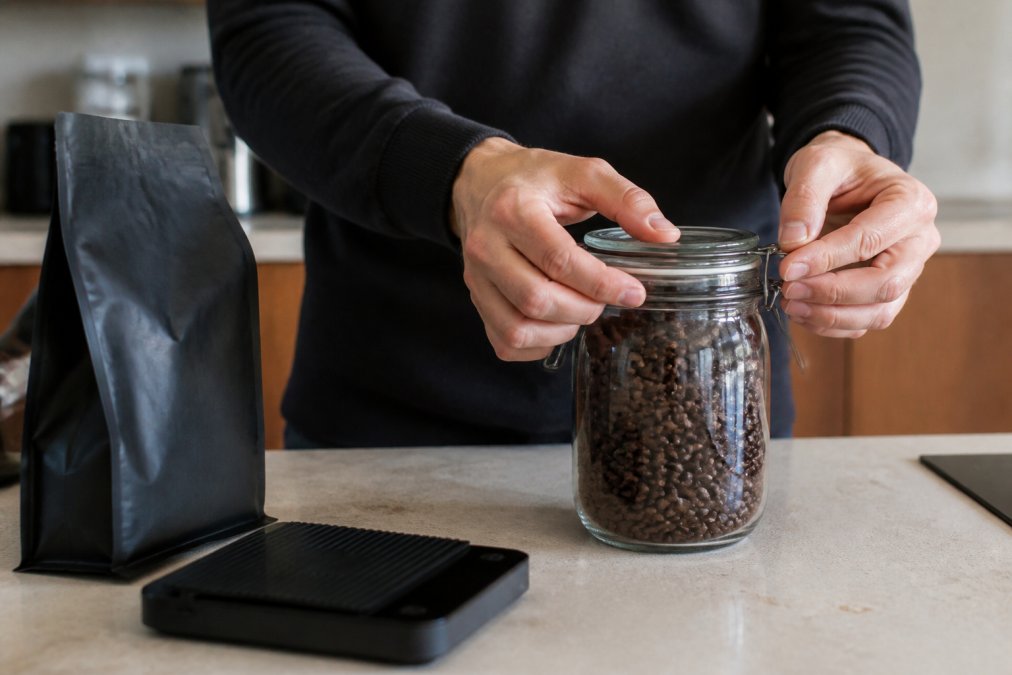
Storage conditions decide how fast your beans move through the freshness timeline. A bag left open on the counter can lose its peak flavor in days, while a properly sealed container stretches that window toward the full 15 days.
Airtight Containers and Oxygen Exposure
An airtight container limits oxygen exposure, which is the primary driver of flavor degradation in roasted beans. Look for an opaque option with a one-way degassing valve or a tight seal, and keep it out of direct light.
Storage container comparison:
| Container Type | Oxygen Protection | Light Protection | Best For |
|---|---|---|---|
| Original bag with valve | Good | Varies | Short-term, unopened bags |
| Glass jar with seal | Good | Poor | Counter display, quick use |
| Opaque ceramic canister | Good | Excellent | Daily use, dark storage |
| Vacuum container | Excellent | Varies | Longer storage, smaller batches |
Glass looks nice but lets light through, which degrades oils over time. If you use glass, store it in a cabinet rather than on an open shelf.
Freezing Coffee Beans: What Actually Works
Freezing coffee beans can extend freshness well past 15 days, but only if you do it right. The key is freezing beans in small, single-use portions so you never thaw and refreeze the same batch.
Moisture is the enemy here. Every time frozen beans warm up, condensation forms on the surface. Repeated thaw cycles introduce the exact moisture you're trying to avoid.
A common mistake is freezing a whole bag and pulling from it daily. Instead, portion beans into airtight bags sized for a few days of brewing, freeze them, and grind straight from frozen when you're ready. No thawing needed for most brew methods.
The 15-Minute Rule by Brew Method: Pour-Over, Espresso, and Cold Brew
The 15-minute grinding rule applies differently depending on your brew method. Espresso punishes stale grounds hardest, while cold brew is the most forgiving.
Pour-over sits in the middle. A 15-minute-old grind still produces a solid cup, but you'll notice a drop in aroma and top-end flavor notes. Grinding fresh for pour-over gives you the clearest window into a bean's actual flavor profile.
Espresso is unforgiving. The pressurized extraction amplifies every variable, and ground coffee that's sat out loses the gases and oils that create a proper crema and balanced shot. Pull espresso within a minute or two of grinding for the best result.
Cold brew is the outlier. Because it steeps for hours in cold water, the 15-minute rule barely applies. You can grind a batch, let it sit, and still get a good result, though fresher grounds still taste cleaner.
How Roast Profile Changes the 15-Day Rule
Roast profile changes how strictly the 15-day rule applies. Darker roasts tend to peak faster and fade faster, while lighter roasts often hold their character longer.
Darker roasts are roasted longer and develop more surface oils, which oxidize quickly once exposed to air. They can taste their best just a few days post-roast and decline sooner than lighter options.
Lighter roasts retain more of the bean's original acids and volatile compounds, so they often need a longer rest to degas and can stay enjoyable closer to the full 15-day window.
This is the nuance most guides skip. The 15-day rule is a general guideline, not a fixed deadline, and your specific roast profile shifts where your personal peak lands. A medium roast from a roaster who ships fast may hit its stride around day 5; a dark roast from a bag that sat on a shelf may already be past it.
Putting the 15-15-15 Rule Into Practice
Applying the 15-15-15 rule comes down to three habits: buy fresh, store smart, and grind right before you brew. Each habit protects a different stage of the freshness timeline.
Here's a practical checklist:
- Check for a roast date, not just a best-by date
- Transfer beans to an airtight, opaque container
- Keep the container in a cool, dark cabinet, not on the counter
- Portion extra beans into small bags before freezing
- Grind only what you'll brew in the next 15 minutes
- Match your expectations to your roast profile
The rule isn't about chasing perfection every single cup. It's about knowing where your coffee sits on the clock so you can get the most out of it. For a deeper look at how freshness affects flavor, the Specialty Coffee Association's guidance on coffee freshness is worth reading.
Many home brewers find that the biggest single upgrade isn't a new machine or a new recipe. It's simply buying coffee with a recent roast date and grinding it fresh.
The hardest part of the 15-15-15 rule is the first link in the chain: getting beans that are actually fresh when they arrive. At The Last Sip Coffee Roasters, every batch is roasted to order, so your coffee ships close to its roast date rather than sitting in a warehouse. Our carefully sourced beans and reliable delivery make it easy to keep a fresh supply on hand without overordering. Get started with The Last Sip Coffee Roasters and enjoy a smooth, satisfying cup from the first sip to the last.
Frequently Asked Questions
How long after roasting should you drink coffee?
Most roasted beans hit peak flavor between 4 and 14 days after the roast date, which is why the 15-15-15 rule sets 15 days as the outer edge for roasted coffee. Beans are still usable after that, but the aroma profile flattens and flavor degradation speeds up. Check the roast date on the bag rather than a best-by date, and buy from roasters who print it clearly.
How does oxygen affect coffee bean freshness?
Oxygen exposure drives oxidation, the same reaction that turns a sliced apple brown. In coffee, it breaks down volatile compounds and oils that carry aroma and flavor notes, leaving stale coffee that tastes flat or papery. Carbon dioxide leaving the bean during degassing actually pushes some oxygen out at first, which is why freshly roasted beans hold up well for the first week or two.
Does the 15-minute rule change depending on brew method?
It does. Ground coffee loses aroma fastest because the surface area exposed to oxygen is far larger. For pour-over and drip, grind right before brewing and use it within about 15 minutes. Espresso is even less forgiving since the puck sits in the basket, so grind, dose, and pull immediately. Cold brew is more tolerant because the long steep extracts steadily, but freshly ground beans still taste noticeably better.
What is the best way to store coffee beans to maintain freshness?
Keep whole beans in an airtight, opaque container at room temperature, away from light, heat, and moisture. Buy only what you will drink within roughly two weeks, or split a larger order and freeze part of it in sealed portions. Skip the fridge, since temperature swings and food odors get absorbed. Grinding right before brewing matters more than any container upgrade you can buy.