
Table of Contents
- Why Freshness Matters for Your Coffee
- The Four Enemies of Coffee Freshness
- Best Coffee Storage Containers for Maximum Freshness
- Whole Beans vs. Ground Coffee: Storage Differences
- How Long Does Coffee Stay Fresh: Shelf Life Guidelines
- How to Tell If Coffee Beans Are Fresh
- Pantry Storage Best Practices
- Conclusion
- Frequently Asked Questions
Last Updated: September 1, 2026
Why Freshness Matters for Your Coffee
Freshly roasted coffee peaks in flavor, with aromatic compounds and oils intact. Within days, oxidation breaks these down. Within weeks, beans taste flat, bitter, or muddy. Freshness affects extraction, crema quality, and the complexity the roaster intended. Stale coffee requires more grounds and longer brew times yet still tastes hollow. At The Last Sip Coffee Roasters, we roast every batch to order because freshness is non-negotiable. Understanding what degrades coffee, temperature swings, light exposure, moisture, and oxygen, lets you control these variables and keep beans vibrant for weeks.
The Four Enemies of Coffee Freshness
Oxygen and Oxidation
Oxidation is the primary driver of staleness. When oxygen contacts coffee oils and aromatic compounds, they break down into duller molecules. This starts immediately after roasting and accelerates with air exposure. Whole beans have limited surface area, but ground coffee has roughly ten times more surface exposed to oxygen, going stale within days. Minimize oxygen exposure with airtight containers. One-way valve bags let CO2 escape during degassing without letting oxygen back in. Reseal immediately after opening.
Light Exposure
Ultraviolet radiation breaks down flavor and aroma compounds, similar to how light fades fabric. Quality roasters use opaque bags for protection, not just aesthetics. Clear glass jars or transparent containers cause noticeably faster flavor loss within two to three weeks. Store coffee in opaque containers in a dark location, a cabinet or pantry is ideal. If using a clear container, keep it in a closed cabinet or drawer, not on a countertop.
Heat and Temperature Fluctuations
Heat accelerates oxidation and breakdown of aromatic compounds. Temperature swings cause condensation, introducing moisture and speeding degradation. The ideal storage temperature is consistent room temperature, between 60-75°F (usda.gov). Avoid placing coffee near stovetops, ovens, direct sunlight, or warm appliances. Even spots above refrigerators are problematic.
Moisture and Humidity
Coffee is hygroscopic and absorbs moisture from air. When beans absorb water, cell structure swells, oils migrate differently, and flavor compounds disperse. High humidity accelerates this, with coffee degrading noticeably within days of opening. Moisture also creates environments for mold and off-flavors. Airtight seals prevent moisture exchange. Desiccant packets can help in humid climates, though they're rarely necessary with truly airtight containers.
Best Coffee Storage Containers for Maximum Freshness
Airtight Containers with One-Way Valves
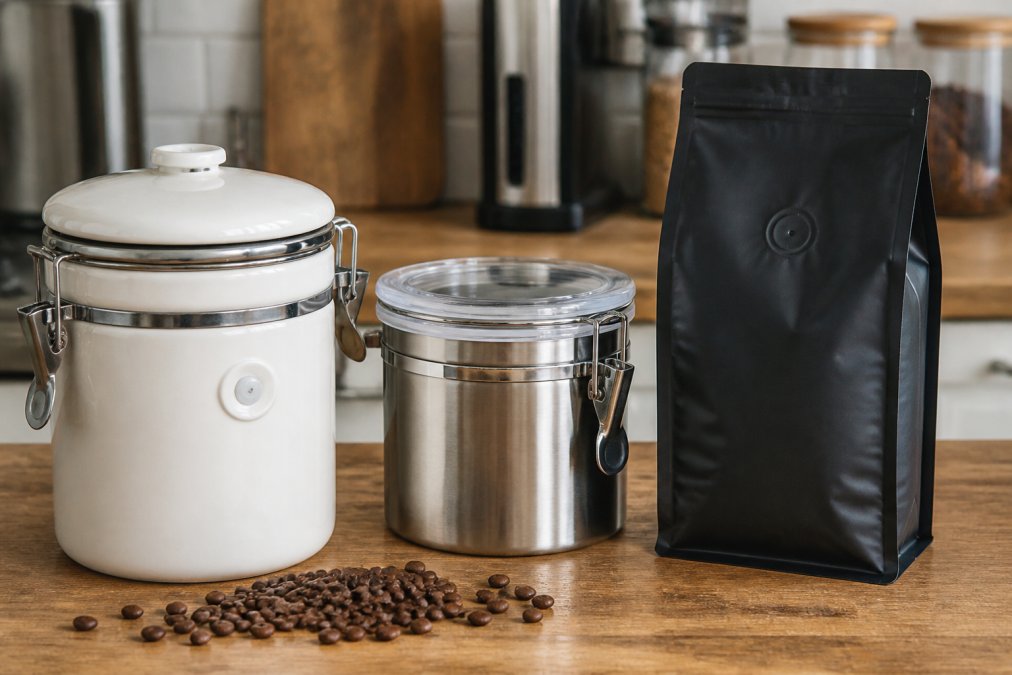
One-way valve bags are the gold standard for fresh-roasted coffee. These valves let carbon dioxide escape while preventing oxygen from entering. They're opaque, protect from light, and seal tightly. If transferring to reusable containers, look for one-way valve inserts. Many specialty retailers sell ceramic canisters and stainless steel jars with this feature. One-way valve containers keep beans fresh for 3-4 weeks after opening when stored in a cool, dark location (peer-reviewed research).
Ceramic and Stainless Steel Canisters
Ceramic and stainless steel canisters are durable, attractive, and excellent at blocking light. Many come with airtight lids and some include one-way valves. Stainless steel has a slight edge over ceramic because it doesn't absorb odors or residual oils. Both work well with truly airtight seals.
Vacuum-Sealed Options
Vacuum-sealed containers remove air entirely, providing maximum protection. Some electric vacuum-seal systems work with coffee containers. The catch: vacuum-sealing can damage beans slightly, and once opened, you lose the benefit. For long-term storage beyond a month, vacuum-sealing makes sense. For regular use, the effort isn't worthwhile.
What to Avoid: Mason Jars and Ziploc Bags
Mason jars are transparent, exposing beans to light, and aren't designed for airtight sealing. Coffee stored in mason jars visibly degrades within two weeks. Ziploc bags and similar plastic storage bags aren't airtight, are transparent, and leach plasticizer compounds into coffee over time. Don't use these, even temporarily.
Whole Beans vs. Ground Coffee: Storage Differences
Why Whole Beans Stay Fresh Longer
Whole beans have minimal surface area exposed to oxygen. The bean's outer layer acts as a natural barrier, slowing oxidation. Properly stored whole beans stay flavorful for 3-4 weeks after roasting. Beans roasted within the last week are ideal. Beyond four weeks, flavor noticeably flattens.
Ground Coffee Degassing and Flavor Loss
Ground coffee loses freshness in days, not weeks. The moment you grind, internal surfaces expose to oxygen and aromatic compounds escape immediately. Within 24 hours, a noticeable shift toward flatness occurs. Within a week, the coffee tastes stale even in an airtight container. Buy whole beans and grind at home for superior results.
Grinding Coffee Fresh for Optimal Results
Grinding immediately before brewing is the single best thing you can do for freshness. A burr grinder takes 30 seconds and produces dramatic flavor differences. Grind as close to brew time as possible. If grinding more than one brew session's worth, store extra ground coffee in an airtight container and use within a few hours.
How Long Does Coffee Stay Fresh: Shelf Life Guidelines
Roast Date and Peak Freshness Window
Days 1-3 post-roast: Beans are degassing. Flavor is developing but can taste slightly sharp.
Days 4-14: Peak freshness. Flavor is fully developed, acidity balanced, aromatic compounds at their height.
Days 15-30: Still good but flattening. Coffee is drinkable but noticeably less vibrant.
Beyond 30 days: Staleness is apparent. Taste is flat, bitter, or muted.
Whole Beans vs. Ground Coffee Timeline
Whole beans maintain peak flavor for 2-3 weeks after roasting and remain acceptable for 4-6 weeks (usda.gov). Ground coffee peaks within 24-48 hours of grinding and is acceptable for a week. This timing assumes airtight, opaque storage in a cool location.
How to Tell If Coffee Beans Are Fresh
Visual and Aroma Indicators
Fresh whole beans have rich, dark color (for dark roasts) or medium brown (for lighter roasts) with consistent appearance. Stale beans look dull and chalky. Aroma is the most reliable indicator. Fresh beans smell vibrant and aromatic with the roast's intended character. Stale beans smell muted, flat, or musty.
Taste Test Signs of Staleness
Fresh coffee tastes bright, balanced, and complex through each sip. Stale coffee tastes flat from the first sip with minimal complexity. Mouthfeel also changes, fresh coffee has body and texture while stale coffee feels thin and hollow.
Pantry Storage Best Practices
Room Temperature and Location Selection
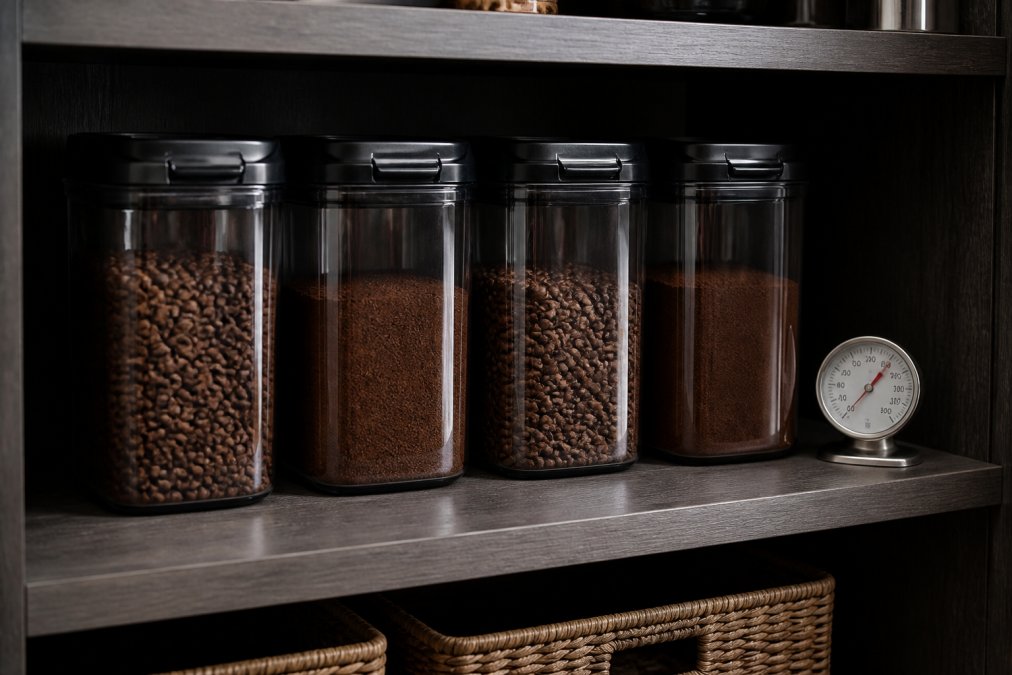
The ideal storage location is a cool, dark, stable-temperature space. A kitchen pantry is typically perfect. Avoid locations above or near the stove, above the refrigerator, near windows, inside the refrigerator, or on sunlit countertops. Choose a shelf inside a closed cabinet or pantry. Consistency matters more than absolute temperature.
Why You Should Avoid the Refrigerator
Refrigerators have high humidity. Every time you open the door, warm air enters, creating condensation inside your container. Temperature fluctuations near the door promote condensation and moisture absorption. Coffee also absorbs odors from the fridge. Keep coffee out entirely, room temperature in a dark pantry is always better.
Freezing Coffee: Myths and Best Practices
Freezing slows degradation but doesn't stop it. The real problem is condensation. When frozen coffee warms, moisture condenses on the surface. Repeated freeze-thaw cycles introduce water directly into beans, worse than room temperature storage.
If you must freeze: use airtight, opaque containers, freeze in small portions, remove only when ready to use, let it reach room temperature in the sealed container before opening, and use within a month. For most home brewers, buying whole beans in quantities you'll use within 2-3 weeks and storing in your pantry is simpler and produces better results.
Conclusion
Keeping coffee fresh comes down to controlling four variables: oxygen, light, heat, and moisture. Airtight, opaque containers stored in a cool, dark pantry protect your beans. Whole beans stay fresh longer than ground coffee. Peak flavor is a 2-3 week window, not permanent. When you start with premium, freshly roasted beans from The Last Sip Coffee Roasters and store them properly, you preserve the roaster's work. Our beans arrive roasted to order, at peak freshness. Proper home storage keeps them vibrant for weeks. Fresh-roasted beans plus smart storage separates a truly excellent cup from a mediocre one. Get started with The Last Sip Coffee Roasters and experience how freshness transforms your morning ritual.
Frequently Asked Questions
How long does coffee stay fresh after opening?
Whole beans remain fresh for 2-4 weeks after opening when stored in an airtight container away from light and heat. Ground coffee degasses rapidly and peaks within 24-48 hours of grinding, though it stays drinkable for 1-2 weeks. For maximum flavor, grind only what you need just before brewing. Freshly roasted coffee from specialty roasters like The Last Sip Coffee Roasters reaches peak flavor 3-5 days after the roast date, so timing your consumption matters as much as storage method.
What is the best container to store coffee in?
Airtight containers with one-way valve bags work best because they allow carbon dioxide to escape during degassing while blocking oxygen. Ceramic canisters and stainless steel containers provide excellent opaque protection from light. Vacuum-sealed options extend freshness significantly. Avoid mason jars (not fully airtight), Ziploc bags (poor oxygen barrier), and clear containers that expose beans to light. The ideal container is opaque, airtight, and designed to minimize oxygen exposure while accommodating the natural degassing process.
Does freezing coffee beans actually keep them fresh?
Freezing slows degradation but introduces risks. When you remove frozen beans from the freezer, condensation forms on the surface, introducing moisture that damages flavor and promotes mold. If you freeze, use airtight containers, minimize air exposure, and avoid repeated thawing cycles. For most home users, pantry storage at room temperature in an airtight container is simpler and safer. Reserve freezing only for long-term storage beyond 4-6 weeks, and thaw beans at room temperature before opening the container to prevent condensation.
How do I know if my coffee beans are fresh?
Fresh beans have a rich, fragrant aroma and a glossy appearance due to natural coffee oils. Stale beans smell flat or musty and look dull. When you brew fresh beans, the coffee blooms noticeably (rapid bubbling from carbon dioxide release), while stale coffee produces minimal bloom. The taste test is definitive: fresh coffee tastes bright and complex; stale coffee tastes flat, bitter, or sour. Check the roast date on your bag, beans are optimal 3-10 days after roasting, then gradually decline in flavor intensity over the following weeks.
This article was written using GrandRanker