
Table of Contents
- The Sensory Test: Smell and Aroma
- Visual Inspection: What Fresh Coffee Beans Should Look Like
- The Taste Profile: Recognizing Flat, Dull, and Bitter Notes
- Understanding Roast Date and Expiration Dates
- How to Store Coffee Beans to Prevent Staleness
- The Coffee Bloom Test and CO2 Release
- Coffee Shelf Life: Ground vs. Whole Bean
- Conclusion: Ensuring Fresh Coffee Every Time
Last Updated: August 23, 2026
The Sensory Test: Smell and Aroma
Fresh coffee beans release a rich, complex aroma, notes of chocolate, nuts, fruit, or florals depending on the roast and origin. Stale coffee smells flat, muted, or musty, like cardboard in a basement. This happens because oxidation and degassing cause CO2 to escape and aromatic oils to break down.
To test freshness by smell, open the bag and take a deep breath. The aroma should hit you immediately and feel vibrant. If you have to sniff hard or detect only stale notes, your coffee has been sitting too long. At The Last Sip Coffee Roasters, we roast every batch to order to preserve this aroma at its peak.
Store beans in an airtight container away from light and heat. Even a few days of air exposure dulls the aroma noticeably. Whole beans hold their fragrance longer than ground coffee, which loses volatile compounds much faster once exposed.
Visual Inspection: What Fresh Coffee Beans Should Look Like
Fresh coffee beans have a glossy, oily surface with visible sheen, the natural lipids in the beans. The color should be rich and uniform, ranging from light brown for lighter roasts to nearly black for dark roasts.
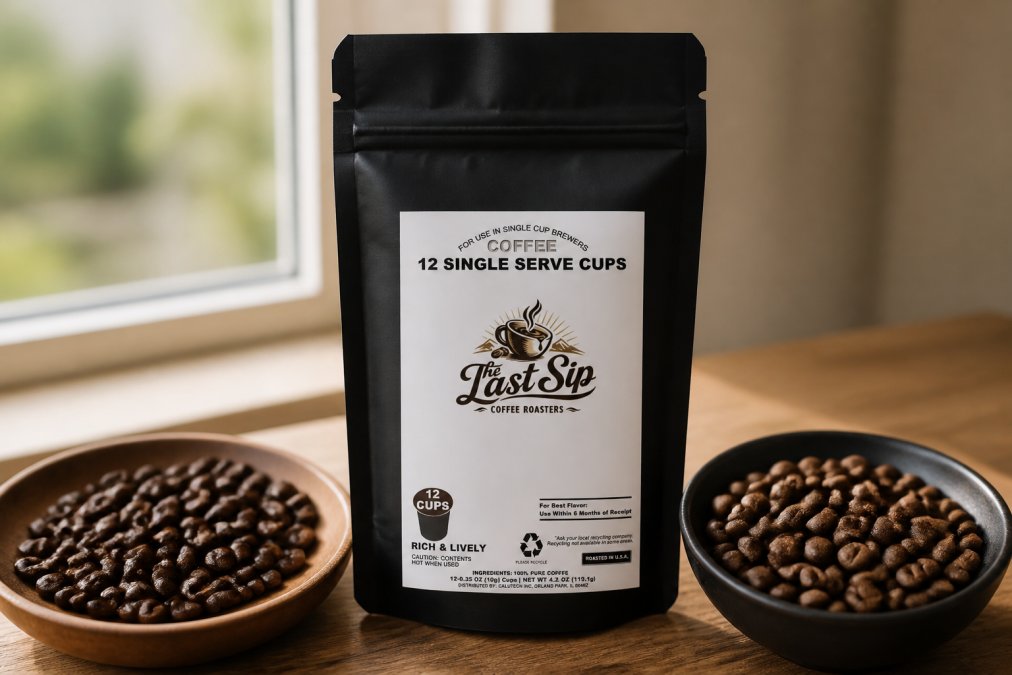
Stale beans look dry and dull, losing their sheen and taking on a matte, lifeless appearance. The color fades, and some older beans develop a slightly ashy coating from oxidation.
Hold beans up to natural light. Fresh beans catch the light and show dimension. Stale beans absorb light and look flat. This simple visual test takes seconds and gives reliable information about freshness.
The Taste Profile: Recognizing Flat, Dull, and Bitter Notes
Fresh coffee has complexity, brightness, acidity, and nuanced flavor notes. Stale coffee tastes flat and hollow, like the flavor has been drained away. When coffee goes stale, the acids that give brightness and complexity oxidize and break down, leaving a one-dimensional, often harshly bitter taste.
Bitterness in stale coffee differs from intentional dark roast bitterness. A well-roasted dark roast tastes bold and smooth with caramel or chocolate notes. Stale coffee tastes harshly bitter without those balancing flavors.
Brew two samples side by side, one from fresh beans and one a month old. The fresh coffee tastes vibrant and multi-layered. The stale coffee tastes thin, one-note, and unpleasant. In espresso, stale coffee produces thin shots that pull too quickly. In pour-over or French press, staleness is equally obvious. Even your palate picks up on the missing complexity immediately.
Understanding Roast Date and Expiration Dates
The roast date is the single most important piece of information on a coffee bag. It tells you exactly when the beans were roasted, your baseline for freshness. Many bags list an expiration date instead, which is less helpful, a bag could have been roasted three months ago and still be within the "best by" window.
The ideal window for freshness is the first 14-21 days after roasting (peer-reviewed research). After 30 days, coffee is still drinkable but noticeably less vibrant. Beyond 60 days, most coffees show significant flavor degradation. At 90 days and beyond, coffee tastes stale in nearly every brewing method.
At The Last Sip Coffee Roasters, we roast to order because this timeline matters. Your coffee arrives within days of roasting, not weeks. When shopping, look for the roast date first. If a bag doesn't have one, ask the roaster. If they can't tell you, that's a red flag.
How to Store Coffee Beans to Prevent Staleness
Poor storage makes fresh beans stale within days. The enemies are oxygen, light, heat, and moisture. The best container is airtight and opaque. Many coffee bags have a one-way valve that lets CO2 escape but prevents air from entering, these work for short-term storage, but transfer beans to an airtight container for anything longer than a week.
Avoid clear glass jars. Light penetrates glass and speeds oxidation. Ceramic or opaque plastic containers work better. Some people use vacuum-sealed bags, which are excellent for long-term storage.
Store coffee at room temperature, ideally 60-75 degrees Fahrenheit (usda.gov). Don't refrigerate or freeze, temperature fluctuations cause condensation inside the container, introducing moisture and accelerating staleness. Keep coffee away from heat sources and direct sunlight.
Ground coffee goes stale much faster than whole beans. Grind only what you'll use in the next few days. Pre-ground coffee should be used within 1-2 weeks of opening. Whole beans stay fresh 3-4 weeks when stored correctly. Buy less coffee more frequently, a smaller bag roasted recently beats a larger bag roasted weeks ago.
The Coffee Bloom Test and CO2 Release
The bloom test checks if your coffee is fresh and still actively degassing. When you pour hot water over fresh grounds, they swell and bubble as CO2 escapes. This visible reaction indicates freshness.
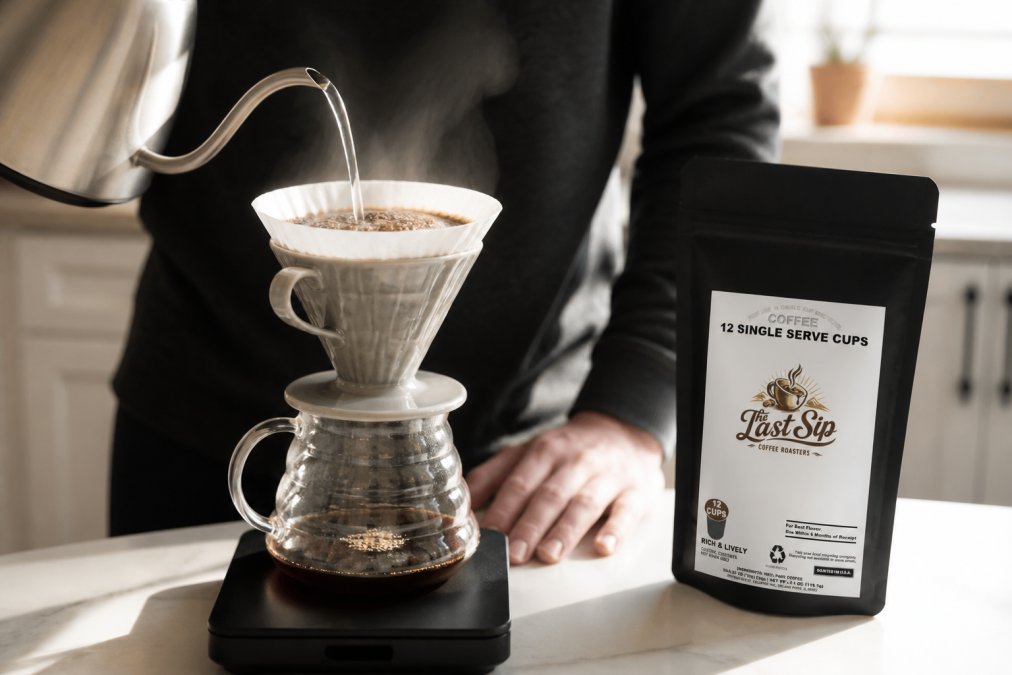
Grind coffee fresh and place it in a pour-over. Pour just enough hot water to saturate the grounds, about twice the weight of the coffee. Wait 30-45 seconds. Fresh coffee visibly blooms and bubbles. Stale coffee shows little to no bloom because most CO2 has already escaped.
Fresh beans actively degas for the first 7-14 days after roasting (peer-reviewed research). After that, degassing slows significantly. By 30 days, most CO2 is gone. The bloom test confirms where your coffee sits on this timeline and affects extraction, stale coffee that doesn't bloom properly often brews unevenly.
Coffee Shelf Life: Ground vs. Whole Bean
Whole beans stay fresh for weeks when stored properly. Ground coffee stays fresh for days, maybe a week with perfect storage. This difference comes down to surface area. Grinding multiplies surface area by hundreds of times, accelerating oxidation.
Whole bean coffee roasted 3-7 days ago is ideal. At 14-21 days, it's still good but noticeably less fresh. Beyond 30 days, whole beans show clear staleness, muted aroma, dull surface, flat taste.
Pre-ground coffee should be used within 1-2 weeks of opening. If you grind your own, use grounds within 15-30 minutes for best results. By 24 hours, ground coffee has already lost significant flavor complexity.
Buy whole beans and grind at home for maximum freshness. If that's not possible, buy smaller quantities of pre-ground coffee more frequently.
| Storage Format | Peak Freshness Window | Still Good | Getting Stale | Avoid |
|---|---|---|---|---|
| Whole bean (sealed) | Days 3-7 | Days 8-21 | Days 22-30+ | Beyond 30 days |
| Whole bean (opened) | Days 1-3 | Days 4-7 | Days 8-14 | Beyond 14 days |
| Ground coffee (sealed) | Days 1-3 | Days 4-7 | Days 8-14 | Beyond 14 days |
| Ground coffee (opened) | Hours 0-2 | Hours 3-24 | Beyond 24 hours | Beyond 48 hours |
Knowing how to tell if coffee is stale puts you in control of your coffee quality. By checking the roast date, inspecting beans visually, smelling the aroma, and understanding storage, you have all the tools to ensure every cup tastes vibrant and satisfying.
The easiest way to guarantee freshness is to buy from roasters who prioritize it. At The Last Sip Coffee Roasters, we roast every batch to order and ship within days, so your coffee arrives at peak freshness. Our Premium Coffee Capsules - 60 Pack are sealed with no oxygen inside, preserving freshness until you brew. Whether you prefer whole beans or single-serve capsules, the principle is the same: fresh roasted, delivered fast, tasting incredible. Start your subscription today and experience the difference that true freshness makes.

Frequently Asked Questions
Q: Is it okay to drink stale coffee?
A: Stale coffee is safe to drink but tastes noticeably worse. Oxidation and CO2 degassing cause the flavor to become flat and hollow. While not harmful, you'll lose the complexity and brightness that make fresh coffee enjoyable. For the best experience, consume coffee within 2-4 weeks of the roast date.
Q: How long can you store whole bean coffee before it goes stale?
A: Whole bean coffee stays fresh for 2-4 weeks after the roast date when stored properly in an airtight container away from heat, light, and moisture. Ground coffee degrades faster, typically within 1-2 weeks. Factors like roast level, bean origin, and packaging type affect shelf life. Check the roast date on your bag to track freshness accurately.
Q: What does stale coffee smell like?
A: Fresh coffee has a vibrant, complex aroma with notes specific to its origin. Stale coffee develops a musty, flat, or cardboard-like smell as oxidation progresses. The aromatic compounds break down, leaving a dull scent lacking brightness and depth. If your coffee smells musty or reminds you of old paper, it has likely lost significant freshness. A strong, inviting aroma is a reliable indicator that your beans are still within their prime window.
Q: Can I drink coffee that's 6 months old?
A: Coffee older than 6 months is technically safe but will taste significantly stale. After 4-6 weeks, oxidation and degassing substantially degrade flavor, removing acidity and complexity. By 6 months, the coffee will taste flat, hollow, and potentially musty. For the best experience, consume coffee within 2-4 weeks of roasting. If you work through coffee slowly, consider ordering smaller quantities more frequently to ensure maximum freshness and flavor in every cup.
This article was written using GrandRanker