
Table of Contents
- How Coffee Subscriptions Work
- Best Coffee Subscription for Hybrid Workers
- Single Origin vs. Blend Coffee Subscriptions
- Roast Date Importance in Coffee Subscriptions
- Using a Coffee Subscription Frequency Calculator
- Key Factors to Consider When Choosing a Plan
- Storage and Shelf-Life Management
- Conclusion
Last Updated: August 30, 2026
How Coffee Subscriptions Work
A coffee subscription delivers freshly roasted beans directly to your door on a recurring schedule, typically monthly or bi-weekly. You select a subscription tier, specify your preferences (grind size, roast profile, single-origin versus blend), and the roastery fulfills and ships your order automatically. Most services allow you to pause, skip, or adjust frequency without penalties.
The real value lies in consistency and discovery. A subscription removes the friction of remembering to reorder and introduces you to coffees you might never encounter at a grocery store, curated by roasters who understand flavor profiles and sourcing. The Last Sip Coffee Roasters, for example, roasts every batch to order, meaning your coffee is roasted days before it ships rather than months before it reaches you.
Best Coffee Subscription for Hybrid Workers
Hybrid workers face a specific challenge: inconsistent coffee access. A coffee subscription solves this by ensuring you always have premium beans on hand, eliminating the compromise between convenience and quality.
The ideal plan prioritizes flexibility and consistency. You need a subscription that lets you adjust frequency without penalty, some weeks you'll burn through a pound; others you'll have surplus. You also need fast, reliable shipping so beans arrive within days of roasting. The Last Sip Coffee Roasters delivers this combination: roasted to order with reliable fulfillment, so you're never caught without fresh stock regardless of your office schedule.
Frequency matters more for hybrid workers than for anyone else. A biweekly subscription prevents the common problem of coffee aging while you're spending more time in the office. Customization also matters, a plan that lets you choose different roasts, grind sizes, or bean origins per shipment beats a locked-in selection, avoiding frustration when your needs change week to week.
Single Origin vs. Blend Coffee Subscriptions
A single-origin coffee comes from one specific farm, region, or country, highlighting the unique characteristics of that terroir. A blend combines beans from multiple origins, creating complexity and balance that no single origin can achieve alone.
Single-origin coffees deliver clarity. You taste the specific flavor notes of a region: the fruity acidity of Ethiopian Yirgacheffe, the chocolate and cocoa notes of Brazilian Santos, the floral sweetness of Colombian Geisha. They're ideal if you're exploring coffee as a hobby or prefer pronounced, distinct tasting notes. The trade-off is inconsistency, each harvest varies slightly, and single-origins tend to be pricier.
Blends prioritize balance and reliability. A roaster combines beans to create a consistent cup that works across brewing methods and preferences. Blends are better for everyday drinking and for households where multiple people share one subscription. They're also typically more affordable.
For a subscription, this choice determines your entire experience. Single-origin plans offer variety and knowledge-building; blend subscriptions offer stability and consistency. Some subscriptions let you mix: alternate months of single-origin and blend, or choose your preference for each shipment.

Roast Date Importance in Coffee Subscriptions
Roast date is the single most important specification on a coffee bag. Coffee begins degrading the moment it's roasted, losing aromatic compounds and developing stale, flat flavors within weeks.
The ideal roast date is between 3 and 14 days before you brew (peer-reviewed research). At three days, the coffee is still off-gassing. By two weeks, the coffee is in its optimal window. After 30 days, degradation accelerates noticeably. After 60 days, most specialty coffee tastes noticeably flat and dull.
This is where roasting to order matters. The Last Sip Coffee Roasters roasts every batch specifically for your order, meaning your coffee arrives with a roast date of days, not weeks or months. Compare this to grocery store coffee, where the roast date might be two months old before you even open the bag. The freshness difference is dramatic.
When evaluating a subscription, always ask: when does the roastery roast, and when does it ship? The best services roast Monday through Thursday and ship the same week. Avoid subscriptions that don't display roast dates prominently or that roast in large batches weeks in advance.
Using a Coffee Subscription Frequency Calculator
Frequency is where most people get subscriptions wrong. They overestimate consumption, receive more coffee than they can use, and end up with stale beans.
Start with honest consumption data. A standard cup uses 0.5 ounces of whole bean coffee (peer-reviewed research). A pound of whole beans yields roughly 32 cups. If you brew two cups daily, you consume one pound every two weeks. If you brew three cups daily, you need a pound every 10 days.
The math is simple: cups per day × 7 days = weekly cups. Weekly cups ÷ 32 = weekly pounds needed. Then multiply by your subscription interval to find the right order size.
Most people underestimate waste. Coffee oxidizes even in sealed bags. If you order a pound and don't finish it within four weeks, you're wasting 10-20% of it to staleness. It's better to order smaller quantities more frequently than larger quantities less often. A biweekly subscription of half a pound beats a monthly pound for most home brewers.
Start conservative, order less than you think you'll use, then increase after a month or two of data. This prevents the common trap of overstocking and watching coffee age.
Key Factors to Consider When Choosing a Plan
Selecting the right coffee subscription plan requires evaluating several interconnected factors.
Grind Size and Brewing Method
Your brewing method determines the grind size you need. A French press requires coarse grounds; espresso requires fine grounds; pour-over requires medium. Some subscriptions ship whole bean only, requiring you to grind at home. Others offer pre-ground options, which is convenient but sacrifices freshness, pre-ground coffee stales faster because grinding dramatically increases surface area.
The best approach is whole bean delivered fresh, ground at home using a burr grinder. If you don't own a grinder, a subscription that offers free grinding is worth the convenience trade-off. Some subscriptions let you specify grind size per shipment, adjusting for whatever brewing method you're using that month.
Customization and Tasting Notes
Customization determines whether a subscription feels tailored to you. The best plans let you customize at least three dimensions: roast profile (light, medium, dark), origin preference (single-origin, blend, or mix), and flavor profile (fruity, chocolatey, balanced).
Many subscriptions use tasting quizzes to understand your preferences. Some go further, letting you rate each coffee and using that feedback to refine future recommendations. This is the gold standard, the service learns your preferences over time and becomes increasingly accurate.
Pricing and Cost-Per-Cup Analysis
Subscription coffee typically costs more per ounce than grocery store coffee, but less per ounce than specialty coffee shop visits. Calculate your actual cost per cup. If a pound costs $15 and yields 32 cups, your cost per cup is roughly $0.47. If you're currently spending $6 per cup at a coffee shop, a subscription at $0.47 per cup is an obvious win.
The Last Sip Coffee Roasters sample packs, like the Best Coffee Sampler Pack at $24.99 for six 2-ounce samples, let you test multiple origins and blends before committing to a full subscription. This reduces risk, you're not locked into a monthly commitment after trying just one coffee.

Most subscriptions offer tiered pricing. Larger orders have lower per-unit costs, but only if you can consume them before staleness becomes an issue.
Cancellation Policy and Flexibility
The best subscriptions make it trivial to pause, skip, or cancel. You should be able to adjust frequency or quantity without penalty, pause for a month if you're overstocked, or cancel immediately if you're unhappy.
Avoid subscriptions with auto-renew that requires calling to cancel, or that charge cancellation fees. The best services let you manage everything online, with no phone calls required. If a subscription offers a trial period with a money-back guarantee, that's a positive sign.
Storage and Shelf-Life Management
How you store coffee after it arrives determines whether you actually get the freshness advantage a subscription promises.
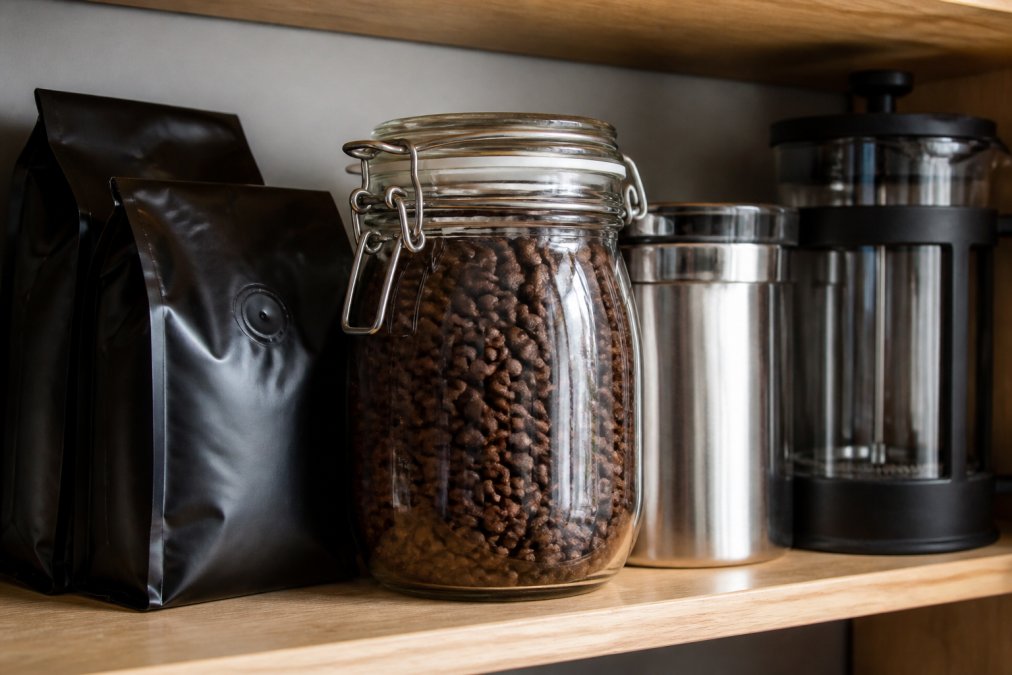
Coffee's enemies are light, heat, moisture, and oxygen. Store beans in an airtight container in a cool, dark place, a kitchen cabinet, not on the counter near a window. Avoid the refrigerator or freezer; temperature fluctuations cause condensation that damages beans.
Whole beans stay fresh for 2-4 weeks if stored properly (peer-reviewed research). Pre-ground coffee lasts 1-2 weeks. Once you open a bag, consume it within two weeks for optimal flavor. For subscriptions, this means ordering frequency matters. If you receive a pound monthly but only consume half a pound before the next shipment arrives, you're sitting on stale coffee. Adjust your subscription frequency so you finish each bag before the next arrives.
| Storage Method | Shelf Life | Best For |
|---|---|---|
| Airtight container, cool dark place | 3-4 weeks | Whole beans, optimal freshness |
| Original bag with valve, sealed | 2-3 weeks | Whole beans, convenience |
| Pre-ground, airtight container | 1-2 weeks | Quick brewing, less freshness |
| Freezer (vacuum-sealed) | 1-2 months | Long-term storage only |
| Refrigerator | 1-2 weeks | Not recommended, condensation risk |
Choosing the right coffee subscription plan comes down to matching your consumption habits, brewing preferences, and freshness priorities to a service that delivers on all three. The best plan is one you'll actually use consistently, arriving with beans roasted within days, not weeks, at a frequency that keeps your supply fresh without excess. The Last Sip Coffee Roasters delivers this combination through roasting to order and offering flexible frequency adjustments. Start with a sample pack to test multiple origins and roast profiles, then commit to a subscription frequency that matches your actual daily consumption. This approach eliminates guesswork and ensures you're getting the freshness advantage that makes premium subscriptions worth the investment.
=== FAQ ANSWERS (audit these too, same rules) ===
Frequently Asked Questions
Is a coffee subscription worth the cost compared to grocery store beans?
A coffee subscription delivers freshness that grocery store beans cannot match. Roasted-to-order coffee like ours peaks in flavor 3-10 days after roasting, while store-bought beans may have been sitting for weeks or months. The cost-per-cup is higher upfront, but the superior taste and aroma justify the investment for coffee enthusiasts. For casual drinkers, a subscription may not be necessary, but for those who value quality and freshness, the difference is significant.
How do I determine the right frequency for my coffee delivery?
Use a coffee subscription frequency calculator to match your consumption rate. Start by tracking how many cups you drink daily, then multiply by your brewing method's coffee-to-water ratio. Most home brewers use 0.5-1 ounce per 6-ounce cup. If you drink 2 cups daily, a half-pound weekly or 2 pounds monthly works well. Adjust based on storage capacity and freshness preferences. A roast date guarantee ensures your beans arrive at peak flavor within days of roasting.
Should I choose a roaster-specific subscription or a multi-roaster service?
A roaster-specific subscription like The Last Sip Coffee Roasters offers consistency, direct relationships with roasters, and roasted-to-order freshness. Multi-roaster services provide variety and blind tasting experiences. If you've found a roast profile and single-origin or blend preference you love, roaster-specific subscriptions deliver reliability. If you enjoy exploring different processing methods, acidity levels, and body profiles, multi-roaster options offer more discovery. Consider your priorities: consistency or variety.
What makes roast date so important in a coffee subscription?
Roast date determines peak flavor window. Specialty coffee hits its best tasting notes 3-10 days post-roast, then gradually loses brightness and complexity. A freshness guarantee with visible roast dates ensures you receive beans at their optimal flavor potential. Whole bean coffee degrades faster than pre-ground due to exposed surface area, so roast date matters more for whole bean orders. Store beans in airtight containers away from light and heat to extend shelf life and preserve the roaster's intended flavor profile.
How can I customize my coffee subscription to match my flavor preferences?
Most subscriptions offer customization quizzes that assess your preferred roast profile, body, acidity, and processing method. Single-origin coffees highlight regional characteristics like washed, natural process, or honey process beans. Blends balance multiple origins for smooth, consistent cups. Start with a sampler pack like our [Best Coffee Sampler Pack](https://thelastsipcoffeeroasters.com/products/best-sellers-sample-pack-6bean-cowboy-breakfast-peru-mexico-bali) with 6 different roasts to identify your tasting preferences, then adjust frequency and selections. Communicate your flavor notes preferences to your roaster for personalized recommendations.
What is the 15-15-15 rule for coffee?
The 15-15-15 rule guides coffee freshness and storage: use beans within 15 days of the roast date for peak flavor, store in an airtight container for 15 days maximum at room temperature, and use pre-ground coffee within 15 minutes of grinding for optimal extraction. This rule emphasizes why roast-to-order subscriptions excel, your beans arrive fresh and maintain quality longer. Whole bean subscriptions let you grind just before brewing, capturing maximum aroma and flavor compared to pre-ground options.
Can I customize orders for two different coffee preferences in one subscription?
Many subscriptions allow you to customize individual shipments. If you and your partner have different preferences, one preferring dark roast espresso blends, the other enjoying light single-origin pour-overs, you can split shipments or alternate selections monthly. Some subscriptions offer dual-preference accounts or allow you to pause and adjust your next delivery. Check the cancellation policy and customization options before committing to ensure the service accommodates multiple tastes.
This article was written using GrandRanker