
Table of Contents
- Understanding Coffee Roast Profiles
- Light vs Medium vs Dark Roast Flavor Differences
- Coffee Roasting Variables for Beginners
- How to Develop a Coffee Roast Profile
- Best Roast Profile for Espresso
- Matching Roast Profile to Your Brewing Method
- Troubleshooting Roast Defects and Sensory Evaluation
- Home vs. Commercial Roaster Constraints
Last Updated: August 15, 2026
Understanding Coffee Roast Profiles
A coffee roast profile is the predetermined path of time, temperature, and heat application that transforms raw green coffee beans into finished roasted coffee. It determines everything from color and flavor to body and acidity. Understanding roast profiles means understanding how heat changes the chemical structure of beans through two critical phases: the Maillard reaction and caramelization.
The roast curve, the trajectory of temperature rise over time, differs fundamentally between light and dark roasts. At The Last Sip Coffee Roasters, we develop custom roast profiles for each origin and blend, ensuring every batch tastes fresh and intentional. The roast curve has three distinct phases: the drying phase where moisture drops, the development phase where flavor compounds form, and the cooling phase where flavors are locked in.

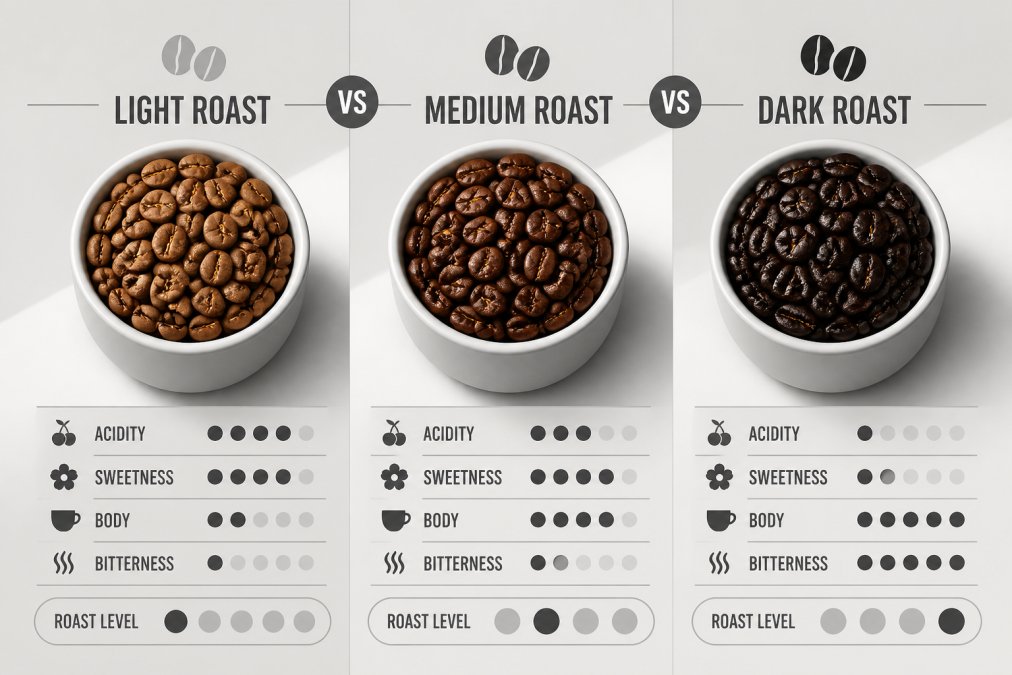
Light vs Medium vs Dark Roast Flavor Differences
The flavor profile you experience depends almost entirely on when you stop the roast. Light roasts preserve origin flavors, characteristics from where the beans were grown. Medium roasts balance origin flavor with roast-developed sweetness. Dark roasts emphasize body and bold character over origin nuance.
Light Roasts: Origin Flavors and Acidity
Light roasts are pulled shortly after first crack, the audible popping sound that signals approximately 356-401°F internal bean temperature. At this point, the bean's origin characteristics shine through, the acidity, brightness, and varietal-specific notes that enthusiasts seek. Light roasts retain higher acidity and require precision: development time is short, usually 7-10 minutes total. One minute too long and you've crossed into medium roast; one minute too short and the roast tastes underdeveloped and grassy. They work best for filter coffee and pour-over brewing methods. The Blonde Roast from The Last Sip Coffee Roasters is a light roast blend designed for those who want origin flavors without the sharp edges that poorly executed light roasts often have.
Medium Roasts: Balance and Complexity
Medium roasts are pulled between first crack completion and the beginning of second crack, typically around 410-428°F internal bean temperature. This is where roast-developed sweetness emerges, caramelization of sugars that creates notes of chocolate, nuts, and subtle fruit. You still taste origin character, but it's in conversation with the roaster's decisions about heat application and development time.
Medium roasts have the broadest appeal because they balance complexity without becoming too bold. Development time typically runs 10-12 minutes, giving the roaster more window to work with than a light roast. They pair well with most brewing methods and are forgiving in French press, excellent for espresso blends, and satisfying as drip coffee. The Medium Roast Breakfast Blend from The Last Sip Coffee Roasters exemplifies this balance, a South American blend that delivers smooth sweetness with enough complexity to be interesting.
Dark Roasts: Body and Bold Character
Dark roasts continue past second crack, often reaching 437-482°F or beyond. At this point, roast-developed flavors dominate. Origin character fades, replaced by bold body, lower acidity, and flavors leaning toward chocolate, smoke, and deep roast character.
Dark roasts are excellent for espresso because that body cuts through milk and creates the mouthfeel people expect from a cappuccino or latte. They're also traditional for French press, where immersion brewing extracts those bold, roasty flavors effectively. The Italian Roast from The Last Sip Coffee Roasters is a dark roast blend crafted specifically for espresso, a slow-roasted combination of specialty-grade Arabica and Robusta that delivers the rich, bold cup that espresso drinkers seek. The challenge with dark roasts is that they're easy to over-roast; push too far and you get bitter, ashy flavors.
Coffee Roasting Variables for Beginners
Roasting coffee isn't magic; it's physics and chemistry responding to controllable variables.
Temperature, Time, and Rate of Rise
The rate of rise, how quickly bean temperature climbs, is the single most important variable in roasting. A fast rate of rise produces light, bright roasts with sharp acidity. A slow rate of rise produces darker, more developed roasts with softer acidity and fuller body.
Most roasters target a rate of rise between 8-15°F per minute during the main roasting phase. Too fast, and the outside of the bean roasts before the inside develops. Too slow, and you risk baking the beans rather than roasting them, producing flat, dull flavors. Temperature itself is the outcome, not the input. You control heat application; temperature responds. Two roasts that both reach 410°F can taste completely different if one got there quickly and the other slowly.
Bean Density, Moisture Content, and Altitude
Not all green coffee beans are created equal. Bean density varies based on altitude and growing conditions. High-altitude beans from mountainous regions are denser than low-altitude beans and require more thermal energy to roast. Moisture content in green beans ranges from 10-12% typically. Beans with higher moisture content require more time in the drying phase before the roast curve truly begins. A Colombian Geisha bean and an Ethiopian Yirgacheffe both respond to heat differently because of their density and moisture profiles.
Batch Size and Charge Temperature
Batch size, how many pounds of green beans you load into the roaster, affects heat distribution and roasting speed. A small batch roasts faster than a large batch because heat penetrates the smaller mass more evenly.
Charge temperature is the temperature of the roaster drum when you add the green beans. A hotter charge temperature means the roast starts faster; a cooler charge temperature means a slower start. Home roasters typically charge between 350-400°F. Many home roasters create inconsistency by using identical charge temperatures regardless of bean density or batch size.
How to Develop a Coffee Roast Profile
Developing a coffee roast profile from scratch is iterative. You're going to roast the same beans multiple times, adjusting variables, tasting the results, and learning what each adjustment produces.
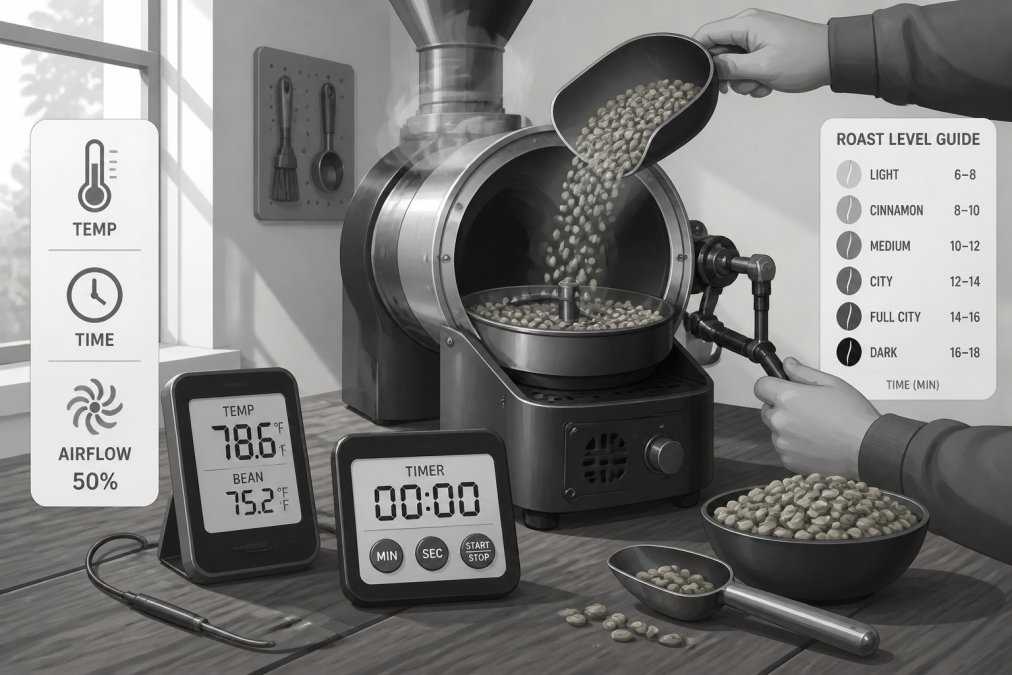
The Roast Curve: From Charge to Cooling
The roast curve is a graph of temperature over time from the moment you charge the beans until you dump them into a cooling tray. It shows the rate of rise, the shape of the curve, and where critical milestones occur.

The curve typically has three sections: the drying phase where temperature rises slowly as moisture evaporates; the main roast phase where temperature climbs quickly as the Maillard reaction accelerates; and the finish phase where you make final adjustments before reaching your target end temperature. Most home roasters spend 2-3 minutes in drying, 5-8 minutes in the main phase, and 1-2 minutes in the finish phase. Controlling the curve means adjusting heat application throughout the roast, applying full heat early to establish a good rate of rise, then reducing heat slightly as you approach first crack to prevent excessive acceleration.
First Crack and Second Crack Milestones
First crack is the audible popping sound that occurs around 356-401°F internal bean temperature. It signals that the bean's internal pressure has built enough to rupture the cell structure and marks the boundary between light and medium roasts.
Second crack occurs 1-3 minutes after first crack, typically around 428-446°F. It's a quieter, more rapid series of pops signaling deeper caramelization and the beginning of the dark roast range. The time between first and second crack, called the development time, is where roast character emerges. A short development time (1-2 minutes) produces bright, acidic roasts. A longer development time (4-6 minutes) produces darker, more developed roasts with fuller body.
Development Time and Flavor Profile Development
Development time is the period from first crack to the end of the roast and is one of the most important variables you control. A 90-second development time produces a very different roast than a 300-second development time, even if both roasts start at the same charge temperature.
Short development times preserve origin flavor and acidity. Medium development times balance origin and roast character. Long development times emphasize roast character and body. Most home roasters keep detailed logs of their roasts, charge temperature, rate of rise, first crack time, end temperature, development time, and tasting notes. Over dozens of roasts, patterns emerge, and you develop a roast profile that's repeatable and intentional.
Best Roast Profile for Espresso
Espresso demands a specific roast profile because espresso brewing forces hot water through finely ground coffee under pressure, extracting quickly and intensely. Espresso roasts need body, sweetness, and low acidity to avoid tasting sharp or sour in the cup.
Most espresso roasts fall into the medium to dark range, typically pulled between 410-437°F. This range develops enough sweetness and body to stand up to the intensity of espresso extraction while maintaining enough complexity to be interesting. A slower rate of rise, around 8-10°F per minute, produces roasts with more sweetness and less sharp acidity than a faster rate of rise. The 6 Bean Coffee Blend from The Last Sip Coffee Roasters is a dark roast specifically designed for espresso, a meticulous blend of beans from around the world, roasted to deliver the rich, bold character that espresso demands while maintaining enough balance to be versatile.
Matching Roast Profile to Your Brewing Method
Your brewing method determines which roast profile will shine. Different brewing techniques extract flavors differently, and roast profiles are optimized for specific extraction methods.
Pour Over and Filter Coffee
Pour-over and filter brewing methods are gentle, controlled extractions that highlight origin flavor and acidity. These methods work best with light to medium roasts. The clarity and brightness of a light roast comes through beautifully in a pour-over setup because the brewing method isn't overwhelming the subtle flavors. A dark roast in the same pour-over can taste thin and one-dimensional because the brewing method isn't extracting enough body to balance the roast character. The Blonde Roast from The Last Sip Coffee Roasters is excellent for pour-over because the brewing method brings out the subtle sweetness and origin character without any sharp edges.
French Press and Immersion Brewing
French press and immersion brewing methods extract slowly over several minutes, pulling more oils and body from the coffee grounds. These methods work best with medium to dark roasts because they need enough body and roast character to stand up to the long extraction. A light roast in a French press can taste over-extracted and bitter because the extended brewing time pulls too many harsh compounds. A dark roast in a French press tastes full, bold, and satisfying. The Cold Brew Coffee from The Last Sip Coffee Roasters is a blend specifically designed for cold brewing, formulated to deliver smooth, satisfying flavor without the sharpness that can emerge from cold extraction.

Cold Brew and Extended Extraction
Cold brew is technically immersion brewing, you're steeping coarse grounds in cold water for 12-24 hours. Cold extraction pulls less acidity and fewer bitter compounds than hot extraction, which means even light roasts can work in cold brew without tasting harsh. A typical cold brew uses a 1:4 or 1:5 coffee-to-water ratio and steeps for 12-24 hours. A medium roast can produce excellent cold brew with more origin character and complexity than a dark roast.
Troubleshooting Roast Defects and Sensory Evaluation
Not every roast succeeds. Understanding what goes wrong and how to spot it is part of developing consistent roast profiles.
Common Roast Defects and How to Spot Them
Underdeveloped roasts taste grassy, sour, and thin because they haven't spent enough time in the main roast phase. The fix is increasing development time or raising your rate of rise. Baked roasts taste flat and dull, lacking brightness, resulting from too slow a rate of rise, increase your charge temperature or adjust heat application to create a steeper rate of rise. Over-roasted or burnt roasts taste ashy and bitter and have been roasted past second crack or held too long after first crack, pull the roast earlier. Uneven roasts have some beans light and some dark, usually from poor heat distribution due to batch size, charge temperature, or airflow issues.
Cupping and Sensory Evaluation Techniques
Cupping is the standardized method that coffee professionals use to evaluate roasts. It involves brewing coffee grounds in small bowls, letting them cool slightly, and then tasting multiple samples side by side. A basic cupping setup requires hot water around 200°F, ground coffee at a ratio of about 1:18 coffee to water, and small bowls or cups. You brew for about 4 minutes, then break the crust on top and smell the aroma. After cooling slightly, you taste each sample, slurping to aerate the coffee and spread it across your palate.
Home roasters can evaluate roasts by brewing samples the same way they normally would and tasting them side by side. The key is consistency, brew each sample identically so the only variable is the roast itself. Keep notes on what you taste: acidity, body, sweetness, origin character, and any defects. Over time, you'll develop a palate that can spot the difference between a 90-second development time and a 120-second development time.
Home vs. Commercial Roaster Constraints
Home roasters typically work with small batch sizes of 1-4 pounds per roast, resulting in fast roasting times of usually 10-15 minutes total. The roaster is often air-cooled, requiring you to dump the beans quickly after reaching your target temperature. Home roasters have less thermal mass, making them more responsive to heat adjustments but also more prone to temperature swings.
Commercial roasters work with larger batches of 25-100+ pounds per roast. They have more thermal mass, resulting in more stable temperatures and longer roasting times. The practical constraint for home roasters is that very long development times are difficult to achieve because the total roast time becomes impractical. This is why many home roasters focus on light to medium roasts, they're faster and more forgiving of the constraints of small batch sizes.
Choosing a coffee roast profile that matches your brewing method and flavor preferences is the foundation of consistently great coffee at home. Whether you're pursuing the bright acidity of a light roast in your pour-over or the bold body of a dark roast in your French press, understanding the variables that shape a roast, rate of rise, development time, charge temperature, gives you control over what ends up in your cup. At The Last Sip Coffee Roasters, we develop roast profiles for each origin and blend with this same precision, which is why every batch arrives fresh and intentional. Start with a roast profile matched to your brewing method, taste carefully, and adjust from there.
Frequently Asked Questions
What's the difference between roast degree and roast profile?
Roast degree refers to the color and stage of roasting (light, medium, or dark), while a roast profile is the complete temperature curve from charge to cooling. A profile includes charge temperature, rate of rise, development time, and end temperature. Two coffees at the same roast degree can have different profiles, affecting flavor complexity and body differently.
How does bean density affect your choice of roast profile?
High-altitude beans have denser cellular structures and require longer roasting times and higher temperatures to develop properly. Lower-density beans roast faster and can reach the same flavor development at lower temperatures. Understanding your bean's origin and density helps you select or adjust a profile to avoid under-roasting dense beans or over-roasting lighter ones.
Which roast profile is smoothest for daily drinking?
Medium roasts typically offer the smoothest balance for everyday coffee. They preserve origin flavor while developing enough body to feel satisfying. If you prefer less acidity and more body, a medium-to-dark profile works well. Our Medium Roast Breakfast Blend ($19.99) is specifically designed for this smooth, approachable character that works across brewing methods.
Does a lighter roast have more caffeine than a dark roast?
The caffeine difference between light and dark roasts is negligible, roughly 1-2% variation at most. Roasting doesn't significantly destroy caffeine. Your brewing method (immersion vs. drip) and coffee-to-water ratio matter far more for caffeine content than roast degree. Choose your roast profile based on flavor preference, not caffeine content.
How do I know if my roast profile is developing properly?
Monitor the roast curve visually and by sound. The beans should show visible color progression without flat spots or stalling. Listen for the first crack (a popping sound indicating the start of flavor development) around 350-400°F. Development time after first crack typically ranges from 30 seconds to 2 minutes depending on your target profile. Cupping the final coffee reveals whether sweetness, origin flavors, and body developed as intended.
Can I use the same roast profile for different bean varieties?
Not exactly. While you can apply the same temperature curve, bean varietal, altitude, and moisture content mean each origin needs slight adjustments. A profile that works for Brazilian beans may need a higher charge temperature for Ethiopian beans due to density differences. Start with a proven profile for your bean type, then make small adjustments to rate of rise and development time based on cupping results.
What's the best roast profile for espresso machines?
Espresso typically works best with medium-to-dark roast profiles that develop body and sweetness while managing acidity. The increased thermal energy from espresso extraction benefits from a roast that brings out caramelization and maillard reaction complexity. Our 6 Bean Coffee Blend ($19.99) is crafted as a dark roast house blend specifically for espresso, delivering the rich, bold cup espresso machines require.
This article was written using GrandRanker