
Table of Contents
- Why Switch from a Coffee Collective to a Direct Roaster?
- Direct Trade Coffee Benefits vs. Aggregator Models
- Fresh Roasted Coffee Delivery: The Last Sip Difference
- Evaluating a Coffee Collective Alternative: What to Look For
- Best Coffee Subscription for Hybrid Workers: Flexibility Matters
- Cost-Benefit Analysis: Direct Purchase vs. Collective Fees
- Conclusion: Your Next Cup, Sourced with Purpose
- Frequently Asked Questions
Last Updated: September 8, 2026
Why Switch from a Coffee Collective to a Direct Roaster?
Most coffee drinkers join a collective for the promise of discovery, but they stay for the convenience. The trade coffee collective alternative is straightforward: instead of paying an aggregator to curate beans from many roasters, you buy directly from a single roastery that controls sourcing, roasting, and delivery. At The Last Sip Coffee Roasters, we see the appeal of marketplaces, yet the friction they create often outweighs the variety. A true coffee collective alternative eliminates the middle layer, giving you a direct line to the roaster and the roast date on the bag.

For hybrid workers, the difference shows up in daily habits. A collective model typically pools orders from multiple sources, which can slow fulfillment and complicate logistics. Buying direct means every batch is roasted to order and shipped fast, so the beans hitting your grinder are at peak flavor. This guide from The Last Sip Coffee Roasters breaks down the real trade-offs, from cost to freshness, so you can decide if a direct roaster is a good fit for your routine.
Direct Trade Coffee Benefits vs. Aggregator Models
Direct trade coffee benefits start with the relationship between roaster and farmer, bypassing layers of brokers and commodity markets. When a roastery buys directly, it pays a premium tied to bean quality rather than market volatility. The sourcing model also supports traceability: you can trace a bag to a specific cooperative or micro-lot rather than a blended origin. This transparency is the core of ethical sourcing, and it is harder to verify when a collective sources from dozens of roasters at once.
But direct trade is not a single, regulated standard. Unlike Fair Trade, which is governed by certifying bodies like Fair Trade USA, direct trade is a set of practices defined by each roaster (fairtradecertified.org). Most direct trade agreements share three pillars: the roaster visits the farm or maintains a long-term relationship with the exporter, the price paid is tied to cup quality rather than the commodity C-market price, and the roaster publishes the price paid or the relationship details publicly. The Specialty Coffee Association's research on relationship coffee has documented how these models shift risk from the farmer to the buyer, but the specifics vary widely (sca.coffee). Some roasters pay 2 to 3 times the commodity price; others pay a smaller premium but guarantee purchase volume across multiple harvests.
Aggregator models excel at variety, giving you a curated selection across many brands. But that breadth introduces trade-offs in logistics and freshness. Roasters ship to the collective, which then repackages and reships to you, adding days to the journey. A direct roastery like The Last Sip Coffee Roasters controls the entire chain, from carefully sourced beans to your door, so the roast profile you chose is the one you brew. For drinkers who value small-batch roasting and origin tracking over endless choice, the direct model can be a good option.
The environmental impact also differs between the two models. Direct trade roasters typically work with farms that use shade-grown cultivation or intercropping, practices that preserve biodiversity and soil health. Aggregators, sourcing from multiple roasters, often rely on third-party certifications like Rainforest Alliance or USDA Organic to signal environmental stewardship. Those certifications are meaningful, but they audit against minimum standards rather than rewarding continuous improvement. A direct relationship can allow the roaster to support specific regenerative practices, such as composting coffee pulp or planting nitrogen-fixing trees, that go beyond what a certification seal can capture.
Fresh Roasted Coffee Delivery: The Last Sip Difference
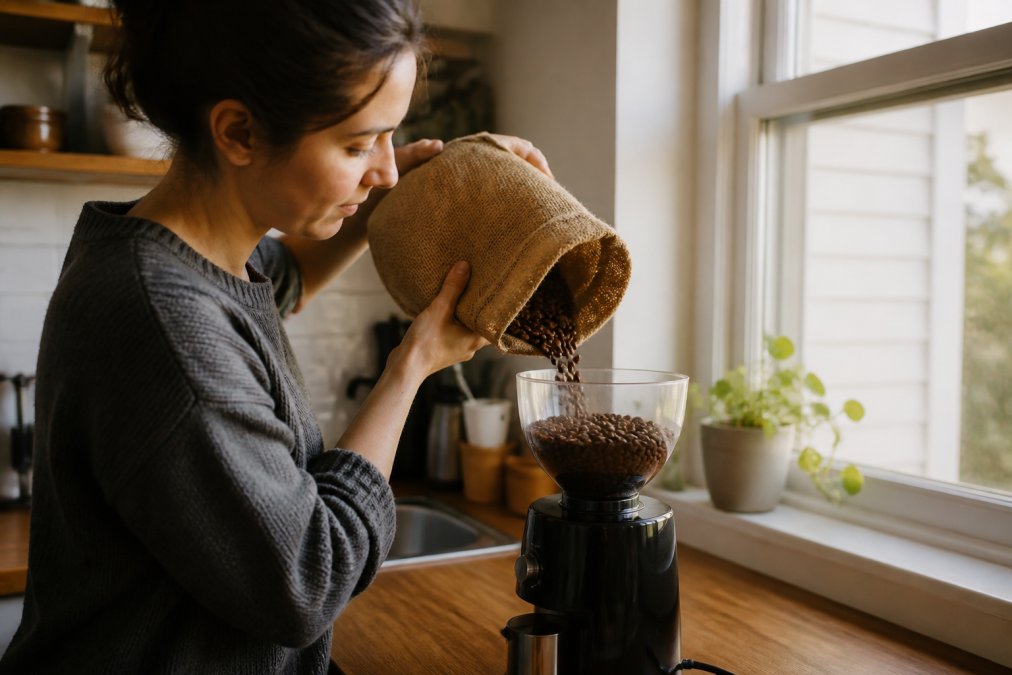
Fresh roasted coffee delivery is the practical payoff of buying direct. Roasting every batch to order means your coffee is roasted, packaged, and shipped within days, not weeks. A coffee collective alternative that roasts on demand protects the volatile compounds that give coffee its aroma and complexity. When beans sit in a warehouse or on a shelf, they lose the brightness and body that define a specialty coffee experience.
The Last Sip Coffee Roasters builds its fulfillment around this principle. With no inventory sitting in storage, each order triggers a fresh roast, and fast, reliable delivery gets the bag to you while the coffee is still vibrant. The difference is measurable in the cup: a smoother, more satisfying brew with the tasting notes the roaster intended. For a medium roast house blend drawn from Central and South America, that freshness translates to nutty and sweet chocolate flavors with a clean finish, not a flat, stale approximation.

Evaluating a Coffee Collective Alternative: What to Look For
When evaluating a coffee collective alternative, focus on four criteria: sourcing transparency, roast freshness, delivery reliability, and flexibility. A roaster should be able to tell you where beans come from. Look for explicit statements about direct relationships and environmental stewardship, not vague sustainability mission language. Certifications help, but a roaster's own sourcing practices often reveal more than a seal.
Roast freshness is easier to verify: check for a roast date on the bag and a fulfillment model that roasts to order. Delivery reliability matters for subscription logistics, so look for consistent shipping windows and responsive support. Finally, flexibility determines whether the service fits your life. A rigid schedule works for some, but hybrid workers often need to pause or adjust delivery without penalty. The table below summarizes what separates a direct roastery from a multi-brand collective.
| Evaluation Criteria | Direct Roastery | Aggregator Collective |
|---|---|---|
| Sourcing | Direct farmer relationships | Multiple roaster partners |
| Roast Timing | Roasted to order | Varies by roaster |
| Fulfillment | Single shipping leg | Repackaging adds delay |
| Price Transparency | Clear per-bag pricing | Subscription fees and markup |
| Flexibility | Adjust or pause easily | Often locked to a plan |
Where most comparison guides stop is the actual logistics of getting in and out of a subscription. This is the friction point that determines whether you stay with a service for a year or cancel after two months. Before you commit to any coffee subscription, test the cancellation and pause workflow. Most direct roasteries let you skip a delivery or change frequency from your account dashboard without contacting support. Aggregator platforms, by contrast, often route changes through a customer service ticket or require you to email a specific address. Some collectives lock you into a prepaid plan that makes pausing complicated; others charge a separate shipping fee if you skip too many consecutive deliveries.
A practical test: sign up for the service's email list and read the fine print on the checkout page. Look for language about minimum commitments, cancellation windows, and whether skipping a delivery resets your billing cycle. If the terms are buried or vague, that is a signal the company does not want you to leave easily. The best services state plainly: "Skip or cancel anytime from your account." The Last Sip Coffee Roasters follows this model, with no lock-in and no penalty for adjusting your cadence.
Flavor matching is another area where services diverge sharply. Some platforms use a detailed quiz that asks about brew method, preferred roast level, and tasting notes, then algorithmically match you to beans. Others require you to select from a catalog manually. A quiz can be useful if you are new to specialty coffee, but it can also lock you into a profile that does not evolve as your palate changes. Direct roasteries tend to favor manual selection, which gives you full control over each order. If you already know you prefer a medium roast with chocolate notes over a light, fruity natural process, manual selection is faster and more accurate than answering twenty questions.
Best Coffee Subscription for Hybrid Workers: Flexibility Matters
The best coffee subscription for hybrid workers balances freshness with a schedule that matches unpredictable weeks. Working from home often means brewing two or three cups on busy days and barely touching the grinder on others. A subscription that forces a fixed delivery cadence leads to stale coffee sitting in the pantry. Look for a service that lets you adjust frequency or skip deliveries without a support ticket.
The Last Sip Coffee Roasters keeps the ordering process simple because flexibility is built into the model. You choose your blend, and the roastery handles the rest, with reliable fulfillment that adapts to your pace. Whether you prefer the balanced profile of a breakfast blend or a stronger morning cup with Robusta for extra caffeine, you can switch roasts between orders. That adaptability, paired with fresh roasted coffee delivery, makes a direct roastery the practical choice for a home office where coffee consumption fluctuates week to week.
Cost-Benefit Analysis: Direct Purchase vs. Collective Fees
A direct purchase often delivers better value per cup once you account for what a collective charges. Aggregators bundle marketing, platform fees, and logistics into their pricing, which can add a premium on top of the roaster's own price. Buying direct removes those layers. A 16 oz bag of The Last Sip Coffee Roasters House Blend costs $19.99, and that price reflects the beans, the roast, and the shipping, not a marketplace markup.
Price transparency is another advantage. With a collective, you rarely know how much of your payment reaches the roaster versus the platform. Direct trade coffee benefits include clarity on where your money goes: more of it supports the farmer and the roastery. The trade-off is narrower selection. If your priority is exploring dozens of roasters monthly, a collective suits that goal. If your priority is a consistent, cafe-quality cup with known origins and peak freshness, the direct model can be a strong contender on both cost and quality.
Conclusion: Your Next Cup, Sourced with Purpose
Choosing a trade coffee collective alternative comes down to what you value in your morning ritual. If you want traceability, fair pay for farmers, and beans roasted to order, a direct roastery delivers those outcomes more reliably than a multi-brand marketplace. The trade-offs are real: less variety, but stronger relationships and fresher coffee in every bag.
Specialty Coffee Association research on direct trade sourcing models shows that consumers increasingly prioritize transparency and origin tracking in their purchasing decisions. The Last Sip Coffee Roasters meets that demand with carefully sourced beans, roasted to order, and delivered fast. Explore the House Blend or the Morning Roast Breakfast Blend, and taste the difference a direct relationship makes. Get started with The Last Sip Coffee Roasters and brew a cup sourced with purpose.
Frequently Asked Questions
How is buying direct from a roaster different from using a coffee collective?
A coffee collective acts as an intermediary, curating beans from various roasters and taking a cut. Buying direct, like from The Last Sip Coffee Roasters, means you purchase straight from the source. This direct-to-consumer model often ensures better price transparency and a closer connection to the roasting process.
What are the main benefits of direct trade coffee?
Direct trade coffee benefits include stronger relationships between roasters and farmers, often leading to higher-quality beans. It bypasses middlemen. For you, it results in fresher, traceable coffee with a clearer story about its origin.
Will I get fresher coffee from an independent roaster than a subscription service?
Yes, often you will. Independent roasters like The Last Sip roast to order, meaning your coffee is roasted and shipped promptly. Subscription aggregators often hold inventory from various roasters, which can add time between the roast date and your doorstep. Direct, fresh roasted coffee delivery maximizes flavor and aroma.
Is a coffee collective alternative suitable for hybrid workers who want flexibility?
Absolutely. The best coffee subscription for hybrid workers offers flexibility in delivery frequency and quantity. Instead of being locked into a rigid schedule, you can order when you need it. This prevents stale coffee and ensures you have a consistent, cafe-quality cup whether you are working from home or heading to the office.