
Table of Contents
- Why Coffee Lovers Outgrow Tea Runners
- Roast-to-Order Coffee Advantages Over Tea Delivery
- How to Choose a Coffee Subscription That Fits Your Routine
- The Last Sip: A Coffee Subscription Built for Hybrid Workers
- Comparing Costs: Tea Subscriptions vs. Specialty Coffee
- Avoiding Subscription Fatigue: Logistics and Flexibility
- Final Verdict: Making the Switch From Tea to Coffee
- Frequently Asked Questions
Last Updated: September 9, 2026
For coffee lovers, tea subscriptions often feel like a mismatch from the first sip. The delivery cycle, portion sizes, and flavor profiles are built around leaves, not beans. Finding a genuine tea runners alternative for coffee lovers means looking for a service that respects how coffee drinkers actually consume: smaller batches, fresher roasts, and bolder flavor options.
At The Last Sip Coffee Roasters, we roast every batch to order precisely because we understand this gap. A tea runners alternative for coffee lovers should deliver the same convenience and discovery you enjoyed, but with the depth and ritual that only freshly roasted specialty coffee provides.
Why Coffee Lovers Outgrow Tea Runners
Most coffee drinkers who try tea subscriptions hit the same wall: the coffee runs out far faster than the tea does. A coffee drinker consuming two to three cups daily needs roughly half a pound of beans per week. Many tea services emphasize herbal blends and single-estate leaves, which rarely satisfy someone craving a caramel-forward medium roast or a chocolatey dessert profile. What you need is a service that understands roast profiles, grind consistency, and the difference between a morning cup and an afternoon treat.
Roast-to-Order Coffee Advantages Over Tea Delivery
The core advantage of roast-to-order coffee is simple: flavor volatiles degrade quickly after roasting. Coffee is at its peak within the first two to four weeks, whereas tea can remain stable for months when stored properly. This means a tea runners alternative for coffee lovers must prioritize freshness above all else.
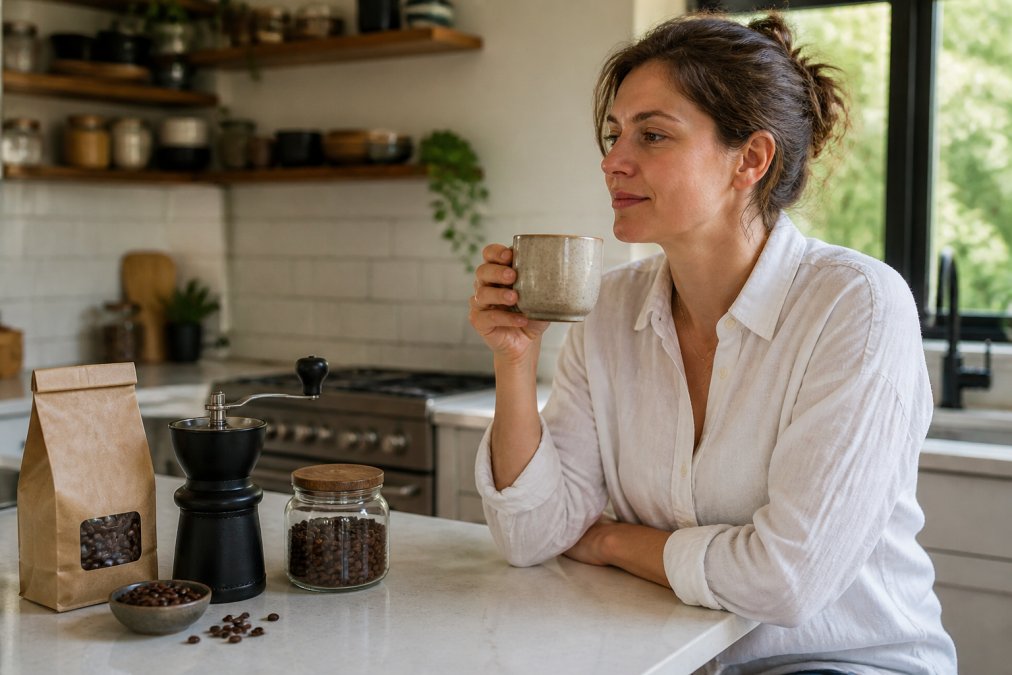
When beans are roasted to order and shipped immediately, you receive them at their aromatic peak. Grinding just before brewing releases oils and compounds that pre-ground supermarket coffee has already lost. Many coffee drinkers also appreciate the transparency that comes with small-batch roasting. You know exactly when your beans were roasted, where they were sourced, and how they were processed.
How to Choose a Coffee Subscription That Fits Your Routine
Choosing the best coffee subscription for hybrid workers starts with honestly assessing your consumption patterns. Hybrid workers typically brew one to two cups at home in the morning, which means a 12-ounce bag lasts roughly two weeks. Ordering more frequently in smaller quantities beats bulk ordering that leads to stale beans.
Consider your brewing method. Pour over enthusiasts need a consistent medium grind, while French press drinkers prefer a coarser cut. A subscription that offers whole bean with flexible grind options gives you control over your brew. Flavor preferences matter just as much as logistics. Some coffee lovers want single origin beans that showcase terroir, while others crave flavored blends that taste like dessert. The best services offer both, letting you rotate between a clean breakfast coffee and an indulgent afternoon treat without committing to a full bag of something you might not enjoy.
The Last Sip: A Coffee Subscription Built for Hybrid Workers
For hybrid workers who split their week between home and office, the ideal coffee subscription balances freshness with flexibility. You need beans that arrive shortly after roasting, in quantities that match your actual consumption, without forcing you to manage complex delivery schedules.
The Last Sip Coffee Roasters fits this profile by roasting every batch to order. There is no inventory sitting on a shelf waiting to go stale. Each order is roasted, flavored if requested, and shipped directly to your door, ensuring maximum flavor and aroma in every cup.
Cinnamon Roll Coffee Cinnabun: A Dessert-Lover's Daily Cup
For those who prefer their morning coffee to taste like a treat, the Cinnamon Roll Coffee Cinnabun delivers all the cinnamon roll flavor without the sugar or calories. It starts as specialty grade single origin coffee, roasted in small batches to a smooth medium, then carefully flavored with high quality oils while still warm.
This is a breakfast coffee that pulls double duty. It works beautifully as a hot drip brew to start the day, and it holds up well over ice for an afternoon pick-me-up. At $19.99 per bag, it replaces the urge to buy a cinnamon roll with your coffee, saving both calories and money.
Hazelnut and Chocolate Blends for Smooth, Sweet Mornings
If your palate leans toward nutty and chocolatey profiles, The Last Sip offers several options that pair well with a slow morning routine. The Hazelnut Flavored Coffee blends nutty hazelnut with Brazilian coffee for a smooth, aromatic cup. The Chocolate Hazelnut Blend Coffee combines rich chocolate and hazelnut for those days when you cannot decide between mocha or hazelnut.

For something a bit more complex, the Turtle Flavored Coffee brings together chocolate, caramel, and a hint of hazelnut. The Pecan Pie Flavored Coffee offers roasted pecans, caramelized sugar, and browned butter, making it a natural match for pour over or French press brewing. Each of these flavored coffees starts with specialty grade single origin beans, so you get genuine coffee character underneath the flavoring rather than a hollow, artificially sweet base.
| Product | Flavor Profile | Best Brewing Method | Price |
|---|---|---|---|
| Cinnamon Roll Coffee Cinnabun | Cinnamon, sweet, no added sugar | Drip, pour over, iced | $19.99 |
| Hazelnut Flavored Coffee | Nutty, smooth, Brazilian base | Drip, French press | $19.99 |
| Chocolate Hazelnut Blend | Chocolate, hazelnut, mocha-like | Drip, espresso | $19.99 |
| Turtle Flavored Coffee | Chocolate, caramel, hazelnut | Drip, cold brew | $19.99 |
| Pecan Pie Flavored Coffee | Roasted pecan, browned butter | Pour over, French press | $19.99 |
Comparing Costs: Tea Subscriptions vs. Specialty Coffee
The initial price tag of a tea subscription often looks more attractive than a specialty coffee bag. A monthly tea box might be $15, while a single 12-ounce bag of coffee is $20. But this comparison ignores the fundamental difference in how these products are consumed and the actual value delivered per serving.
The Real Math: Cost Per Cup
The most honest comparison is cost per brewed cup, not cost per shipment. A typical serving of loose-leaf tea uses 2 to 3 grams of leaves. A standard cup of coffee requires 15 to 18 grams of beans. This means a 12-ounce (340-gram) bag of coffee yields roughly 20 to 24 cups. A 4-ounce (113-gram) bag of premium loose-leaf tea yields about 38 to 56 cups.
Here is a side-by-side breakdown of the actual cost per cup:
| Subscription Type | Typical Price | Weight | Cups Yielded | Cost Per Cup |
|---|---|---|---|---|
| Premium Tea Box | $15.00 | 4 oz (113g) | ~40 cups | $0.38 |
| Retail Specialty Coffee | $16.00 | 12 oz (340g) | ~22 cups | $0.73 |
| Roast-to-Order Subscription | $19.99 | 12 oz (340g) | ~22 cups | $0.91 |
On the surface, tea appears to be the more economical choice. However, this math misses the core issue for a coffee lover: a single cup of tea does not replace a cup of coffee. If you are a coffee drinker who needs two cups to start the day, you would need to brew two or three cups of tea to feel the same effect, which immediately erases the cost advantage. When you factor in that a coffee drinker would consume 2-3 cups of tea to replace one cup of coffee, the cost per 'effective serving' is nearly identical.
What Your Money Actually Buys
The price difference also reflects a fundamentally different production and distribution model. The cost of a tea subscription primarily covers the leaf and the blending process. The cost of a specialty coffee subscription covers a more complex chain: sourcing green beans at origin, paying above commodity prices for quality, the energy-intensive roasting process, and the rapid logistics required to deliver a perishable product.
According to the Specialty Coffee Association's research on pricing, price transparency in coffee helps consumers understand what they are paying for at every stage of the supply chain. When you buy a $19.99 bag of roasted-to-order coffee, you are paying for:
- The raw material: Specialty-grade green beans cost significantly more than commercial-grade or commodity beans.
- The craft: Small-batch roasting is labor-intensive and requires skill to develop flavor without introducing defects.
- The logistics: Direct-to-consumer shipping of a fresh product requires faster turnaround and more careful packaging than shipping shelf-stable tea.
- The waste: Coffee is a perishable product. A roaster that does not hold inventory is absorbing the cost of unsold product, which is reflected in the price.
The Hidden Cost of Wasted Coffee
The most expensive coffee is the coffee you throw away. A $15 bag of retail coffee that goes stale after three weeks and gets tossed is a worse investment than a $20 bag that is consumed at its peak. When you buy from a service that roasts to order, you are paying for the assurance that the product will be at its best when it arrives, reducing the likelihood of waste.
The Value of the Experience
Finally, consider the subjective value. A tea subscription offers a moment of calm. A coffee subscription offers a ritual that is often tied to productivity and focus. For a coffee lover, the cost per cup is not just about caffeine delivery; it is about the sensory experience of a well-roasted, freshly ground bean. If a $1.00 cup of coffee replaces a $5.00 cafe latte, the subscription is not a luxury; it is a cost-saving measure.
Avoiding Subscription Fatigue: Logistics and Flexibility
The most common reason people cancel a coffee subscription is often the friction of managing the delivery. To avoid this, you need to understand the specific mechanics of how a service handles scheduling, pausing, and cancellation before you commit.
The Three Friction Points That Kill Subscriptions
There are three primary points of friction that can lead to churn:
- The Rigid Schedule: Many services auto-ship on a fixed date (e.g., the 1st of every month). This fails to account for travel, changes in consumption, or the fact that you might still have half a bag left. If you cannot easily shift your delivery date, you will eventually receive coffee you do not need, which leads to waste and resentment.
- The Opaque Cancellation Flow: Some companies make it easy to sign up but bury the cancellation option behind multiple pages, requiring a phone call or a chat with a retention agent. This creates a hostile experience. The best services treat cancellation as a simple, self-serve option in your account dashboard.
- The 'Skip' Penalty: A flexible service should allow you to skip a delivery without penalty. Some services limit the number of skips per year or require you to 'reactivate' by a certain date. This adds mental overhead that makes the subscription feel like a chore.
A Practical Checklist for Evaluating Flexibility
Before you subscribe, check the service's FAQ or help center for answers to these specific questions:
- Can I change my delivery date for the next shipment only? (Look for a calendar-based scheduler, not just a frequency selector).
- Can I pause my subscription indefinitely? (Some services allow a 'pause' that is effectively a cancellation without losing your profile and preferences).
- Is there a penalty for skipping a shipment? (The answer should be a clear 'no').
- Can I cancel directly from my account page? (If the only way to cancel is to email support, that is a red flag).
- What happens to my 'coffee credits' if I cancel? (Some services operate on a credit system; understand if those are refundable).
The 'Set and Forget' vs. 'On-Demand' Model
There are two distinct operational models for coffee delivery:
- The 'Set and Forget' Model: This is a traditional subscription. You choose a frequency (e.g., every 2 weeks) and the service auto-charges you and ships until you cancel. This is convenient for consistent drinkers but requires active management to avoid over-delivery.
- The 'On-Demand' Model: This is a hybrid. You store your preferences (grind size, bean type) in your profile, but you only order when you need a new bag. This eliminates the risk of stale coffee and subscription fatigue entirely. You get the convenience of a saved profile without the commitment of a recurring charge.
For a hybrid worker whose consumption varies week to week, the on-demand model is often the superior choice. It provides the flexibility to order a bag when you are running low, rather than being forced to accept a shipment that arrives when you are traveling or have a surplus.
The Role of the 'Pause' Button
A well-designed pause function is the single most important feature for preventing churn. It allows you to take a break without losing your preferences, your grind settings, or your place in a loyalty program. If a service makes pausing difficult, it is a sign that they are prioritizing their cash flow over your experience.
Research on subscription logistics and consumer behavior shows that delivery flexibility is one of the strongest predictors of subscription longevity. Consumers who can adjust their schedule are far less likely to churn than those locked into fixed intervals. The research indicates that the ability to 'skip a month' without friction increases customer lifetime value by reducing the need for a full cancellation.
Why This Matters for the Coffee Lover
The goal of a coffee subscription is to ensure you always have fresh beans on hand, not to create a new administrative burden. The best services understand that their role is to be a reliable pantry staple, not a demanding vendor. By prioritizing logistics and flexibility, you can enjoy the discovery and quality of a curated coffee service without the anxiety of a rigid commitment.
Final Verdict: Making the Switch From Tea to Coffee
Switching from a tea subscription to a coffee subscription does not mean giving up the joy of discovery. It means finding a service that delivers the same anticipation with a product that matches your daily habits. The best coffee subscriptions for hybrid workers offer roast-to-order freshness, flexible delivery, and flavor options that keep mornings interesting.
The National Coffee Association's guide to coffee freshness emphasizes that whole bean coffee maintains its quality for about a month when stored properly, which makes frequent, smaller shipments the right call for most households. If you drink less than a bag every two weeks, consider a service that lets you order on demand rather than committing to a rigid schedule.
The Last Sip Coffee Roasters checks these boxes with roasted-to-order batches, carefully sourced specialty grade beans, and fast, reliable delivery. With a simple ordering process and no inventory sitting around, you get a smooth, satisfying cup from the first sip to the last. That makes it a strong tea runners alternative for coffee lovers who want freshness without the hassle.
Making the switch from tea to coffee does not have to mean sacrificing convenience or discovery. The challenge is finding a service that roasts to order, delivers reliably, and offers flavors that keep you excited about your morning ritual. The Last Sip Coffee Roasters delivers maximum flavor and aroma through small-batch roasting, carefully sourced beans, and a straightforward ordering process. Get started with The Last Sip Coffee Roasters and taste the difference that freshness makes in every cup.
Frequently Asked Questions
What makes a coffee subscription better than Tea Runners for coffee lovers?
Tea Runners excels at tea variety, but a coffee subscription like The Last Sip delivers beans roasted after you order. That timing protects volatile flavor compounds that degrade within weeks. You get a roast date on the bag, not just a best-by date. For coffee drinkers, this freshness gap matters more than the curation model. You also control grind size and roast level.
How do I know if a roast-to-order coffee subscription is worth the price?
Compare $19.99 per 12-ounce bag against what you pay for premium beans at a grocery store. Roast-to-order advantages include beans hitting peak flavor 3 to 10 days after roasting, not after months in a warehouse. You are paying for small-batch roasting and the assurance of fresh beans. If you drink 2 cups daily, the cost per cup stays under $1.
Can I switch from a tea subscription without losing variety?
Yes. Flavored coffees like Cinnamon Roll, Hazelnut, and Pecan Pie provide the rotating flavor experience tea clubs offer, but with a deeper body and higher caffeine content. The Last Sip roasts single-origin beans in small batches, and you can order different flavors without committing to a rigid schedule. That gives you the discovery element of Tea Runners with coffee's intensity.
What is the best coffee subscription for hybrid workers who brew at home?
Look for subscriptions that match your consumption pace. Hybrid workers who brew 2 to 3 cups weekly should order smaller batches more frequently to avoid staleness. The Last Sip roasts to order and ships fast, so beans arrive within their optimal window. Flexible delivery scheduling is essential, since home brewing volume fluctuates with your remote versus office days.
How is The Last Sip different from other premium coffee subscriptions?
The Last Sip eliminates the lag between roasting and shipping. Your order is roasted after you place it, not pulled from a warehouse shelf. That means the coffee you brew is at its peak aromatic potential. The lineup focuses on naturally flavored, dessert-inspired medium roasts like Turtle and Chocolate Hazelnut.