
Table of Contents
- Why Your Afternoon Coffee Might Be Working Against You
- Best Water Temperature for Brewing Green Tea (and Other Alternatives)
- Top Natural Alternatives to Caffeinated Coffee for Afternoon
- How to Avoid Afternoon Energy Crash
- Taste Profile Mapping: Finding Your Perfect Afternoon Sip
- Preparation Methods for Office Settings
- Conclusion: Your Afternoon Upgrade
- Frequently Asked Questions
Last Updated: September 23, 2026
Why Your Afternoon Coffee Might Be Working Against You
That 2 p.m. cup feels like a rescue, but it often sets up a harder crash an hour later. For many people, natural alternatives to caffeinated coffee for afternoon hours solve the problem that a second or third coffee creates. At The Last Sip Coffee Roasters, we roast every batch to order, so we think hard about what actually belongs in your cup and when.
The issue is timing. Caffeine blocks adenosine, the molecule that builds up through the day and makes you sleepy. When you drink coffee at 2 p.m., you are borrowing energy from 9 p.m. According to the FDA guidance on caffeine and how the body processes it, caffeine's effects can last for hours, and sensitivity varies widely from person to person.
The result: jitters now, poor sleep later, and a deeper slump tomorrow.
Best Water Temperature for Brewing Green Tea (and Other Alternatives)
The best water temperature for brewing green tea is 160-180°F, not a rolling boil. Water that hot scalds the leaves and turns a delicate cup bitter and astringent.
Temperature matters more than most people expect. Green tea, white tea, and jasmine-style blends want cooler water. Herbal infusions built on rooibos or hibiscus need full boiling water at 212°F to pull out flavor.
| Beverage Type | Water Temperature | Steep Time |
|---|---|---|
| Green tea, jasmine | 160-180°F | 2-3 minutes |
| Herbal infusions, rooibos, hibiscus | 212°F | 5-10 minutes |
| Matcha, hojicha powder | 175°F | Whisk, no steeping |
A simple kitchen thermometer removes the guesswork. If you brew by eye, let the kettle rest for two minutes after it boils before pouring over green tea.
Top Natural Alternatives to Caffeinated Coffee for Afternoon
The best natural alternatives to caffeinated coffee for afternoon energy are caffeine-free or low-caffeine drinks that support focus without spiking cortisol. The goal is steady energy, not a jolt.
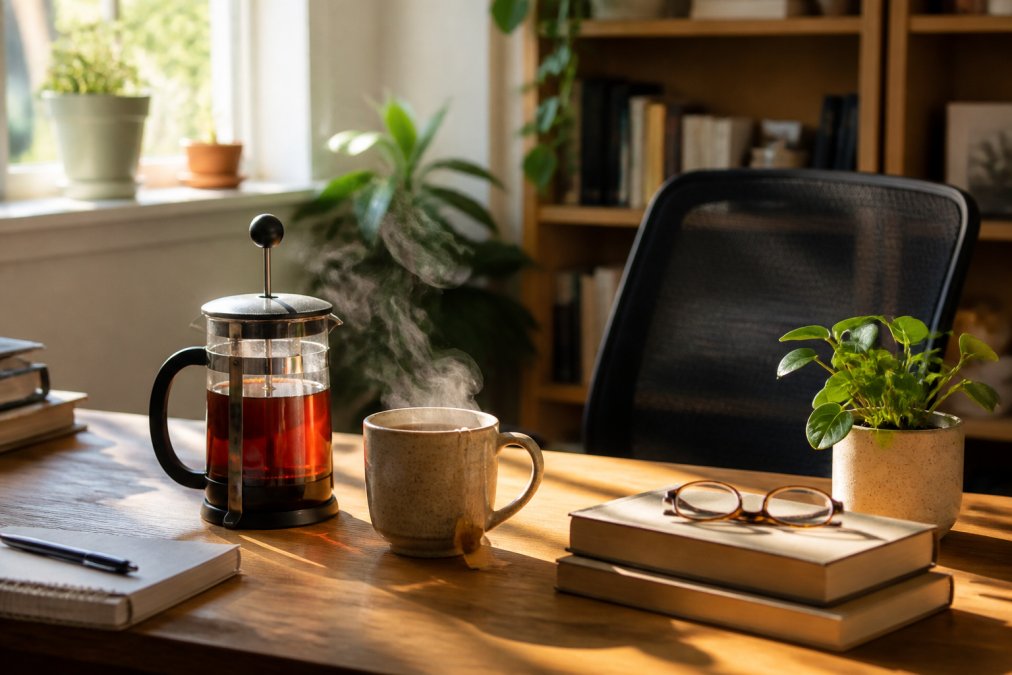
Below are the categories worth trying, with honest trade-offs for each.
Herbal Teas: Caffeine-Free and Comforting
Herbal teas are caffeine-free by nature, which makes them the safest afternoon swap. They deliver flavor and ritual without touching your sleep.
Peach Paradise Herbal Tea ($17.99) is fruity, smooth, and sweet, with peach, cranberry, and rose. It works hot or poured over ice. Pros: caffeine-free, refreshing, good iced. Cons: the fruit-forward profile may read as light if you want a bold cup.
Apple Cider Rooibos Tea ($17.99) brings cinnamon, orange peel, and natural spices over red bush tea. Rooibos is naturally caffeine-free and smooth. Pros: cozy, spiced, great year-round. Cons: naturally mild, so some drinkers add extra spice.
Hibiscus Berry Tea ($17.99) is tart, sweet, and full-bodied, with organic hibiscus, rosehips, and rooibos. Pros: bold flavor, excellent cold-brewed. Cons: oversteeping makes it sharply tart.
Decaf Coffee: The Familiar Choice
Decaf keeps the ritual intact without the stimulant. That matters if the habit itself is what you enjoy.
Our Peru Decaf Coffee ($19.99) is a medium roast with caramel sweetness and a citrus finish, decaffeinated using the Swiss Water Process. Pros: single origin, smooth, clean finish. Cons: you lose the caffeine lift entirely, so pair it with a short walk if you need a nudge.

If you want flavor without the plain cup, Dubai Chocolate Coffee ($19.99) is a medium roast with chocolate and pistachio notes, available in regular or decaf. Pros: dessert-like, available decaf. Cons: flavored coffee is not for purists.
Other Beverages: Golden Milk, Chicory, and More
Golden milk, chicory root, and adaptogenic blends round out the list. Each offers a different texture and taste.
- Golden milk: warm milk with turmeric and spices. Caffeine-free and soothing.
- Chicory root: roasted and brewed like coffee, naturally caffeine-free, with an earthy flavor.
- Adaptogenic blends: often built on mushrooms or herbs, marketed for calm focus.
For a roasted, toasty option, Hojicha Powder ($22.99) is a stone-milled Japanese green tea with low caffeine and a naturally sweet, toasted cereal flavor. Pros: warm and grounding. Cons: still contains some caffeine.
How to Avoid Afternoon Energy Crash
The most reliable way to avoid an afternoon energy crash is to stop treating it with more stimulant. Fix the inputs before you fix the cup.
Why the Slump Hits Around 2 to 3 p.m.
The afternoon slump is not imaginary. Two things stack up at once. First, adenosine, the molecule that builds up in your brain the longer you are awake, reaches a meaningful level by early afternoon. Caffeine works by blocking adenosine receptors, which is why a 2 p.m. cup feels like a rescue. Second, your core body temperature and alertness follow a circadian dip in the early-to-mid afternoon, a pattern the CDC guidance on sleep and daily rhythms describes as part of the normal daily rhythm.
That combination is why the slump feels physical, not just mental. It is also why a second coffee works for about an hour and then makes the next dip worse: the adenosine was never cleared, only masked.
What Actually Helps at 3 p.m.
A common mistake is skipping lunch, then reaching for coffee at 3 p.m. Blood sugar swings drive more afternoon fatigue than most people realize. Eat protein and fiber at midday, and drink water before you brew anything.
A short walk, bright light, and a glass of water often beat a third coffee. Try those first. Ten minutes of daylight and movement does more for the circadian dip than most people expect, and it does not borrow energy from tonight.
The Caffeine Half-Life Problem
Caffeine has a half-life of roughly 5 hours in most adults, meaning half of a 2 p.m. cup is still circulating around 7 p.m. That is the mechanism behind the loop: caffeine now, poorer sleep tonight, deeper slump tomorrow. Sensitivity varies widely, and the FDA guidance on caffeine and how the body processes it notes that how long caffeine lasts depends on the person.
If you slept poorly, no beverage fixes that. A caffeine-free cup at 3 p.m. protects your sleep; a caffeinated one pushes it later.
Taste Profile Mapping: Finding Your Perfect Afternoon Sip
Taste profile mapping means matching a drink's flavor and body to what you actually crave at 2 p.m. Most people pick by habit, not by preference.
Ask three questions:
- Do you want roast or fruit? Roasted and nutty points to hojicha or chicory. Fruity points to hibiscus or peach.
- Do you want body or lightness? Full-bodied points to rooibos and hibiscus. Light points to jasmine.
- Do you want hot or iced? Herbal blends like hibiscus and peach brew beautifully cold.
For a floral, smooth cup, Jasmine Tea ($17.99) is medium-bodied and sweet, and it holds up to multiple steepings. Pros: delicate and calming. Cons: it contains green tea caffeine, so keep it early.
If you want spice and warmth, Masala Chai Tea ($17.99) delivers black tea with green cardamom. Pros: bold and aromatic. Cons: caffeinated, so it is a morning drink.
Preparation Methods for Office Settings
Office-friendly preparation comes down to three things: no mess, no noise, and no waiting. Choose a method that fits your desk, not your kitchen.
Here is what works in practice:
- Tea sachets or infusers: steep in your mug, no equipment, easiest cleanup.
- Electric kettle with temperature settings: precise control for green tea and matcha.
- Cold brew in a sealed bottle: brew hibiscus or peach overnight, drink it cold all afternoon.
- Hojicha or matcha powder: whisk into hot water, no steeping, no leaves to strain.
A common mistake is oversteeping because you got pulled into a meeting. Set a timer.
Conclusion: Your Afternoon Upgrade
The hardest part is not finding a substitute. It is breaking the reflex that says tired equals more coffee.
Frequently Asked Questions
What can I replace my afternoon coffee with for sustained energy?
Try caffeine-free herbal teas like rooibos or hibiscus, which provide hydration without a crash. For a coffee-like experience, choose decaf coffee such as Peru Decaf, which uses the Swiss Water Process to remove caffeine while keeping smooth caramel and citrus notes. Pair with a protein-rich snack to stabilize blood sugar and maintain focus.
How do herbal teas compare to coffee for afternoon alertness?
Herbal teas are caffeine-free, so they won't give the immediate jolt of coffee, but they can support alertness through hydration and natural compounds. For example, rooibos is naturally caffeine-free and smooth, while hibiscus berry tea offers a refreshing tartness.
What is the best water temperature for brewing green tea?
The ideal water temperature for brewing green tea is between 160°F and 180°F. Water that's too hot can make green tea bitter; too cool and the flavor won't fully develop. For example, Moroccan Mint Tea recommends steeping at 185°F for 2-3 minutes. Use a thermometer or let boiling water cool for a few minutes before pouring.
How can I avoid the afternoon energy crash without caffeine?
To avoid the afternoon energy crash, focus on hydration, balanced snacks, and gentle movement. Drink caffeine-free beverages like Peach Paradise herbal tea or Hibiscus Berry Tea to stay hydrated. Pair with protein or fiber-rich foods to keep blood sugar stable. A short walk or stretching can also boost circulation and alertness without stimulants.
Are there natural caffeine-free drinks that improve afternoon focus?
Yes, several caffeine-free options can support focus. Herbal teas like peppermint or rooibos provide hydration and may have calming effects. Golden milk with turmeric is anti-inflammatory and soothing. Chicory root coffee alternative offers a rich, roasted flavor without caffeine. Staying hydrated with lemon water also helps maintain mental clarity.