
Table of Contents
- The Real Cost of Shade Grown Coffee: What You Pay For
- Benefits of Shade Grown Coffee: Flavor, Ecology, and Longevity
- Organic Coffee Certification Standards: What the Labels Actually Mean
- Bird Friendly Coffee vs Shade Grown: Untangling the Certifications
- Greenwashing vs. Authentic Certification: How to Spot the Difference
- Brewing Adjustments for Shade Grown Beans
- Verdict: Is Organic Shade Grown Coffee Worth It for You?
- Frequently Asked Questions
Last Updated: September 13, 2026
The Real Cost of Shade Grown Coffee: What You Pay For
Walk down any coffee aisle and you'll notice the premium on bags labeled organic and shade grown. The question worth asking is whether that premium reflects genuine value or clever marketing. At The Last Sip Coffee Roasters, we source carefully selected beans, and the difference shows up in the cup long before it shows up on a receipt.
Shade grown coffee is coffee cultivated under a canopy of trees rather than in direct sunlight, a method that slows bean maturation and typically produces denser, more flavorful beans. The price gap between conventional and shade-grown beans isn't arbitrary. It reflects real differences in farming costs, yield volumes, and the labor required to maintain diverse canopy systems.
Where the Premium Actually Comes From
Most buyers assume the upcharge is pure marketing margin. In practice, it maps to four cost centers that sun-grown operations don't carry:
- Yield reduction. A shaded plot produces less fruit per acre than a full-sun plot, because trees compete for light, water, and nutrients. The farmer harvests fewer cherries from the same land.
- Canopy maintenance. Shade trees must be pruned, replanted, and managed for species diversity. That's skilled labor spread across the whole growing cycle, not just harvest.
- Hand-picking at peak ripeness. Shade slows and staggers maturation, so cherries ripen unevenly. Selective hand-picking replaces strip-picking, which raises labor cost per pound.
- Certification and audit fees. USDA Organic, Bird Friendly, and Rainforest Alliance all charge application, inspection, and renewal fees, plus the record-keeping burden of proving compliance year over year.
A Consumer Cost-Benefit Framework
Rather than asking "is it worth it" in the abstract, run your own numbers. The premium on certified organic shade-grown beans typically lands in the range of a meaningful percentage above commodity-tier coffee, though the exact spread varies widely by origin, roast, and retailer. For our Latin American Coffee Blend, which is shade grown, the price is $19.99. Here's how to decide whether that spread buys you something:

- Calculate your annual coffee spend. Multiply your weekly bag cost by 52. A modest per-bag premium compounds fast across a year.
- Weigh flavor against your brewing method. If you drink drip coffee with cream and sugar, the flavor delta between tiers narrows. If you drink pour-over or espresso black, the difference in sweetness and acidity is far more legible.
- Decide what the non-flavor attributes are worth to you. Bird habitat, soil health, and supply-chain traceability are real outputs, but they're only "worth it" if you actually value them.
- Test before committing. Buy a single 12-ounce bag of certified shade-grown coffee and brew it side by side with your usual bean using the same recipe. Let your palate, not the label, cast the vote.
The Honest Trade-Off
Conventional farms maximize output per acre. Shade-grown operations accept lower yields in exchange for better bean quality and healthier ecosystems. That trade-off is the core of why the price differs, and why the premium is defensible when the certifications are real. The mistake is paying a shade-grown price for a bag whose only proof is a word printed on the front. If the seal and the farm name aren't there, you're funding a claim, not a practice.
Benefits of Shade Grown Coffee: Flavor, Ecology, and Longevity
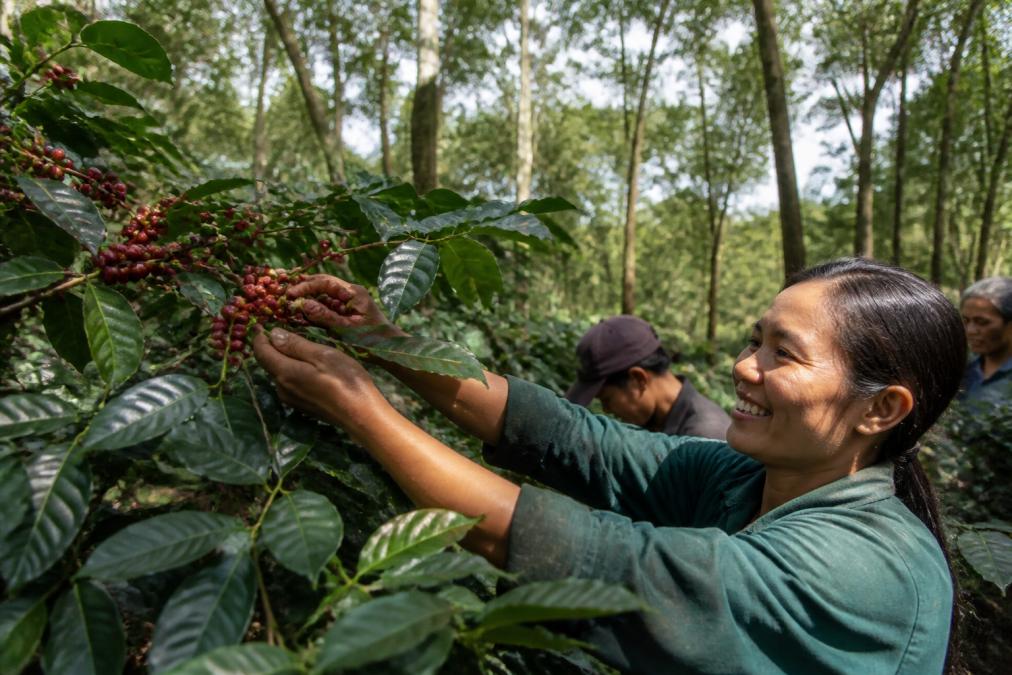
The benefits of shade grown coffee extend far beyond a single cup. Slower maturation under canopy cover allows sugars to develop more fully in the coffee cherries, which translates to a sweeter, more complex flavor profile. Farms that maintain diverse shade trees also support migratory birds, natural pollinators, and healthier soil through reduced erosion.
How Shade Trees Change Bean Maturation and Flavor
Coffee plants evolved as understory species. When grown under direct sun, they're pushed to produce faster, often at the expense of flavor complexity. Shade slows the process. That extra time on the branch lets the bean develop the sugars and acids that define a memorable cup. In practice, this means shade-grown beans often show brighter acidity, deeper body, and more layered tasting notes than their sun-grown counterparts.
Organic Coffee Certification Standards: What the Labels Actually Mean
Organic certification in the United States is governed by the USDA National Organic Program, which sets strict standards for soil management, pest control, and the use of synthetic substances. For coffee to carry the USDA Organic seal, it must be grown on land free from prohibited substances for at least three years before harvest and processed through certified facilities.
The USDA National Organic Program standards outline specific requirements for crop production, handling, and labeling. Understanding these standards matters because "organic" and "shade grown" are separate claims. A coffee can be certified organic while grown in full sun, and a shade-grown coffee isn't automatically organic unless it carries the certification.
Bird Friendly Coffee vs Shade Grown: Untangling the Certifications
Bird Friendly certification, administered by the Smithsonian Migratory Bird Center, is the most rigorous shade standard available. It requires specific canopy height, foliage cover, and native tree species diversity that go well beyond what "shade grown" alone implies. A coffee can be shade grown without meeting Bird Friendly requirements.
Here's the practical distinction:
- Shade grown describes a general farming approach with no unified certification standard
- Bird Friendly requires verified canopy structure, native species, and organic certification
- Organic addresses chemical inputs but says nothing about tree cover
The Smithsonian Migratory Bird Center's Bird Friendly program sets the benchmark that other shade certifications are measured against. If habitat preservation is your priority, Bird Friendly is the label to look for.
Greenwashing vs. Authentic Certification: How to Spot the Difference
Vague terms like "shade grown" and "eco-friendly" appear on packaging with no legal definition or third-party verification. This is where greenwashing thrives. A roaster can print "shade grown" on a bag without any farm-level proof.
Three signals separate authentic certification from marketing language:
- A certifier's seal (USDA Organic, Bird Friendly, Rainforest Alliance) with a traceable certification number
- Farm-level transparency naming the cooperative or estate
- Specific claims like "grown under 40% canopy cover" rather than generic environmental language
When a bag says "shade grown" but carries no seal and names no farm, treat the claim as unverified. The Federal Trade Commission's Green Guides set the standards for environmental marketing claims, and vague terms without substantiation can run afoul of them.
Brewing Adjustments for Shade Grown Beans
Shade-grown beans often have a denser structure and slightly different moisture content than sun-grown beans. That density means they can handle a slightly finer grind and extract more evenly. Start with your usual ratio, then adjust:
- Grind: Go one step finer than you would for a comparable sun-grown bean
- Water temperature: 200-205°F works well for most medium and medium-dark roasts
- Ratio: Begin at 1:15 (coffee to water) and adjust toward 1:16 for brighter cups
- Time: Expect a slightly longer extraction window, around 2:45 to 3:15 for pour-over
Why the Beans Behave Differently
The mechanism matters more than the recipe. Slower maturation under canopy cover gives the bean more time to develop cell structure, which tends to produce higher density and lower internal moisture. Denser beans resist water penetration longer, so they extract more slowly and more evenly than a porous, fast-grown bean. That's why a recipe dialed in for commodity coffee can taste thin or sour when you swap in shade-grown beans without adjusting anything else.
Troubleshooting by Brew Method
If your first cup with shade-grown beans misses, the fix usually depends on how you brew:
- Pour-over tastes sour or underdeveloped: The grind is too coarse for the bean's density. Step finer in small increments and extend the bloom to 45 seconds so the bed saturates fully.
- Pour-over tastes bitter or hollow: You've overcorrected. Back the grind off one notch and drop the water temperature by about 5°F.
- Espresso runs too fast: Dense beans need a finer grind to build resistance. Tighten the grind and watch the shot time rather than the scale.
- Espresso runs too slow or channels: The puck is over-compressed or the dose is too high. Reduce the dose slightly before you coarsen the grind.
- French press tastes muddy: Dense beans throw fewer fines, so a slightly coarser grind and a full four-minute steep usually cleans the cup up.
A Note on Roast Level
Roast level changes the equation more than the farming method does. A dark roast is more porous regardless of how it was grown, so the density advantage narrows and your standard recipe may work fine. The adjustments above matter most with light and medium roasts, where the bean's original structure survives the roast. Buy from a roaster who prints the roast date, and give the beans a few days to rest after roasting before you chase a recipe, fresh beans degas and brew differently than week-old ones.
Most guides skip this step entirely, which is why some drinkers brew excellent shade-grown beans and wonder why the cup tastes thin. The beans aren't the problem. The recipe is.
Verdict: Is Organic Shade Grown Coffee Worth It for You?
For drinkers who care about flavor complexity, environmental impact, and supporting sustainable agriculture, organic shade grown coffee earns its premium. The combination of slower bean maturation, verified ecological practices, and traceable sourcing produces a cup that's genuinely different from commodity coffee. The cost-benefit math favors shade grown when you factor in flavor, the environmental footprint of your purchase, and the supply chain transparency that certified beans provide.
For budget-focused drinkers who treat coffee as pure caffeine delivery, conventional beans will do the job. There's no shame in that. But if your morning cup is a ritual rather than a refill, the difference is worth paying for.
At The Last Sip Coffee Roasters, our Latin American Coffee Blend is shade grown in Central American rain forests and volcanic soil near the Amazon, roasted to order so it arrives at peak freshness. It's a straightforward way to taste what shade-grown farming actually delivers.
Frequently Asked Questions
Is shade-grown coffee better for flavor?
Many coffee enthusiasts find shade-grown beans have a more nuanced flavor profile. Slower bean maturation under canopy cover allows sugars to develop more fully, often resulting in notes of cocoa, nuts, and mild fruit. The Latin American Coffee Blend from The Last Sip Coffee Roasters, for example, is shade grown and offers nutty hints with a gentle cocoa aftertaste. However, flavor also depends on roast level and brewing method, so shade growing alone does not guarantee a better cup.
What is the difference between bird-friendly and shade-grown coffee?
Shade-grown coffee simply means the beans were cultivated under a canopy of trees. Bird-friendly certification, administered by the Smithsonian Migratory Bird Center, requires strict shade density, native tree species, and organic practices. All bird-friendly coffee is shade grown, but not all shade-grown coffee meets bird-friendly standards. If habitat preservation for migratory birds is your priority, look for the Bird Friendly seal specifically.
Does organic certification guarantee higher quality coffee?
No. Organic coffee certification standards prohibit synthetic pesticides and fertilizers, but they do not address flavor, freshness, or roast quality. A certified organic bean can still be stale or poorly roasted. Quality depends on sourcing, processing, and roast date. Look for a roast-to-order model, like The Last Sip Coffee Roasters uses, to ensure maximum flavor and aroma regardless of certification.
Is it worth paying a premium for organic shade grown coffee?
The premium for specialty, shade-grown beans like our Latin American Coffee Blend ($19.99) reflects the investment in sustainable agriculture, biodiversity, and often better flavor. If you drink coffee daily and value environmental stewardship, the cost per cup is a small investment for a premium experience. For casual drinkers, the difference may not justify the price. Consider your consumption habits and priorities before deciding.
Choosing coffee that aligns with your values shouldn't require a research degree. The Last Sip Coffee Roasters roasts every batch to order, sources carefully selected shade-grown beans, and delivers them fresh to your door with a simple ordering process. If you want maximum flavor and aroma without the guesswork, get started with The Last Sip Coffee Roasters and taste the difference freshness makes.