
Table of Contents
- What Makes Coffee Truly Fresh? The Markers That Matter
- How Long Does Coffee Stay Fresh After Roasting?
- How to Buy Freshly Roasted Coffee Beans Online Without Getting Burned
- Quick Comparison: Freshness-First Coffee Options
- The Last Sip Coffee Roasters: Roasted to Order, Shipped Fast
- How Brewing Method Changes Your Perception of Freshness
- Storage, Shipping, and Sustainability: Protecting Freshness End to End
- Frequently Asked Questions
Last Updated: September 12, 2026
What Makes Coffee Truly Fresh? The Markers That Matter
The freshest coffee you can buy is whole bean coffee that carries a printed roast date within the last 7 to 14 days and arrives in airtight packaging with a one-way valve (sca.coffee). Roast date, not price or packaging design, is the single most reliable freshness marker on any bag.

This guide from The Last Sip Coffee Roasters breaks down how to read those markers, how long coffee actually stays fresh after roasting, and which formats deliver the best cup.
Freshness in coffee is not a marketing slogan. It is a measurable window that starts the moment beans leave the roaster and begins closing the moment they meet oxygen. Three variables determine where a bag sits inside that window: how recently it was roasted, how it was packaged, and how it was stored before it reached you.
Roasted to order is the strongest signal a roaster can send. It means your beans were roasted after you placed your order, not pulled from a warehouse pallet. Small batch roasting supports this model because short runs make it practical to roast against demand rather than forecast.
Roast Date vs. Best By Date: What the Label Actually Tells You
A roast date tells you when the coffee was roasted. A best by date tells you when the roaster believes the coffee stops tasting acceptable, and it is usually calculated from an unstated roast date.
That distinction matters more than most buyers realize. A best by date can sit six to twelve months out from roasting, which means a bag on the shelf today may already be months old. A roast date leaves nothing to interpretation.
| Label Element | What It Tells You | What It Hides |
|---|---|---|
| Roast date | Exact day beans left the roaster | Nothing |
| Best by date | A window chosen by the roaster | The actual roast date |
| "Packed on" date | When the bag was filled | When the beans were roasted |
| No date at all | Nothing useful | Everything |
If a bag carries no roast date, treat it as an unknown quantity. Specialty coffee roasters who stand behind freshness print the date.
How Long Does Coffee Stay Fresh After Roasting?
Coffee stays at peak flavor for roughly 7 to 21 days after roasting, depending on the bean, the roast level, and how the bag is stored (peer-reviewed research). After that window, oxidation steadily flattens the aroma profile and mutes the flavor notes that made the coffee distinctive.
The timeline is not uniform. Dark roasts tend to fade faster because their oils sit closer to the surface and meet oxygen sooner. Lighter roasts hold their acidity and brightness longer, though they need a longer rest before brewing.
The Degassing Window: Why the First 14 Days Matter
Freshly roasted coffee releases carbon dioxide for days after roasting. This process, called degassing, is why a sealed bag with a one-way valve puffs up in its first week.
The one-way valve exists for exactly this reason. It lets carbon dioxide escape without letting oxygen in, which protects the beans from the oxidation that causes staleness.
Here is the part most guides skip: degassing is not a flaw to wait out. It is the reason a coffee can taste flat on day two and remarkable on day ten. Brew too early and the escaping gas disrupts extraction, producing an uneven cup. Brew inside the freshness window and the bean has settled into its full character.
A practical rule: give espresso a rest of 7 to 14 days after the roast date, and pour-over or drip a rest of 3 to 7 days. Whole bean coffee holds its peak longer than pre-ground because grinding multiplies the surface area exposed to oxygen.
How to Buy Freshly Roasted Coffee Beans Online Without Getting Burned
Buying coffee online comes down to verifying three things before you check out: the roast date policy, the shipping speed, and the packaging format. Get those right and you can buy freshly roasted coffee beans online with confidence.
Ask these questions of any roaster:
- Does the site print a roast date on every bag, or only on some?
- How fast does an order ship after roasting?
- Is the bag airtight with a one-way valve?
- Can you order in quantities that match your actual consumption?
That last point solves a problem home drinkers run into constantly. Ordering in bulk to save on shipping backfires if the second half of the bag sits in the pantry past its freshness window. Matching order size to your weekly pace keeps every cup inside the window.
Quick Comparison: Freshness-First Coffee Options
The right format depends on how you brew and how fast you go through a bag. Here is how the main options compare on the factors that actually protect freshness.
| Option | Format | Freshness Strength | Best For |
|---|---|---|---|
| Bourbon Barrel Aged Coffee | Whole bean, roasted to order | Peak aroma, distinctive profile | Slow morning rituals |
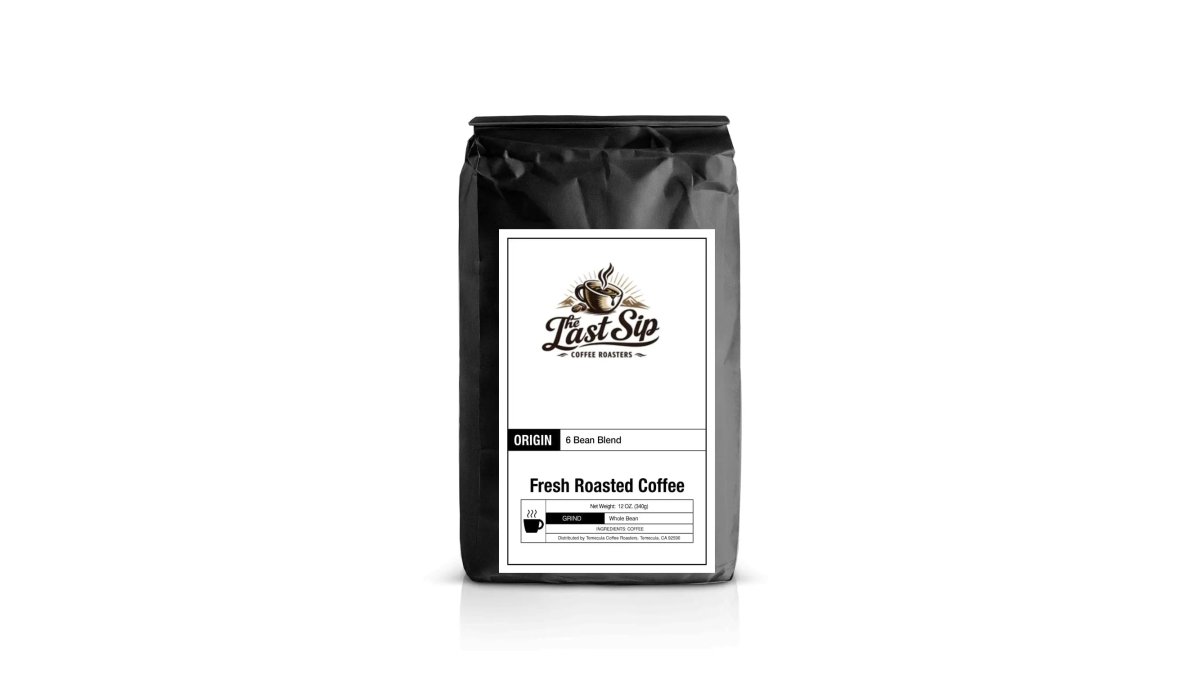
| 6 Bean Coffee Blend | Whole bean, dark roast | Bold, full-bodied cups | Espresso and drip |
| Kopi Safari Artisan Blend | Whole bean, medium/dark | Balanced, dual purpose | One bag for every method |
| Single-serve capsules | Sealed, oxygen-free | Convenience without staleness | Fast weekday brews |
The Last Sip Coffee Roasters: Roasted to Order, Shipped Fast
The Last Sip Coffee Roasters roasts every batch to order, which means the roast date on your bag reflects the day your coffee was made, not the day it was pulled from inventory. That single practice removes most of the guesswork from buying fresh coffee online.

The roastery keeps a focused lineup, and each option answers a different kind of morning.
Bourbon Barrel Aged Coffee: Single Origin Guatemala, 30-Day Barrel Rest
The flagship is a single origin Guatemala coffee aged 30 days in a bourbon barrel and then roasted to order. The barrel rest layers in subtle spirit-barrel character before roasting, and the medium roast whole bean format keeps the natural qualities of the Guatemalan bean intact.
It ships at $19.99. If you want a cup that tastes like an occasion rather than a routine, this is the pick. Note that the aging process adds barrel character but no alcohol.
6 Bean Coffee Blend and Kopi Safari: Whole Bean Workhorses
The 6 Bean Coffee Blend is a dark roast house blend built for espresso, pulling a rich, bold shot with a full body. It runs $19.99 and suits drinkers who want a heavy, low-acidity cup.
Kopi Safari takes a different approach. This post-roast artisan blend balances brightness with depth and works as a dual purpose option, brewing a smooth drip cup and a well-balanced espresso shot from the same bag. At $19.99, it is the most flexible choice if you switch methods during the week.
Single-Serve Capsules: Sealed Fresh for Convenience
Capsule drinkers are not stuck with stale coffee. The Original Roast capsules are sealed with no oxygen inside, which locks in freshness without requiring a grinder or a scale. The 12-pack runs $19.99 and the 60-pack runs $59.99.

The improved filter design keeps grounds from shooting through the middle, so the capsule absorbs more coffee and delivers a livelier cup without slowing the brew. They work with Original Line machines.
How Brewing Method Changes Your Perception of Freshness
Brewing method changes how fresh a coffee tastes, sometimes more than the roast date does. Espresso amplifies small differences in degassing and grind consistency, while immersion methods like French press are far more forgiving.
The reason comes down to extraction. Espresso forces water through a compact puck in seconds, so any inconsistency in the bean or the grind shows up immediately as sourness or bitterness. A fresh bean that has rested properly extracts evenly. A bean still off-gassing heavily resists water and pulls unevenly.
Pour-over rewards freshness differently. The bloom, that first swell of grounds when hot water hits them, is the carbon dioxide leaving the coffee. A lively bloom signals a recently roasted bean. A flat, quiet bloom usually means the coffee has been sitting a while.
Grind consistency ties into all of this. Fresh beans grind more predictably because they still contain their oils and moisture. Old beans shatter into inconsistent particles, which produces a muddy, bitter cup no matter how good your technique is.
Storage, Shipping, and Sustainability: Protecting Freshness End to End
Freshness is only as good as the chain that protects it. From the roastery to your counter, every step either preserves the coffee or quietly erodes it.
Storage at home is simpler than most advice suggests. Keep beans in an airtight container away from light, heat, and moisture. Skip the refrigerator, where condensation and absorbed odors do real damage. A cool, dark cabinet beats a fancy gadget every time.
Shipping is where online buyers have the most to gain and the most to verify. Fast, reliable delivery shortens the gap between the roast date and your first brew, which is the entire point of buying direct. A roaster that ships quickly after roasting hands you more of the freshness window.
Sustainability and ethical sourcing connect to freshness more than they first appear. Direct trade relationships give roasters more control over bean density, moisture content, and handling before roasting, all of which affect how well a coffee holds up after the roast. Careful sourcing at the front end tends to produce a bean that stays vibrant longer at the back end.
Specialty Coffee Association standards and research
Frequently Asked Questions
What is the freshest coffee to buy?
The freshest coffee you can buy is whole bean coffee roasted within the last 7 to 14 days and shipped directly from a roastery that roasts to order. Look for a printed roast date, not a best-by date. Whole bean coffee holds its aroma longer than pre-ground, and an airtight bag with a one-way valve protects it during shipping. Roasted-to-order options from specialty roasters typically arrive days after roasting, which beats grocery shelf inventory that may sit for weeks or months.
How long does coffee stay fresh after roasting?
Whole bean coffee hits peak flavor roughly 4 to 14 days after roasting, once degassing slows. Most roasters recommend enjoying it within 2 to 6 weeks of the roast date for the best aroma profile and flavor notes. Pre-ground coffee loses freshness faster because more surface area is exposed to oxygen. After about 8 weeks, oxidation and moisture exposure flatten the flavor, and you lose the bright acidity and body that define specialty coffee.
Is roast date or best-by date more important on a coffee bag?
Roast date is far more useful. A best-by date is a manufacturer estimate, often set months after roasting, and it tells you nothing about how long the bag has been sitting in a warehouse or on a shelf. A roast date tells you exactly how many days have passed since the beans left the roaster. For the freshest coffee, prioritize bags with a clear roast date printed on the package, ideally within the last two weeks.
Does buying coffee online guarantee better freshness than grocery stores?
Not automatically, but roast-to-order roasters have a structural advantage. Grocery store coffee passes through distributors and can sit on shelves for months before you buy it. When you buy freshly roasted coffee beans online from a roaster that ships within days of roasting, the bag reaches you inside the freshness window. Check the shipping timeline and roast date policy before ordering. Fast, reliable delivery is what turns an online order into a fresher cup.
How should I store coffee to keep it fresh after it arrives?
Keep whole beans in an airtight container away from light, heat, and moisture. A one-way valve bag works well for the first week or two. Avoid the refrigerator, where condensation and odors seep in, and skip the freezer unless you portion beans into vacuum-sealed bags for long-term storage. Buy only what you will drink in 2 to 4 weeks. For a half-pound-per-week habit, a small-batch bag from a roast-to-order roaster keeps every cup inside the freshness window.