
Table of Contents
- How Ihaveabean and Trade Coffee Stack Up at a Glance
- Is a Coffee Subscription Worth It? Breaking Down the Math
- How to Choose a Coffee Subscription That Fits Your Routine
- Freshly Roasted Coffee Benefits: Why Roast Date Matters
- The Last Sip Coffee Roasters: A Direct Alternative to Both
- Where Each Option Wins: Use-Case Recommendations
- Verdict: Ihaveabean vs Trade Coffee Comparison
- Frequently Asked Questions
Last Updated: September 29, 2026
How Ihaveabean and Trade Coffee Stack Up at a Glance
The Ihaveabean vs Trade Coffee comparison comes down to a simple split: one service is built for people who already know what they love, the other for people who want a roaster to choose for them. At The Last Sip Coffee Roasters, we roast every batch to order, so we watch this category closely.
Both sell the same core promise: freshly roasted beans, shipped on a schedule. The difference is how much control you keep.
| Factor | Ihaveabean | Trade Coffee |
|---|---|---|
| Selection style | Fixed menu you choose from | Matched to a quiz |
| Control over beans | You pick every bag | The platform picks |
| Ordering model | Direct purchase | Subscription-first |
| Flexibility | Order when you need it | Managed on a schedule |
| Best for | Decisive buyers | Undecided buyers |
Neither model is wrong, they suit different habits, and picking the wrong one is why so many subscriptions get cancelled in month two.
Is a Coffee Subscription Worth It? Breaking Down the Math
A coffee subscription is worth it when the per-cup cost beats what you already pay for comparable beans, and when you drink through the bag before it fades. That second condition trips up more people than the first.
A subscription only pays off if the bag size matches your weekly consumption. Order two pounds and you are drinking stale coffee by week three, however good the roast was on arrival.
Cost Per Cup: Subscription vs. Retail
Cost per cup is the only number that matters. Divide the bag price by the cups it brews, then compare that figure across every option.
A 16 oz bag of The Last Sip Coffee Roasters' House Blend runs $19.99. At roughly 16 grams per cup, that makes about 28 cups, well under a dollar per cup. That gap is the entire argument for brewing at home, whether you subscribe or buy direct.

The Two Pricing Models, Side by Side
Subscription-first platforms and direct-purchase roasters price coffee differently, and it shows in three places: bag size, cadence, and what happens when you skip.
Bag size. Subscription platforms typically ship 12 oz bags to fit a predictable weekly or biweekly cadence; direct roasters default to 16 oz or larger because the buyer controls reorder timing. Per-ounce, the larger bag usually wins, but only if you finish it before the roast date fades.
Cadence. A subscription locks you into a delivery rhythm; if your habits swing, heavier in winter, lighter in summer, you adjust the schedule or accumulate bags. Direct purchase has no rhythm to adjust; you order when the bag runs low.
Skip and pause friction. This is where the models diverge most. Subscription platforms let you skip, pause, or cancel, but mechanics vary: some require a window before the next charge, some push a retention offer, some make cancellation multi-step. Direct purchase has no skip button because there is nothing to skip.
A practical way to compare: take the price of the bag you would actually buy, divide by the cups it brews at your dose, then multiply by your monthly cups. The lower monthly number is not automatically the winner, the one you will finish before it goes stale is.
Monthly Budget: What a Realistic Number Looks Like
A two-cup-a-day household brews roughly 60 cups a month, about 960 grams, or a little over two pounds. Two 16 oz bags covers it.
That math is the same whether you subscribe or buy direct. What changes is how the coffee arrives: on a fixed cadence you may not need, or on demand when your supply runs low. Steady consumption suits a subscription cadence; fluctuating consumption makes direct purchase the safer bet.
What the Price Does Not Tell You
Two services can charge nearly identical per-ounce prices and deliver very different value, because price does not capture roast date, bag size fit, or skip friction. A cheaper bag that arrives two weeks off the roast is not cheaper per good cup. A slightly pricier bag roasted to order and finished within three weeks usually is.
That is the number most comparison tables skip: cost per cup actually enjoyed, not cost per cup purchased.
How to Choose a Coffee Subscription That Fits Your Routine
Choosing a coffee subscription starts with three questions: how much do you drink weekly, do you want to pick your own beans, and how fresh must the coffee be on arrival. Answer honestly and the shortlist writes itself.
If you drink two cups on weekends only, a subscription will outrun you. Buy direct instead and order when the bag runs low.
Best Coffee Sampler Packs: 2oz Coffee →
Flavor Profile Matching: Beyond Roast Level
Flavor profile matching beats roast level as a selection tool. "Medium roast" tells you almost nothing about whether you will enjoy the cup. Tasting notes do.
Look for specifics on the label. The Last Sip Coffee Roasters' Single Origin Sample Pack spells out each coffee's profile, from a Colombia with dried orange, berry, and chocolate notes to a Tanzania with pear, floral, jasmine, and strawberry, enough detail to match a bean to your palate before committing to a full bag.

A short framework for matching:
- If you like milk drinks: go darker, with cocoa and caramel notes
- If you drink it black: start medium and work lighter
- If you add sweetener: brighter, fruit-forward coffees hold up better
- If you are unsure: buy a sampler before a subscription
Freshly Roasted Coffee Benefits: Why Roast Date Matters
Freshly roasted coffee benefits come down to one thing: the roast date, not the best-by date. Coffee releases carbon dioxide for days after roasting, and that gas carries aroma into the cup; beans roasted weeks ago have lost most of it.
A common mistake is judging freshness by the bag's expiration date. That date usually reflects packaging, not roast day. Flip the bag over and look for the actual roast date. If it is not printed, that tells you something too.
Grind size matters here as well. Whole beans hold their flavor far longer than ground coffee. Grind right before brewing and the difference is noticeable in the first sip.
The Last Sip Coffee Roasters: A Direct Alternative to Both
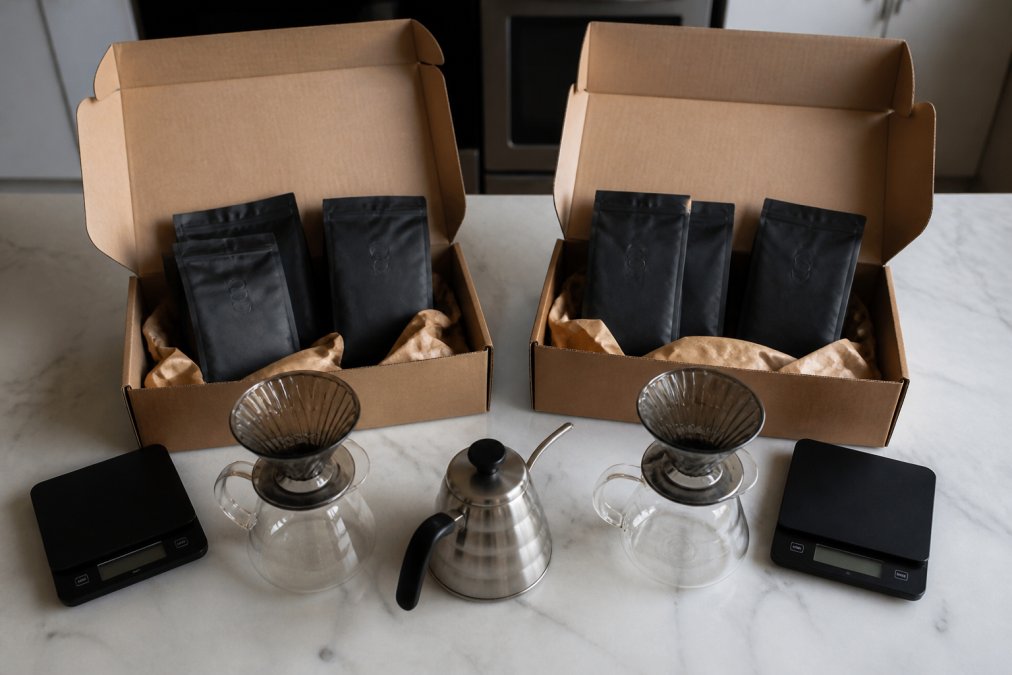
The Last Sip Coffee Roasters sits outside the subscription model entirely. Every batch is roasted to order, so the roast date on your bag is days old, not weeks, no quiz, no locked-in schedule, no warehouse inventory losing its edge.
The catalog is built for people who want to explore without committing to a single flavor for months:
- Best Coffee Sampler Pack ($24.99): six 2 oz packs covering 6Bean, Cowboy, Breakfast, Peru, Mexico, and Bali
- Single Origin Sample Pack ($24.99): six 2 oz packs, including Colombia, Ethiopia, and Tanzania
- House Blend ($19.99): a medium roast with nutty, sweet chocolate, and mild citrus notes
- Breakfast Blend ($19.99): a smooth 16 oz medium roast built for easy morning drinking
The sampler route solves the biggest objection to any subscription: paying for a full bag you might not like.

Where Each Option Wins: Use-Case Recommendations
Each option wins in a specific scenario, and naming it is more useful than declaring one service universally better. But the scenario is not just taste, it is logistics, transparency, and how much of the buying decision you want to hand off.
The Logistics Angle Nobody Compares
Most comparisons stop at price and selection. The operational differences matter just as much.
Transparency: What to Look For on the Label
This is the gap most comparison content skips. Two services can both claim 'fresh' and 'specialty' while reporting very different things.
- Roast date, printed as a date, not a best-by window
- Origin, named down to the region or farm where the roaster discloses it
- Process, such as washed, natural, or honey, this shapes flavor as much as origin
- Certification or sourcing claim, stated specifically rather than as a vague 'ethically sourced' badge
A Decision Framework by Buyer Type
Choose a quiz-matched subscription if you are new to specialty coffee, do not know your preferences, and value discovery over control. You are trading roast-date visibility for curation.
Verdict: Ihaveabean vs Trade Coffee Comparison
The Ihaveabean vs Trade Coffee comparison ends in a split decision. Trade Coffee wins for the undecided drinker who wants a guided start; Ihaveabean wins for the buyer who already knows the bag they want and prefers to order directly. Neither beats the other on freshness, because freshness is a roasting decision, not a platform feature.
Frequently Asked Questions
Is a Trade Coffee subscription worth the monthly cost?
It depends on how much you value variety and convenience. A coffee subscription comparison against retail premium beans shows subscriptions can cost more.
How does Ihaveabean compare to larger coffee subscription platforms?
Ihaveabean operates as a smaller roastery with limited SKUs, which means less variety. Larger platforms offer more choices but may warehouse beans longer before shipping. When evaluating how to choose a coffee subscription, check whether the roaster ships within 48 hours of roasting.
Does roast-to-order freshness make a difference in coffee quality?
Yes, significantly. Freshly roasted coffee benefits include brighter acidity, more pronounced tasting notes, and better extraction. Coffee peaks in flavor 4-14 days after roasting and degrades noticeably after 3-4 weeks. Beans roasted to order and shipped immediately arrive within that window. Store-bought bags sitting on shelves for months lose the volatile compounds that create complex flavors, leaving a flat, stale cup.
What factors should you consider when choosing a coffee subscription?
Focus on four things: roast date transparency (does the bag show when it was roasted?), shipping frequency flexibility (can you pause or change intervals?), cost per cup (not just bag price), and flavor profile matching (does the service ask about your taste preferences?). A coffee subscription comparison should weigh these factors against your brewing habits and how quickly you consume a bag.