
Table of Contents
- How We Tested Coffee Subscriptions for Small Households
- Best Coffee Subscription for Small Households: Quick Comparison
- Coffee Subscription Frequency for Singles and Low-Volume Drinkers
- How to Store Coffee Beans for Freshness Between Deliveries
- Shipping Speed and Delivery Reliability for Fresh Roasts
- Customization, Pause, and Cancellation Options
- Why Sample Packs Beat Bulk Orders for Small Households
- Conclusion
Last Updated: August 26, 2026
How We Tested Coffee Subscriptions for Small Households
Finding the right coffee subscription for small households means looking beyond marketing and evaluating what actually matters when consuming half a pound of coffee per week. We assessed subscriptions across five dimensions: freshness at delivery, customization flexibility, pause and cancellation ease, cost per ounce relative to quality, and shipping speed. Small household coffee drinkers need frequency options matching actual consumption, not bulk purchases that sit for weeks. The best subscription prioritizes freshness through roast-to-order models, guaranteeing maximum flavor from the first cup. We tested ordering processes, roast date transparency, sample size availability, and customization options.
Best Coffee Subscription for Small Households: Quick Comparison
The Last Sip Coffee Roasters stands out for small households because they roast every batch to order, ensuring maximum freshness. Their sample packs are purpose-built for low-volume drinkers exploring preferences before larger commitments.
The Best Coffee Sampler Pack with 6Bean, Cowboy, Breakfast, Peru, Mexico & Bali at $24.99 offers six 2oz portions covering blends and single origins, letting you compare roast levels and tasting profiles without committing to a full pound that might go stale.

For single-origin enthusiasts, the Single Origin Sample Pack - Favorites at $24.99 includes Brazil Santos, Colombia, Costa Rica, Ethiopia, Honduras, and Tanzania. Each 2oz pack highlights different altitude, soil, and processing characteristics.

The Flavored Coffee Sample Pack at $24.99 covers French Vanilla, Hazelnut, Cinnabun, Caramel, Mocha, and Cinnamon Hazelnut, all medium roasts made from specialty-grade beans.

For pod users, the Original Roast Coffee Capsules 12-Pack at $19.99 matches small household weekly consumption without bulk commitment. Each capsule is sealed with no oxygen inside, keeping coffee fresh. Single-origin options like Peru Coffee Pods or Mexico Coffee Pods at $19.99 each deliver fresh roast with specific tasting notes.
| Product | Price | Format | Best For | Key Feature |
|---|---|---|---|---|
| Best Sellers Sample Pack | $24.99 | 2oz x 6 | Exploring blends & origins | Roasted to order, curated variety |
| Single Origin Favorites | $24.99 | 2oz x 6 | Single-origin enthusiasts | Six origins, different altitudes |
| Flavored Coffee Sample | $24.99 | 2oz x 6 | Flavor explorers | Specialty-grade base, medium roast |
| Original Roast Capsules 12-Pack | $19.99 | Pods x 12 | Pod machine users | Sealed fresh, no oxygen |
| Single Origin Pods | $19.99 | Pods x 10 | Pod users wanting origin focus | Specific tasting profiles |
Coffee Subscription Frequency for Singles and Low-Volume Drinkers
The ideal subscription frequency for small households consuming half a pound weekly is every two to three weeks, not the standard monthly cadence most subscriptions push. This timing keeps beans within their peak freshness window, typically two to three weeks after roasting, while preventing overstock that leads to stale coffee (peer-reviewed research).
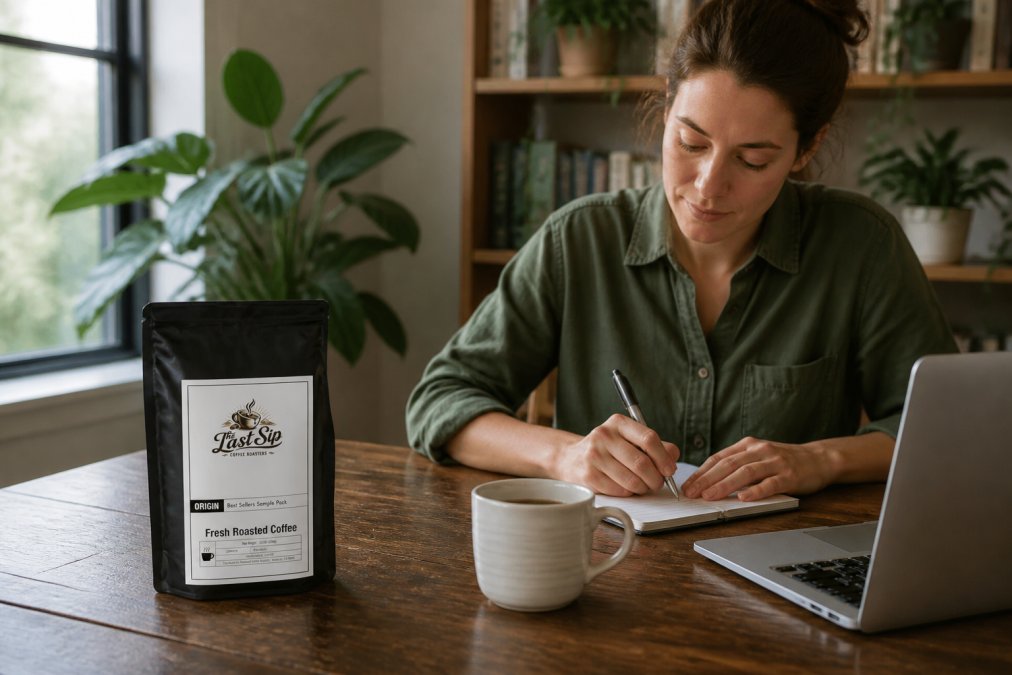
A two-week delivery cycle means you finish one batch as the next arrives. For someone drinking one to two cups daily, a half-pound order lasts seven to ten days. Two pounds, a typical minimum, lasts three to four weeks. By the bottom of a two-pound bag, beans have lost brightness and complexity.
Standard monthly subscriptions are designed for heavier drinkers or offices. Many won't let you adjust frequency easily or charge extra for more frequent shipments. The best coffee subscription for small households removes friction from frequency changes.
Flexibility matters more than frequency itself. Seasonal changes and weekly variation affect consumption. A subscription that lets you pause without penalty, skip a month, or adjust delivery timing handles real-life variation. Sample packs solve this entirely, a 2oz portion is consumed in two to three days, and six packs last two to three weeks without requiring recurring commitment.
How to Store Coffee Beans for Freshness Between Deliveries
Coffee beans begin losing flavor immediately after roasting (peer-reviewed research). Oxygen exposure, light, heat, and moisture accelerate degradation. For small households, proper storage is critical because beans sit longer than in commercial kitchens.
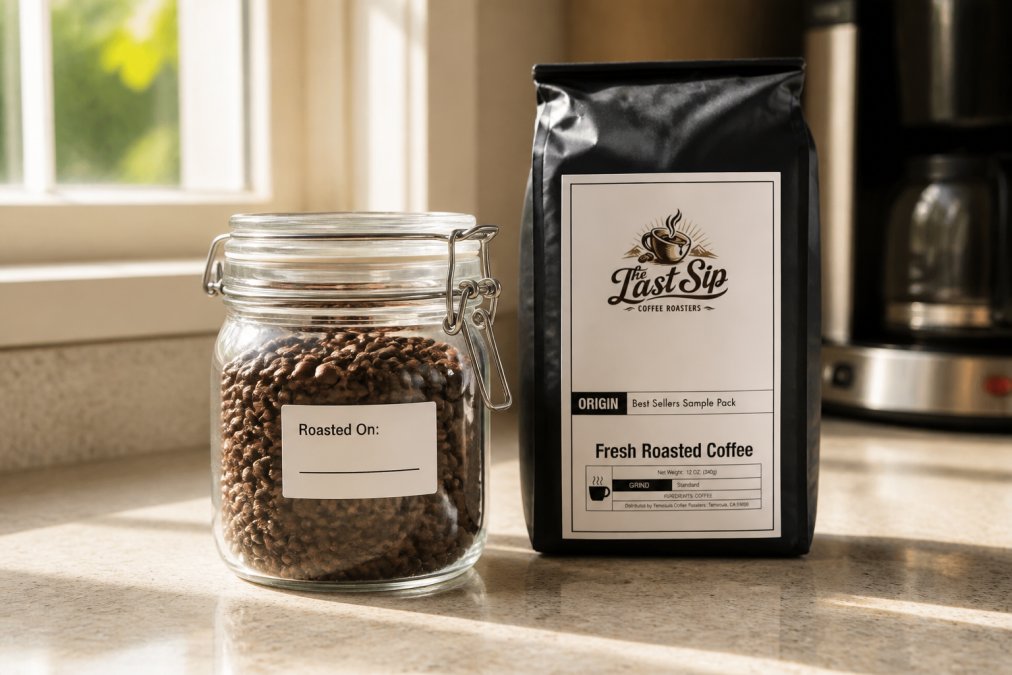
The ideal storage container is airtight, opaque, and cool. Glass or ceramic canisters with airtight seals work well. Avoid clear containers that expose beans to light. Many specialty roasters ship in kraft paper with one-way degassing valves that let carbon dioxide escape but prevent oxygen from entering. Keep beans in the original bag if it has a valve, or transfer to an airtight container.
Room temperature around 68°F is acceptable (the FDA). Refrigerators and freezers introduce moisture when opened and closed, causing condensation that degrades beans faster. Avoid placing containers above stoves, near windows, or in direct sunlight. A kitchen cabinet away from heat sources is ideal.
Whole beans stay fresh longer than ground coffee. Grinding increases surface area exposed to oxygen, accelerating flavor loss. Grind immediately before brewing for maximum quality. The roast date matters more than the sell-by date. The Last Sip Coffee Roasters roasts to order, so your beans are never more than a few days old when they arrive.
Shipping Speed and Delivery Reliability for Fresh Roasts
Speed from roastery to your door determines whether you receive truly fresh coffee or beans already losing their peak brightness. The best coffee subscription for small households ships within 24 to 48 hours of roasting, keeping the flavor window wide open. A one-week gap between roasting and delivery is acceptable. Anything longer compromises the freshness advantage of specialty subscriptions.
Reliable delivery means consistent arrival dates and undamaged packages. Track your first delivery carefully. Does it arrive on the promised date? Is the package sealed properly? Inconsistent delivery ruins the subscription model for small households.
Shipping cost matters proportionally more for small orders. Subscriptions that include shipping in their pricing are more transparent than those that add it at checkout. For small households ordering frequently, shipping costs can exceed the coffee cost if not managed carefully.
Customization, Pause, and Cancellation Options
The ability to customize your order separates a true subscription service from forced recurring charges. Can you change roast levels? Switch between single-origin and blends? The best coffee subscription for small households gives you control.
Pause functionality without penalty is non-negotiable. You might have enough coffee stockpiled, be traveling, or want to try competitors. A pause option keeps you in the subscription without forcing cancellation.
Cancellation ease reveals whether a service values customers or locks them in. If you can cancel in one click from your account dashboard, that's customer-first design. Sample packs eliminate customization concerns entirely, you're not locked into recurring charges or forced selections. You buy a pack, explore it, and decide what to order next.
The Last Sip Coffee Roasters' sample pack approach, offering six 2oz portions in curated combinations, gives you exploration without commitment. You're buying a one-time product, not subscribing to recurring service.
Why Sample Packs Beat Bulk Orders for Small Households
A bulk order of three pounds seems economical until you account for waste. If you dislike the roast level or flavor profile, you're stuck with three pounds you don't enjoy. If beans go stale before finishing, you've paid for freshness you never experienced.
Sample packs flip the economics. Six 2oz portions at $24.99 cost $0.21 per ounce. A three-pound bulk order at $45 costs $0.31 per ounce when accounting for waste and staleness. The sample pack is actually cheaper when factoring in actual consumption of fresh coffee.
Sample packs also solve the discovery problem. Coffee preference is personal. You might think you want dark roast but prefer medium. You might assume single-origin is superior and find a well-crafted blend more satisfying. Buying a pound untested is expensive learning. Buying 2oz is cheap learning.
For small households, a sample pack provides two to three weeks of exploration without subscription lock-in. You order when you want, try what interests you, and build a preference profile over months.
Conclusion
Small household coffee drinkers are underserved by standard subscriptions designed for bulk consumption. The best approach combines sample packs for discovery with the ability to order single quantities once you've found your preference. Roast-to-order models eliminate staleness entirely. Flexible delivery intervals and pause options respect that coffee consumption varies week to week.
The Last Sip Coffee Roasters addresses every pain point for small households. Their sample packs deliver freshly roasted coffee in 2oz portions, small enough to finish before staleness occurs, diverse enough to explore different roast levels and origins, and priced competitively when accounting for actual consumption of fresh beans. Start with the Best Coffee Sampler Pack to discover your preference, then order single quantities of your favorites as needed.
Frequently Asked Questions
Q: Is a coffee subscription worth it if I only drink one cup a day?
A: Yes, especially if you prioritize freshness and flavor. Small-household subscriptions avoid the problem of beans going stale in bulk. With flexible frequency options, you can order every 3-4 weeks instead of monthly, matching your actual consumption. Roast-to-order services guarantee beans arrive at peak freshness, something store-bought coffee can't match after sitting on shelves for weeks.
Q: How do I choose a coffee subscription frequency that fits a small household?
A: Calculate your weekly consumption first: if you drink 0.5 pounds per week, you need 2 pounds monthly. Many subscriptions let you adjust frequency from every 2-4 weeks. Start with 3-week intervals and adjust based on how quickly beans degrade in your storage. Look for services offering pause options so you can skip months without penalty. This flexibility is crucial for small households where bulk orders lead to stale coffee before you finish them.
Q: What is the best way to keep coffee fresh when buying a subscription for a small household?
A: Store beans in an airtight container away from heat, light, and moisture, a dark cupboard or sealed glass jar works well. Keep unopened bags in their original packaging until ready to use. Whole beans stay fresh 2-4 weeks after roasting; ground coffee degrades faster. With subscription services that roast-to-order, beans arrive at peak freshness, so proper storage lets you enjoy them throughout your subscription cycle without waste or stale flavors.
Q: What makes a coffee subscription specifically suited for small households?
A: Small-household subscriptions offer smaller batch sizes (2-4 oz sample packs or half-pound quantities), flexible delivery frequency, and pause options. They eliminate the problem of buying bulk quantities that go stale before consumption. Roast-to-order models ensure maximum freshness, and curated selections let you explore different single-origin and blend options without committing to large quantities. This approach works best for people who value quality over volume and want to avoid waste.
Q: How fast does coffee typically ship from specialty roasters?
A: Most specialty roasters ship within 2-3 business days of roasting, with delivery in 3-7 days depending on location. Roast-to-order services may take slightly longer (4-10 days total) because they roast after you order. This timing is actually an advantage for freshness: beans arrive after degassing begins but before peak flavor window closes. Check each service's shipping policy; some offer expedited options for an additional fee if you need beans faster.
Small household coffee drinkers often accept mediocre coffee because bulk subscriptions force them into it. The Last Sip Coffee Roasters proves that specialty, freshly roasted coffee doesn't require commitment or waste. Their sample packs and roast-to-order approach deliver maximum flavor and aroma without the staleness that plagues standard subscriptions. Get started with The Last Sip Coffee Roasters and experience the difference that true freshness makes in every cup.
This article was written using GrandRanker