
Table of Contents
- What Makes Small Batch Coffee Roasting Different
- Superior Flavor Profile Development in Small Batches
- The Coffee Roast Date Importance for Maximum Freshness
- Small Batch vs Commercial Coffee Roasting: Key Differences
- Roast-to-Order Coffee Advantages for the Consumer
- Quality Control and Consistency You Can Trust
- Why Freshness Matters More Than You Think
- Frequently Asked Questions
Last Updated: October 1, 2026
What Makes Small Batch Coffee Roasting Different
Small batch coffee roasting prioritizes freshness and flavor precision by roasting limited quantities to order, rather than preparing massive batches weeks or months in advance.
Small batch roasted coffee delivers vibrant aromatics and complex flavor notes because the roastmaster controls every variable, temperature curves, airflow patterns, duration, and cooling speed, ensuring uniform development without the inconsistency of larger operations.
At The Last Sip Coffee Roasters, every order is roasted fresh to eliminate warehouse inventory that degrades over months.
Superior Flavor Profile Development in Small Batches
Small batch coffee roasting excels at flavor precision: a roastmaster can monitor the roasting curve with exacting detail, making micro-adjustments that transform good beans into exceptional ones.
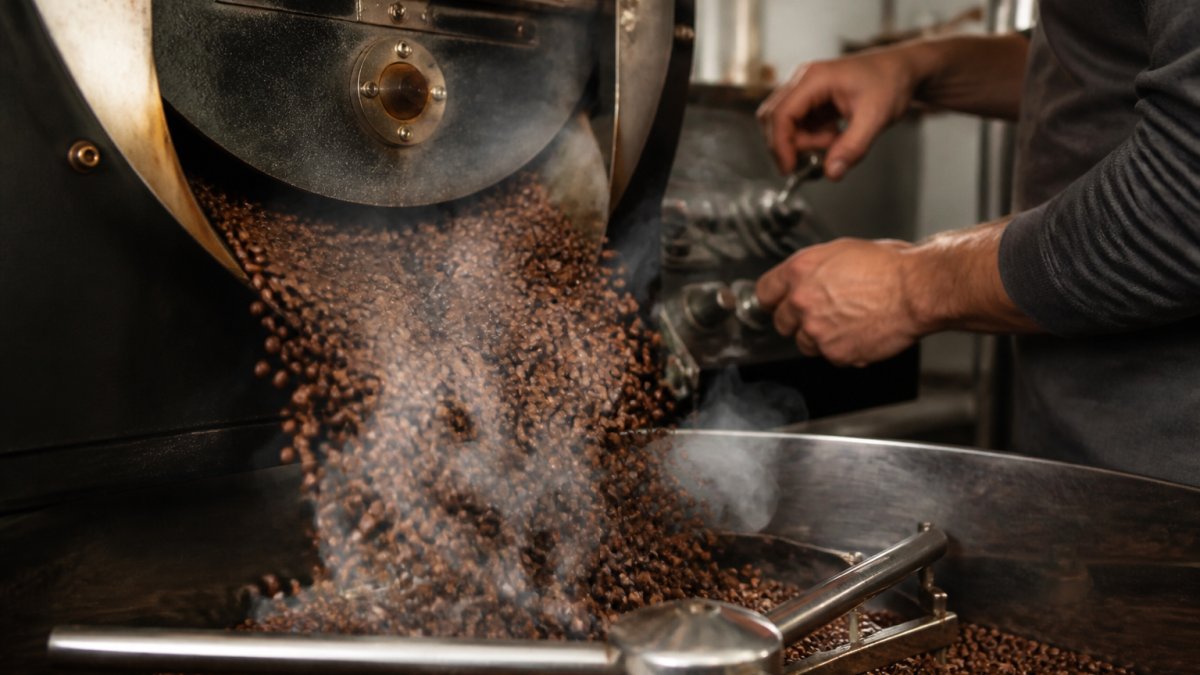
The Equipment Advantage
Small-batch roasters use drum roasters or fluid bed roasters, each offering precision control advantages that industrial equipment cannot replicate.
Drum roasters rotate a perforated cylinder while heat is applied from below and around. The roastmaster adjusts heat input in real time by modulating burner intensity or drum speed.
Fluid bed roasters suspend beans on hot air, offering precise temperature control and faster heat transfer for lighter roasts with exceptional clarity, though they require more technical skill and are less common in commercial operations.
The First Crack and Real-Time Feedback
As beans heat, they undergo the first crack, when cellular structure fractures and releases CO₂. In small batches, the roastmaster can hear this clearly and respond immediately; in massive roasters, this critical feedback gets lost in noise and scale.
The roastmaster adjusts heat transfer based on real-time sensory feedback, listening for the crack, observing color shifts, and smelling aromatics, a feedback loop impossible to automate at scale.
Origin-Specific Development
This precision matters for origin characteristics: a Kenya coffee with bright acidity and floral notes demands different treatment than a Brazilian bean with chocolate and nutty undertones. Small batch roasting allows the roastmaster to develop each origin's unique profile.

A high-altitude Ethiopian natural-process bean may need slower early heat to develop fruity complexity; a dense Brazilian bean can handle aggressive heat for chocolate and caramel notes. Industrial roasting cannot adjust curves per origin when the same profile runs across dozens daily.
The result is a cup with remarkable clarity where you taste the terroir, altitude, soil, and climate, the coffee's story from farm to cup.
The Coffee Roast Date Importance for Maximum Freshness
Coffee begins deteriorating the moment it cools from the roaster as volatile aromatic compounds, responsible for the fresh-roasted smell, escape into the air.
A bag of beans roasted three weeks ago will never taste as good as beans roasted three days ago. The difference is dramatic.
Most specialty coffee professionals recommend brewing coffee within 2-4 weeks of the roast date.
When you order from The Last Sip Coffee Roasters, the roast date reflects when we prepared your specific order, so you know exactly how fresh your coffee is.
Small Batch vs Commercial Coffee Roasting: Key Differences
| Aspect | Small Batch Roasting | Commercial Roasting |
|---|---|---|
| Batch Size | 5-25 lbs per roast | 100+ lbs per roast |
| Roastmaster Attention | Individual monitoring per batch | Preset automated processes |
| Heat Control | Real-time adjustments | Fixed temperature curves |
| Feedback Loop | Immediate sensory feedback | Delayed or absent feedback |
| Consistency | High within small batches | Variable across large volumes |
| Freshness | Days old when delivered | Weeks or months old |
| Flavor Profile | Origin-specific development | Standardized roast profile |
Commercial roasting prioritizes efficiency and cost reduction by spreading fixed costs across massive quantities. The roastmaster becomes an operator monitoring machines rather than an artisan, with preset temperature curves running automatically and entire batches at risk if something goes wrong.
Small batch roasting inverts these priorities, allowing the roastmaster to become intimately familiar with how each batch behaves and continuously refine their craft over years.
Small batch roasted coffee tastes better because it's fresher, developed with intention, and receives the roastmaster's time and attention.
Roast-to-Order Coffee Advantages for the Consumer
Roast-to-order coffee advantages extend well beyond flavor. This model solves a genuine problem that traditional coffee retail never addresses: how to guarantee freshness while offering transparency about cost.
The Freshness Guarantee
When you place an order for roast-to-order coffee, the roastmaster doesn't begin work until they receive your request. Your beans are roasted specifically for you, then packaged and shipped while still in that ideal freshness window. You receive coffee that's typically 3-7 days old, still in its peak flavor period.
Compare this to buying coffee at a specialty retailer. Even the best local roaster has inventory sitting on shelves. That bag of Kenya beans? It might have been roasted two weeks ago. The roaster needed to have stock available when customers walked in. Roast-to-order eliminates this compromise entirely.
There's also a practical advantage for home consumers. You don't need to buy large quantities to get fresh coffee. Many specialty roasters require minimum orders of multiple pounds. If you consume coffee slowly, you face a choice: buy more than you need and watch it go stale, or pay premium pricing for smaller quantities.
Understanding the Cost Premium: Where Your Money Goes
Small-batch roasted coffee typically costs 20-40% more than mass-market alternatives. This premium often surprises consumers, but understanding the cost structure reveals why the price reflects genuine value.
French Vanilla Vanilla Flavored Coffee Beans →
Labor intensity: A roastmaster overseeing a 10-pound batch spends roughly the same time monitoring the roast as one managing a 100-pound batch.
Bean sourcing: Small-batch roasters typically source directly from specialty importers or even directly from farms, paying premium prices for traceable, high-quality green beans (The Roaster's Dilemma: How to Thrive in an Age of Volatility). Mass-market roasters buy commodity-grade beans in bulk at a fraction of the cost. A specialty Kenya AA microlot sourced directly from a cooperative costs 2-3 times more per pound than commodity-grade beans.
Inventory risk: Small-batch roasters roast to order, minimizing waste and spoilage. However, they also cannot achieve the economies of scale that come from roasting massive quantities in advance.
Packaging and logistics: Roast-to-order requires individual packaging and frequent small shipments. This is more expensive per unit than bulk packaging and infrequent shipments.
The Value Equation
When you buy small-batch roasted coffee, you're paying for:
- Coffee roasted within days of your order, not weeks or months old
- Beans sourced from known origins with documented quality standards
- A roastmaster's expertise applied to your specific batch
- Flavor clarity and complexity that mass-produced coffee cannot deliver
A practical way to evaluate whether the premium is worth it: brew a side-by-side comparison of small-batch roasted coffee (roasted within 7 days) and mass-market coffee (roasted 3+ weeks ago). The difference in aroma, body, and flavor complexity is typically dramatic enough to justify the price difference for anyone who drinks coffee regularly.
The subscription model compounds these advantages. You establish a regular delivery schedule, say, half a pound every two weeks, and fresh coffee arrives automatically. No need to remember to reorder. No risk of running out. No coffee sitting around growing stale.
Quality Control and Consistency You Can Trust
Quality control in small batch operations works differently than in industrial settings.
A roastmaster performing cupping evaluates multiple sensory dimensions: aroma, body, acidity, flavor clarity, finish. They're checking for roast consistency, ensuring that beans throughout the batch developed uniformly.
This process happens for every small batch.
The consistency you gain from this approach is remarkable. When you order the same coffee multiple times, you get nearly identical results. The roastmaster remembers how that Kenya performed last time.
This is why specialty coffee enthusiasts build loyalty to specific roasters. They're not just buying coffee, they're buying the roastmaster's expertise and attention.
Why Freshness Matters More Than You Think
Freshness determines whether coffee tastes vibrant or flat. This isn't subjective preference, it's chemistry.
The moment coffee is roasted, volatile aromatic compounds begin oxidizing.
The difference is noticeable within a week. After two weeks, it's pronounced. After a month, the coffee tastes noticeably diminished.
This is why the coffee roast date importance extends beyond just knowing how old your coffee is.
Storage conditions matter too, of course.
When you prioritize freshness by choosing roast-to-order coffee, you're making the single most impactful decision about your coffee quality.
The real difference between ordinary coffee and exceptional coffee comes down to freshness and intentional roasting. Small batch coffee roasting delivers both. At The Last Sip Coffee Roasters, we roast every order fresh, ensuring maximum flavor and aroma in every cup. Our carefully sourced beans, like our Kenya coffee beans with bright acidity and floral notes, or our French Vanilla medium roast for smooth, everyday enjoyment, arrive at peak freshness with reliable, fast delivery. Start with The Last Sip Coffee Roasters and experience the difference that fresh-roasted specialty coffee makes in your morning ritual.

Frequently Asked Questions
How long does coffee stay fresh after the roast date?
Coffee reaches peak freshness within 2-14 days after roasting. The flavor and aroma are most vibrant during this window. After 30 days, oxidation begins to noticeably diminish the brightness and complexity. Small batch roasting ensures you receive beans near their peak freshness, unlike mass-produced coffee that may have spent weeks in storage before reaching shelves.
Is small batch coffee actually better than mass-produced coffee?
Small batch roasting allows roastmasters to control heat transfer, airflow, and roasting duration with precision, resulting in more uniform bean development and consistent flavor. Mass-produced batches prioritize speed and volume, often sacrificing the careful attention that specialty-grade beans deserve. The roastmaster's feedback loop and quality control in small batches directly translate to a noticeably superior cup.
What are the quality control advantages of small batch roasting?
Small batches enable roastmasters to monitor each bean's development through first crack and second crack, adjusting heat and airflow in real time. This precision prevents under- or over-roasting and ensures uniformity across the batch. Larger commercial operations cannot apply this level of sensory analysis and feedback, making consistency and quality control significantly easier to achieve and verify in small-scale production.
Does roast-to-order coffee really stay fresher during shipping?
Yes. Roast-to-order coffee is roasted only after you place your order, meaning beans ship within days at peak freshness rather than sitting in inventory. This approach eliminates the weeks of shelf time typical of retail coffee. Proper packaging preserves the coffee's shelf life during transit, ensuring arrival during the optimal flavor window when aroma and brightness are at their best.