
Table of Contents
- What a Gourmet Tea Subscription Box Actually Delivers
- Tea Subscription Box Price Comparison: Cost Per Cup
- Freshness and Storage: How to Store Loose Leaf Tea for Freshness
- Best Water Temperature for Brewing Green Tea (and Other Varieties)
- Cancellation, Flexibility, and Waste: The Fine Print
- Who Gets the Most Value From a Gourmet Tea Subscription
- Frequently Asked Questions
Last Updated: September 14, 2026
What a Gourmet Tea Subscription Box Actually Delivers
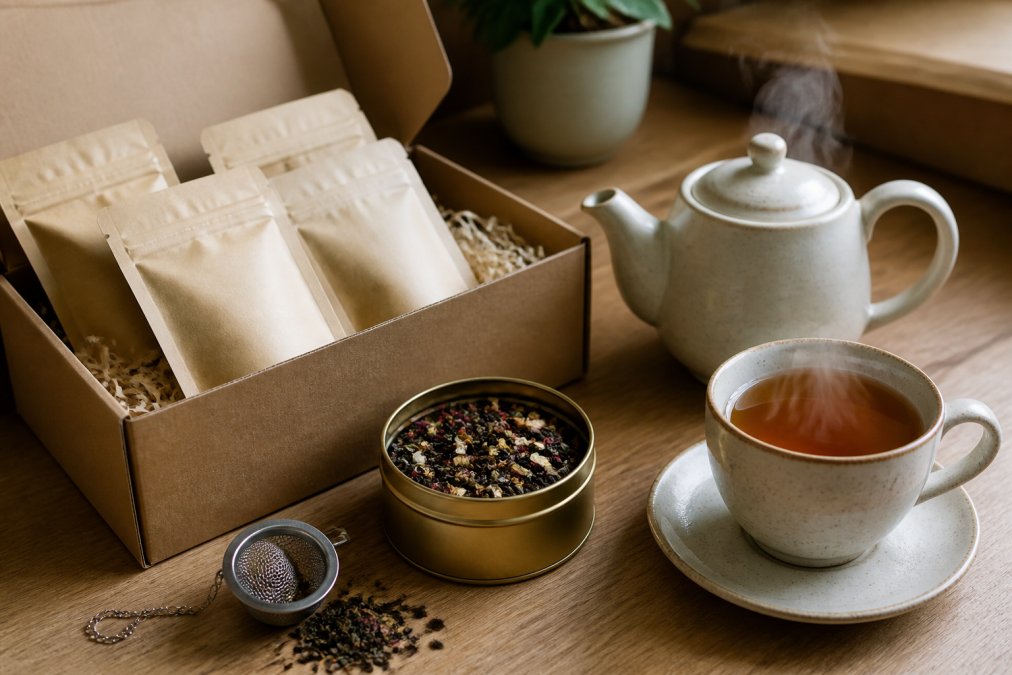
A gourmet tea subscription is a recurring delivery service that sends curated loose leaf teas, tasting notes, and brewing guidance to your door, usually monthly. The core promise is freshness and discovery: small-batch, single-origin, and artisanal blends you would not find on a grocery shelf, paired with steeping instructions specific to each leaf. At The Last Sip Coffee Roasters, we roast and pack to order for the same reason, because aroma fades fast once a leaf or bean meets air.
What separates a good box from a disappointing one comes down to four things: sourcing transparency, flavor profile range, packaging that protects the leaf, and whether the monthly delivery actually matches how much tea you drink. Miss on any one of those and the value proposition collapses.
Tea Subscription Box Price Comparison: Cost Per Cup
The honest answer most listicles skip: a tea subscription box price comparison only means something when you convert it to cost per cup. A $17.99 tin of loose leaf tea that yields roughly 30 to 40 cups lands near $0.50 to $0.60 per cup. Compare that to a $4 café tea or a $2 bottled option and the math shifts fast.
Here is how our own single-tin pricing breaks down against a typical monthly delivery habit:
| Product | Price | Approx. Cups | Cost Per Cup | Best For |
|---|---|---|---|---|
| English Breakfast Tea | $17.99 | 35-40 | $0.45-$0.51 | Daily morning cup |
| Earl Grey Tea | $17.99 | 35-40 | $0.45-$0.51 | Afternoon ritual |
| Jasmine Tea | $17.99 | 30-35 | $0.51-$0.60 | Multiple steepings |
| Peach Paradise Herbal | $17.99 | 30-35 | $0.51-$0.60 | Caffeine-free evenings |
| Ceremonial Matcha | $22.99 | 20-25 | $0.92-$1.15 | Mindful daily ritual |
The Hidden Cost of Store-Bought Tea
Store-bought tea hides its real cost in staleness. A box that sat on a shelf for months delivers a flatter cup, so you use more leaf to compensate and burn through the package faster. Many tea drinkers find that freshly packed loose leaf goes further per gram because the flavor holds through a second and third steeping. That is the quiet financial case for a subscription model, not the per-tin sticker price.

Freshness and Storage: How to Store Loose Leaf Tea for Freshness
Knowing how to store loose leaf tea for freshness matters more than which box you buy. Tea degrades through three enemies: air, light, and moisture. Keep leaf in an airtight, opaque container away from the stove, and it holds its character far longer than a bag left open in a cabinet.
A practical storage checklist:
- Transfer leaf to an airtight tin or a opaque jar with a gasket seal
- Store away from heat sources, sunlight, and strong-smelling spices
- Keep herbal infusions separate from black and green tea to avoid flavor transfer
- Label each container with the packing date
- Buy quantities you will finish within a few months, not a year
Best Water Temperature for Brewing Green Tea (and Other Varieties)
The best water temperature for brewing green tea is 160 to 180°F, not a rolling boil (pubmed.ncbi.nlm.nih.gov). Water that hot scalds delicate leaves and turns a sweet cup bitter. This single variable explains why so many people decide they "don't like green tea" after one bad steep.
| Tea Type | Water Temperature | Steep Time |
|---|---|---|
| Green tea (Jasmine, Moroccan Mint) | 160-180°F | 2-3 minutes |
| Black tea (English Breakfast, Earl Grey) | 195-212°F | 3-5 minutes |
| Herbal infusions (Peach, Hibiscus) | 212°F | 5-10 minutes |
| Matcha | 160-175°F | Whisk, no steep |
Caffeine content tracks the leaf, not the temperature. Black and green teas carry caffeine; herbal infusions and rooibos are naturally caffeine-free, which makes them the right pick for an evening cup (the FDA).
Cancellation, Flexibility, and Waste: The Fine Print
The single biggest reason people regret a tea subscription is not the tea, it is the billing. Before you enter a card number, treat the cancellation and flexibility terms as the actual product, because they determine whether a good box becomes a bad relationship.
The Five Friction Points to Check Before You Subscribe
Most subscription traps are not hidden; they are just buried. Read the terms and confirm each of these in writing:
- Cancellation method. Can you cancel online in your account dashboard, or does it require an email, a phone call, or a chat during business hours? A dashboard toggle is low friction. "Email us to cancel" is a churn wall, and it is the most common complaint pattern in subscription reviews.
- Notice window. Many boxes bill on a fixed monthly date and require cancellation 3 to 7 days before that date. Miss the window by a day and you have bought another month. Set a calendar reminder for two days before your billing date.
- Skip vs. pause vs. cancel. These are three different actions. Skipping usually preserves your account and any loyalty pricing; pausing suspends shipments for a set number of months; canceling ends the relationship and may forfeit accrued credits or a grandfathered rate. Know which one you actually need.
- Prepaid vs. month-to-month. A month-to-month plan costs more per box but carries zero commitment. A 6- or 12-month prepaid plan lowers the per-box price but is typically non-refundable and non-cancelable mid-term. Only prepay if you have already tested one shipment and know you like the curation.
- Return and damage policy. If a tin arrives dented or a matcha pouch splits, what is the remedy? A replacement or credit is standard; a "contact us within 48 hours" clause is a trap for anyone who does not open the box immediately.
The Waste Math Nobody Runs
Waste from a tea subscription comes in two forms: leaf you never brew and packaging you never reuse.
On the leaf side, the math is simple. If your box ships 4 ounces a month and you brew through only 2 ounces, you are accumulating a 2-ounce surplus every month, 24 ounces a year of leaf that is quietly going stale. That surplus is the real cost of an oversized subscription, and it is invisible on the invoice.
On the packaging side, count what actually arrives: an outer shipping box, a branded inner box, tissue or crinkle paper, a card, and one tin, pouch, or sachet per tea. A four-tea box can generate six to eight pieces of packaging a month. Over a year that is roughly 75 to 100 pieces of packaging for one person's tea habit. Bulk-buying loose leaf from a single retailer typically produces one bag or tin per purchase instead.
If waste matters to you, look for three things: a subscription that lets you set frequency to every other month, packaging that is recyclable or compostable (paper, not foil-lined), and a brand that ships refills in pouches rather than new tins each cycle. Reusing your own tins and ordering refills is the single highest-impact swap.
The Flexibility Test
A subscription is only worth it if it bends to your life. Ask yourself: if I go on vacation for three weeks, can I skip a shipment without penalty? If I fall behind, can I push my next box out a month? If I decide tea is not for me, can I stop in under two minutes? If the answer to any of those is no, the flexibility is the cost, and it is a cost the sticker price never shows.
Who Gets the Most Value From a Gourmet Tea Subscription
This is the section most articles skip, because the honest answer requires math instead of a listicle. Here is the break-even analysis, framed as the question you are actually asking: at what point does a subscription beat buying the same tea retail?
The Break-Even Math
Start with your monthly tea spend. A typical gourmet subscription runs somewhere in the range of a mid-priced single tin per month, and a single tin yields roughly 30 to 40 cups depending on the leaf and how many times you resteep. So a subscription that delivers the equivalent of one to two tins a month is competing against a retail spend of roughly one to two tins a month.
The subscription wins on cost per cup when three conditions hold:
- You brew daily. At two cups a day, you go through a tin in about two to three weeks. A monthly box that matches that pace never sits long enough to stale, and the per-cup cost stays at its floor.
- You would otherwise buy premium retail. If your alternative is a grocery-store box, the subscription is more expensive per cup but delivers a different product. If your alternative is a specialty tea shop, the subscription is often comparable or cheaper per cup because you are buying curation and freshness, not shelf space.
- You actually drink the variety. A box that sends four teas you will brew beats a box that sends four teas you admire and shelve. Unbrewed leaf is the most expensive tea you own.
The subscription loses on cost per cup when you brew occasionally, when you already have a favorite you rebuy, or when you let shipments outpace your drinking. In those cases, buying individual tins on demand, no recurring commitment, is the cheaper and fresher path.
The Customization Question
Customization is where subscriptions separate. The weakest model sends the same box to everyone. The strongest lets you set preferences at signup, caffeine-free only, green and oolong only, no smoky profiles, and adjust them later. If a box does not let you steer the curation, you are paying for someone else's taste, and the value depends entirely on how closely their taste matches yours.
A practical test: before subscribing, ask whether you can exclude a category you dislike. If the answer is no, expect to receive teas you will not drink, and price that waste into your decision.
The Gifting Angle
Subscriptions are one of the few tea purchases that work as a gift, because the value arrives repeatedly rather than once. A three-month prepaid plan is a common entry point: it caps your spend, gives the recipient a defined experience, and avoids the awkwardness of an open-ended recurring charge on your card. If you gift a subscription, confirm whether the recipient can cancel or convert it to their own account, a gift that cannot be stopped is a burden, not a present.
The Verdict by Drinker Type
| Drinker | Brews Per Day | Subscription Worth It? | Better Alternative |
|---|---|---|---|
| Daily variety seeker | 2+ | Yes, cost per cup favors curation | Monthly box matched to pace |
| Daily single-tea loyalist | 2+ | Marginal | Rebuy one tin on demand |
| Weekend sipper | Under 1 | Usually no | Individual tins as needed |
| Gift-giver | N/A | Yes, for a fixed term | 3-month prepaid plan |
| Caffeine-free only | Varies | Yes, if the box filters | Preference-set subscription |
FDA guidance on food storage and shelf life
Frequently Asked Questions
How much does the average tea subscription box cost per month?
Most gourmet tea subscription boxes run $15 to $50 per month depending on quantity and rarity. At The Last Sip Coffee Roasters, individual teas like Jasmine, Earl Grey, and Masala Chai are $17.99 each, while Ceremonial Matcha is $22.99. A typical subscriber drinking two cups a day spends roughly $30 to $40 monthly. That works out to about $0.50 to $1.00 per cup, which is competitive with cafe prices but higher than basic grocery store bags.
Are tea subscription boxes cheaper than buying loose leaf tea individually?
Not always cheaper per ounce, but often better value per cup. A gourmet tea subscription box price comparison shows that subscriptions bundle curated selections, tasting notes, and brewing guides that individual purchases lack. The Last Sip Coffee Roasters offers loose leaf teas at $17.99 per pouch, and because leaves like Jasmine and Moroccan Mint support multiple steepings, the cost per cup drops significantly compared to single-use bags.
What are the benefits of a gourmet tea subscription?
The main benefits are variety, freshness, and convenience. You get a curated selection of loose leaf teas delivered on a monthly schedule, often with tasting notes and steeping instructions. Freshness matters because tea loses aroma within months of opening. A subscription ensures you receive small-batch, recently packaged tea rather than inventory that has sat on a shelf. It also removes the guesswork of choosing among hundreds of options.
Do tea subscription boxes include brewing accessories?
Most gourmet tea subscription boxes focus on the tea itself, not accessories. Some include a brewing guide with steeping time and water temperature recommendations, but you will usually need your own teapot, infuser, or strainer. The Last Sip Coffee Roasters provides brewing instructions for each tea, such as steeping Moroccan Mint at 185 degrees for 2 to 3 minutes, but does not ship hardware with orders. Budget $15 to $30 for a basic infuser if you are starting out.
How do I choose the best tea subscription for my taste preferences?
Start by identifying whether you prefer caffeine or caffeine-free options, then narrow by flavor profile. If you enjoy bold, spiced cups, Masala Chai or English Breakfast fit well. For lighter, floral notes, Jasmine or Ceremonial Matcha work better. Caffeine-free drinkers can try Peach Paradise, Hibiscus Berry, or Apple Cider Rooibos. Many subscriptions let you customize your first box or skip months, so you can test a range before committing to a recurring plan.
The real question is not whether a subscription is worth it in the abstract, but whether the tea arrives fresh enough to justify the recurring cost. The Last Sip Coffee Roasters packs aromatic teas to order, from a medium-bodied Jasmine Tea to a spiced Masala Chai, so every tin reaches you at peak flavor. Explore the full loose leaf lineup, order only what you will drink, and let the first sip tell you whether the ritual is worth keeping.