
Table of Contents
- Start With Fresh, Quality Beans
- Mastering the Coffee-to-Water Ratio Chart
- Best Coffee Grind Size for Brewing Methods
- Water Temperature and Quality Matter
- Why Is My Coffee Bitter and How to Fix It
- Step-by-Step Guide to Brew Better Coffee
- Storage and Freshness Tips for Maximum Flavor
- Conclusion
Last Updated: August 25, 2026
Start With Fresh, Quality Beans
The difference between mediocre and exceptional coffee comes down to freshness. Stale beans taste flat and bitter; fresh beans taste alive. Coffee loses its optimal flavor profile within two to four weeks of roasting, so check the roast date on the bag, not the "best by" date (peer-reviewed research).
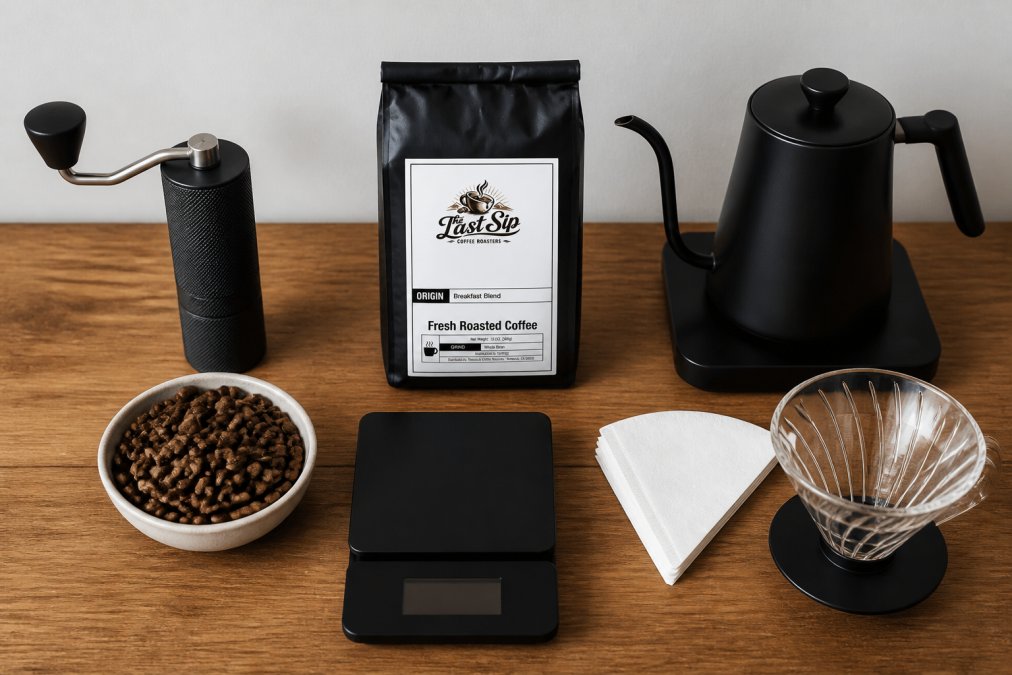
The Last Sip Coffee Roasters solves this by roasting every batch to order, so beans arrive at peak freshness. Fresh beans produce noticeably brighter, more complex cups with better clarity of flavor. Single-origin coffees showcase freshness best: a Colombian bean roasted last week will sing; the same bean roasted three months ago will taste muted. Start with beans roasted within the past two weeks.

Mastering the Coffee-to-Water Ratio Chart
The coffee-to-water ratio is the foundation of consistency. The standard ratio is 1:16, one part coffee to 16 parts water by weight. This is a starting point; some prefer 1:15 for stronger coffee, others use 1:17 for lighter. But 1:16 is where most brewers find balance.
Use a kitchen scale and measure both coffee and water by weight, not volume. Twenty grams of coffee plus 320 grams of water equals 1:16. This takes 30 seconds and eliminates guessing.
The ratio shifts slightly by brewing method. Immersion brewing (French press, cold brew) works well at 1:16. Pour-over methods often benefit from 1:15 because water passes through grounds quickly. Espresso uses 1:2 or 1:3 because extraction happens under pressure.
Start at 1:16 with your current method. Brew the same way three times and taste each cup. If it tastes weak, try 1:15 next. If it tastes bitter, try 1:17. Change one ratio at a time.
Best Coffee Grind Size for Brewing Methods
Grind size determines how fast water extracts flavor from grounds. Too coarse, and water rushes through without pulling enough flavor. Too fine, and water gets stuck, over-extracting into bitterness.
Use a burr grinder, not a blade grinder. Blade grinders produce inconsistent particle sizes; burr grinders produce uniform grind size, which means uniform extraction.
Pour-over methods need medium-fine grind, similar to sand. Water passes through in two to four minutes. French press needs coarse grind, almost like breadcrumbs, since the metal filter has large holes and steep time is four minutes. Espresso demands fine, consistent grind because water spends only 25-30 seconds under nine bars of pressure.
The relationship between grind size and brewing time is direct: finer grinds extract faster; coarser grinds extract slower. If your coffee tastes bitter, try grinding coarser. If it tastes weak or sour, try finer. Consistency matters more than perfection, stick with one grinder to maintain uniform results.
Water Temperature and Quality Matter
Water temperature controls extraction speed. The optimal range is 195 to 205 degrees Fahrenheit, with 200°F as the sweet spot (peer-reviewed research). Boil water and wait 30 seconds before pouring. For precision, use a gooseneck kettle with a built-in thermometer.
Water Quality and Mineral Content
Water quality is critical and often overlooked. Tap water varies by location. Hard water (high mineral content) brews differently than soft water. Chlorinated water tastes like chlorine.
Filtered water solves most problems. A simple pitcher filter removes chlorine and reduces mineral content. Water with 75-250 ppm (parts per million) of minerals extracts well (peer-reviewed research). Below 75 ppm, extraction is slow and flavors taste thin. Above 250 ppm, extraction is fast and flavors taste bitter. For most people, filtered water from a standard pitcher filter is sufficient.
Equipment Maintenance: The Hidden Factor
Mineral buildup and old coffee oils accumulate inside brewers, kettles, and grinders over time, muting flavor and introducing off-tastes that no technique adjustment will fix.
Mineral Buildup in Kettles and Brewers
Descale your kettle and brewer every two to four weeks if you brew daily. For kettles: Fill with equal parts white vinegar and water. Heat until steaming, then let sit for 15 minutes. Rinse thoroughly with fresh water twice. Boil plain water once more and discard.
For pour-over cones and immersion brewers: Soak in one part white vinegar to two parts water for 20 minutes. Scrub gently with a soft brush. Rinse thoroughly with fresh water three times.
Old Coffee Oils in Grinders and Brewers
Coffee oils oxidize and turn rancid over time. Clean your grinder every two weeks by unplugging it and using a soft brush to sweep out grounds from between the burrs. For a deeper clean, run uncooked rice through the grinder to absorb oils, then discard and brush again.
For brewers: Wash all removable parts with hot soapy water immediately after brewing. Soap removes oils. For paper filters, use fresh filters every brew, don't reuse them.
Why Is My Coffee Bitter and How to Fix It
Bitter coffee tastes harsh and unpleasant. But bitterness is only one symptom of extraction gone wrong. Learn the language of flavor, acidity, body, and sweetness, so you can diagnose and fix problems.
Understanding Extraction and Flavor
Extraction is dissolving soluble compounds from coffee grounds into water. Early extraction pulls bright, sweet, acidic compounds. Extended extraction pulls bitter, harsh compounds. The goal is roughly 18-22% of the ground coffee's mass dissolving into your cup.
Under-extraction (less than 18%) tastes sour, thin, and weak. Over-extraction (more than 22%) tastes bitter, harsh, and sometimes metallic.
The Flavor Diagnosis Chart
If your coffee tastes sour or acidic: Grind finer, extend brew time by 30 seconds to one minute, increase water temperature by 5°F, or use slightly more coffee (adjust ratio from 1:16 to 1:15). Very fresh beans (roasted fewer than 3 days ago) can taste overly acidic until they rest for 5-7 days.
If your coffee tastes bitter or harsh: Grind coarser, reduce brew time by 30 seconds to one minute, lower water temperature to 195-200°F, or use slightly less coffee (adjust ratio from 1:16 to 1:17). Check your grinder for inconsistent particle sizes.
If your coffee tastes flat, muted, or lifeless: Check the roast date, beans older than four weeks lose complexity. Test your water; if using distilled or heavily filtered water with fewer than 50 ppm of minerals, switch to filtered tap water. Ensure your equipment is clean; mineral buildup or old coffee oils mute flavor.
If your coffee tastes sweet but thin: Grind slightly finer, extend brew time by 15-20 seconds, or increase water temperature by 2-3°F.
If your coffee tastes bitter and heavy: Grind noticeably coarser, reduce brew time by 45 seconds to one minute, or lower water temperature to 195°F. For French press, reduce steeping time from four minutes to three.
The Sensory Tasting Method
Develop your palate by tasting deliberately: smell first, sip and hold for 2-3 seconds, identify acidity, taste for sweetness, and compare to a reference. Brew the same beans two ways, one slightly under-extracted and one slightly over-extracted, to train your palate.
Most bitter coffee is fixable by adjusting one variable at a time. Keep notes. After three to five brews, you'll know exactly how to adjust your technique.
Step-by-Step Guide to Brew Better Coffee
Step 1: Buy Fresh Beans (Roast Date Within 2 Weeks)
Order from a roaster that publishes roast dates. The Last Sip Coffee Roasters roasts to order, so your beans arrive at peak freshness.
Step 2: Measure Your Coffee by Weight
Use a kitchen scale. For 1:16 ratio brewing, measure 20 grams of coffee per 320 grams of water.
Step 3: Grind Just Before Brewing
Pour-over: medium-fine. French press: coarse. Espresso: fine. Grind immediately before brewing.
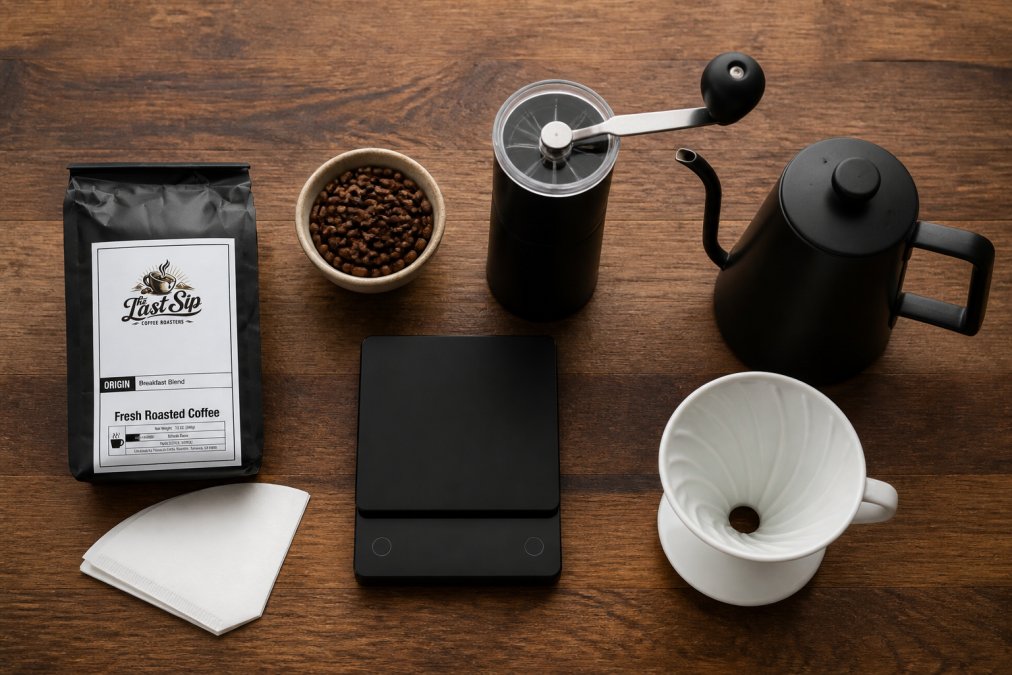
Step 4: Heat Water to 200°F
Boil water and wait 30 seconds before pouring.
Step 5: Bloom Your Grounds (Pour-Over and Immersion Methods)
Pour just enough water to saturate the grounds. Wait 30-45 seconds. This releases CO2 and improves extraction.
Step 6: Pour or Steep
For pour-over: pour slowly in circular motions. Total brew time should be 3-4 minutes. For French press: pour all water at once, stir after one minute, press after four minutes.
Step 7: Taste and Adjust
Is it bitter? Grind coarser or reduce brew time next time. Is it sour? Grind finer or extend brew time. One variable at a time.
The entire process takes five minutes. This consistency is how you actually improve.
Storage and Freshness Tips for Maximum Flavor
Whole beans stay fresher longer than ground coffee. Store beans in an airtight container, away from light and heat. A dark cabinet works better than a countertop.
Freezing whole beans extends freshness to two to three months. Thaw the night before use. Don't refrigerate, condensation damages flavor. Buy smaller quantities more often. The Last Sip Coffee Roasters' subscription model delivers fresh beans regularly, so you never have stale coffee sitting around.
Check the roast date every time you brew. Beans older than four weeks require perfect technique to taste acceptable. Fresh beans are forgiving.
Brewing better coffee at home isn't complicated. Start with fresh beans, measure your ratios, control water temperature, and adjust one variable at a time. The Last Sip Coffee Roasters delivers roasted-to-order beans that eliminate guesswork around freshness. Order the Breakfast Blend or House Blend to get started with beans at peak flavor. Consistent, great-tasting coffee is within reach.


Frequently Asked Questions
What is the most effective way to brew better coffee at home?
The most effective approach combines three factors: using freshly roasted beans within 2-4 weeks of the roast date, maintaining precise water temperature between 195-205°F, and measuring your coffee-to-water ratio accurately. Start with a 1:16 ratio (1 gram coffee to 16 grams water) and adjust based on your taste preferences. Consistency in these three areas produces café-quality results more reliably than any single technique.
Why is my coffee bitter, and what causes this flavor problem?
Bitter coffee typically results from over-extraction, which happens when water contacts grounds too long or at temperatures that are too high. Common culprits include grinding too fine, using water hotter than 205°F, or steeping grounds for longer than recommended. Under-extraction (weak, sour coffee) occurs when grounds are too coarse or brew time is too short. Adjusting grind size and temperature first solves most bitterness issues before experimenting with brew time.
What coffee-to-water ratio should I use for different brewing methods?
Most brewing methods work well with a 1:16 ratio as a starting point. Pour-over and drip coffee often perform best at 1:15 to 1:17, while immersion brewing like French press typically uses 1:14 to 1:15 for fuller body. Espresso requires a much finer ratio around 1:2 to 1:3. Use a scale to measure both coffee and water by weight rather than volume, this removes guesswork and ensures repeatability across batches.
How do I know if my coffee beans are actually fresh?
Check the roast date on the bag, beans are freshest within 2-4 weeks of roasting. Beans roasted to order, like those from The Last Sip Coffee Roasters, arrive at peak freshness since they're roasted specifically for your order rather than sitting in warehouse inventory. Fresh beans produce visible bloom (CO2 release) during brewing, smell aromatic, and taste vibrant. Beans older than 4-6 weeks lose complexity and develop stale, flat flavors.
Does water temperature really change the taste of coffee?
Yes, water temperature significantly affects extraction and flavor. Water between 195-205°F extracts coffee compounds evenly, producing balanced flavor with proper acidity and body. Hotter water over-extracts quickly, creating bitter, harsh flavors. Cooler water under 190°F under-extracts, leaving coffee sour and thin. Investing in a simple thermometer or gooseneck kettle with temperature control is one of the highest-impact upgrades for home brewing.
What grind size should I use for my brewing method?
Grind size directly affects extraction time: coarse grinds for immersion methods like French press (4+ minutes steeping), medium grinds for pour-over and drip (3-4 minutes contact time), and fine grinds for espresso (25-30 seconds pressure extraction). Inconsistent grind size causes uneven extraction, some particles over-extract while others under-extract. A burr grinder produces consistent particle size far better than blade grinders, making it essential for better brewing.
This article was written using GrandRanker