
Table of Contents
- How to Avoid Stale Coffee Subscriptions
- Understanding Coffee Roast Date Importance
- Match Your Coffee Subscription Delivery Frequency to Your Consumption
- Choose the Best Coffee Storage Containers for Freshness
- Optimize Your Subscription Tier and Batch Size
- Recognize and Prevent Stale Coffee Before It Happens
- Reduce Waste with Smart Brewing and Consumption Strategies
- Conclusion
Last Updated: August 16, 2026
How to Avoid Stale Coffee Subscriptions
Stale coffee kills the subscription model. You sign up excited, anticipating café-quality cups at home. Two weeks in, you're staring at a bag of beans that smell flat and taste muted. This happens because customers receive exceptional beans but don't consume them fast enough, store them wrong, or their subscription cadence doesn't match their actual coffee drinking habits. The fix requires understanding how coffee degrades and aligning your subscription to your lifestyle.
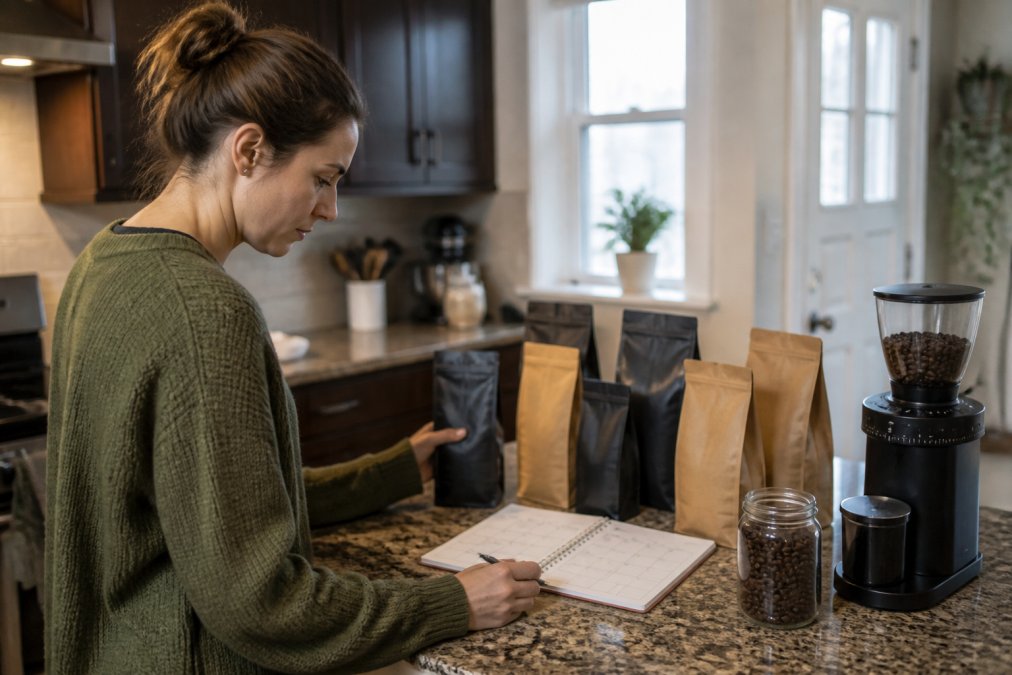
Below, we'll show you exactly how to avoid stale coffee subscriptions by matching delivery frequency to consumption, choosing the right storage containers, and recognizing when beans have lost their peak freshness.
Understanding Coffee Roast Date Importance
The roast date is your coffee's expiration clock. Coffee begins losing flavor and aroma the moment it cools after roasting. Fresh-roasted coffee reaches peak freshness between 5 and 30 days after roasting, depending on the brewing method. Pour-over and specialty-grade preparations benefit most from beans roasted 7-14 days prior. Cold brew tolerates slightly older beans because extended steeping extracts flavor even from coffee that's lost some surface volatility.
The roast date becomes your most important purchasing signal. A bag with a roast date from three weeks ago is already past peak. A roast date from the last week means you're getting coffee at its absolute best. Subscription services that roast to order, like The Last Sip Coffee Roasters, have a significant advantage: every shipment arrives with a recent roast date, not weeks-old inventory sitting in a warehouse.
When you receive your subscription box, check that roast date immediately. If it's older than two weeks, contact the roaster. If it's within the last week, you're in the optimal window.
Match Your Coffee Subscription Delivery Frequency to Your Consumption
This is where most subscriptions fail. The roaster sends coffee on a fixed schedule while you consume it on your own schedule. When the two don't align, beans sit around degrading.
Start by calculating your actual consumption rate. A half-pound per week means you need roughly 2 pounds monthly. A full pound per week means 4 pounds. Most people guess wrong and end up with surplus beans that lose freshness while waiting to be used.
Once you know your consumption rate, adjust your subscription frequency to match it. If you drink half a pound weekly, request delivery every two weeks. If you drink a full pound weekly, monthly delivery works. The goal is receiving fresh beans just as you're finishing the previous batch, with minimal overlap and maximum freshness.
Many subscription services let you customize delivery frequency. Choose the frequency that aligns with your consumption, not what feels convenient. A monthly subscription is worthless if you only drink coffee twice a week and the beans go stale by mid-month.
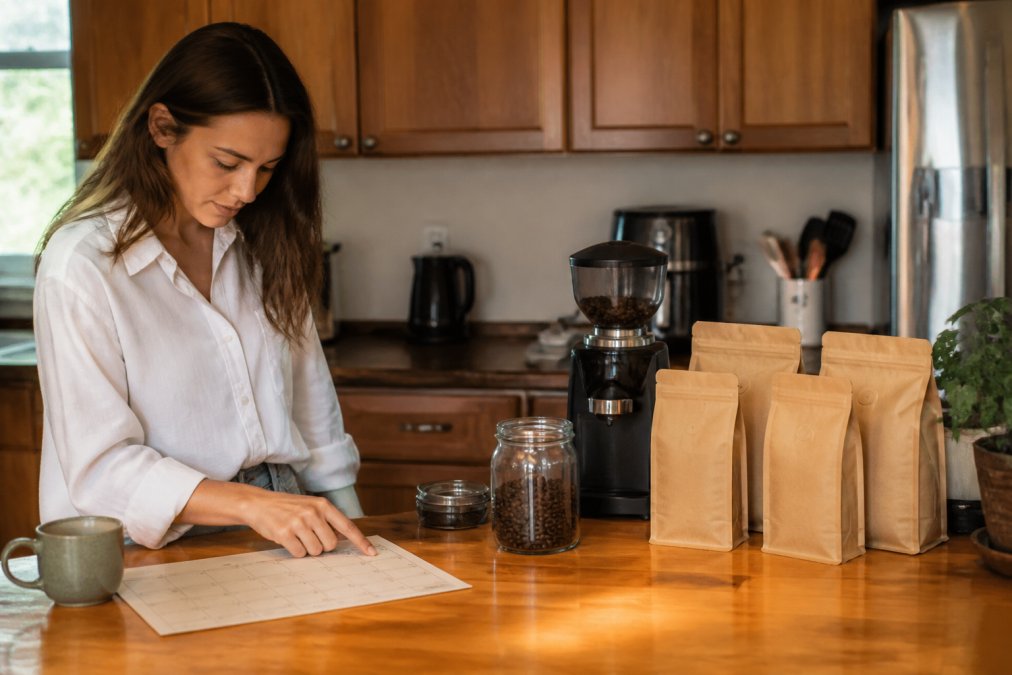
Consider your lifestyle too. Work-from-home professionals who brew daily need faster delivery cadences than weekend coffee drinkers. Travel disrupts consumption patterns. Seasonal changes matter, many people drink less iced coffee in winter, affecting their monthly volume.
Subscription cadence optimization is the single biggest lever for avoiding stale coffee. Get this right, and storage and roast dates become secondary concerns.
Choose the Best Coffee Storage Containers for Freshness
Oxygen is coffee's enemy. The moment beans are roasted, they begin oxidizing. Exposure to light accelerates this process. Moisture introduces mold and flavor degradation. Temperature fluctuations cause the beans' oils to migrate, affecting taste consistency.
Why Airtight Containers with One-Way Valves Matter
An airtight container creates a barrier against all three threats. The best coffee storage containers feature a one-way valve, a small mechanism that lets carbon dioxide escape while preventing oxygen from entering. This valve is critical. Without it, pressure builds inside the container, forcing it open or creating stress on the seal.
One-way valves work through a simple flapper mechanism: CO2 pushes the flapper open as it exits, but when pressure equalizes, the flapper closes, blocking oxygen from entering. Vacuum-sealed containers are the premium option, extending shelf life to 4-6 weeks versus 2-3 weeks in standard airtight containers. However, standard airtight containers with one-way valves work well for most home users and cost $10-25 per container.
Container Size and Single-Dose Storage
Size matters more than most people realize. A container that's too large means excess air space and more oxygen for the coffee to interact with. Match container size to your consumption interval. If you drink one pound of coffee per week, use a one-pound container.
For maximum freshness, some coffee enthusiasts use single-dose storage: dividing beans into individual daily portions in small airtight containers immediately after receiving the shipment. This eliminates the air-space problem entirely and prevents oxidation of unused beans. The trade-off is time investment and storage space.
Protecting Against Oxygen, Light, and Moisture
Store your containers in a cool, dark, dry place. A pantry or cabinet works better than a kitchen counter. Direct sunlight degrades coffee rapidly. Heat causes volatile aromatic compounds to evaporate faster. Humidity introduces moisture that can affect bean quality.
Room temperature, around 65-75 degrees Fahrenheit, is ideal. Avoid areas near heat sources (ovens, dishwashers, radiators), appliances that cycle temperature (refrigerators), or windows where sunlight exposure varies throughout the day.
Why Freezing and Refrigeration Backfire
The freezer is tempting for long-term storage, but it's counterproductive for most home users. Freezer burn damages bean structure. More critically, temperature fluctuations as you open and close the freezer cause condensation inside the container, moisture is introduced every time you remove beans. The refrigerator is worse than the freezer. Constant temperature changes and humidity exposure degrade coffee faster than room-temperature storage.
Transitioning from Original Bags
Many specialty-grade beans come in bags with one-way valves built in. These bags work well for short-term storage (the first 2-3 weeks after roasting) but aren't designed for long-term use. Transfer beans to a dedicated airtight container after opening the bag. If your subscription arrives in kraft bags without valves, transfer to an airtight container immediately upon receipt.
Optimize Your Subscription Tier and Batch Size
Subscription tiers vary by roaster, but the principle is consistent: larger batch sizes mean beans sit longer before being consumed. Smaller, more frequent shipments keep coffee fresher.
Calculate Your Household Consumption Rate
Start with a simple metric: cups per day. A standard cup of brewed coffee uses 0.5 ounces of whole beans. A household drinking 4 cups daily uses 2 ounces per day, or 14 ounces per week, or approximately 0.9 pounds per week.
Use this formula:
- Cups per day × 0.5 oz = daily bean consumption
- Daily consumption × 7 = weekly consumption
- Weekly consumption × 4.3 = monthly consumption
Example: 4 cups daily = 2 oz/day = 14 oz/week = 0.88 lbs/week = 3.8 lbs/month
Most people overestimate their consumption. Track your actual consumption for one week by measuring beans before brewing. This removes guesswork.
Match Consumption Rate to Subscription Tier
Once you know your monthly consumption, choose a subscription tier that delivers slightly less than that amount. The goal is finishing beans just as the next shipment arrives, with minimal overlap.
If your household consumes 2 pounds monthly, a biweekly tier (2 lbs × 2 shipments) is optimal. If your household consumes 4 pounds monthly, a monthly tier (4 lbs) is acceptable if the roast date is recent. If your household consumes 6 pounds monthly, a monthly tier (6 lbs) works for high-consumption households.
The cost per pound is typically identical across tiers. The freshness advantage of smaller, more frequent shipments is significant, beans roasted 5 days ago are noticeably fresher than beans roasted 20 days ago.
Account for Seasonal and Lifestyle Variation
Consumption isn't constant. Many people drink less iced coffee in winter, affecting monthly volume by 20-30%. Remote workers drink more coffee than office workers. Travel disrupts consumption patterns.
If your consumption varies by season, choose a tier that works for your average month, then use subscription pauses during low-consumption periods. Most roasters allow pauses without penalty. If you know you're traveling for three weeks, pause that month.
Waste Reduction for Oversized Tiers
If you've chosen a tier that's slightly larger than your consumption, you have options. Cold brew concentrate uses older beans well because extended steeping (12-24 hours) extracts flavor that's still present. Beans that are 4-6 weeks old work fine for cold brew. Espresso shots can mask subtle flavor loss that's noticeable in lighter brewing methods. Flavored applications like coffee cocktails, coffee-infused desserts, or coffee rubs for cooking don't require peak freshness and can use beans that are 4-8 weeks old.
By understanding your consumption rate and these secondary uses, you can confidently choose a subscription tier that balances freshness with cost and household needs.
Recognize and Prevent Stale Coffee Before It Happens
Stale beans have telltale signs. The aroma is the first indicator. Fresh-roasted coffee smells vibrant and complex. Stale coffee smells flat, sometimes almost cardboard-like. Appearance changes too, fresh beans have visible oils on the surface, especially in the first two weeks after roasting. As beans age, they lose these oils and appear duller.
Taste is the final confirmation, but by then it's too late. Stale coffee tastes thin, lacking the body and complexity of fresh beans. The flavor profile flattens. Acidity becomes harsh rather than bright.
Prevention is simpler than recovery. Stick to your optimized subscription frequency. Use the roast date as your guide and consume beans within 30 days of roasting. Store properly in airtight containers away from light and heat. Grind immediately before brewing to slow oxidation of the grounds.
Reduce Waste with Smart Brewing and Consumption Strategies
The subscription model works best when consumption aligns with delivery. But real life isn't perfectly predictable. Travel, schedule changes, or simply losing interest in coffee for a week can create surplus.
Smart brewing strategies make slightly older beans useful. Cold brew concentrate is one approach. French press brewing uses more coffee per cup than pour-over, extracting more flavor from beans that have lost some volatility. Espresso shots can mask subtle flavor loss that's noticeable in lighter brewing methods.
If you know you're traveling for two weeks, pause your subscription that month. Most roasters allow pauses without penalty. If you're going through a low-consumption period, reduce your subscription frequency temporarily.
The goal isn't perfection. It's alignment: matching what you receive to what you actually drink, storing it properly, and having backup plans for the beans that inevitably sit a little longer than ideal.
Stale coffee subscriptions don't have to be inevitable. The problem isn't the subscription model itself, it's misalignment between delivery frequency, consumption rate, and storage practices. By understanding roast date importance, matching your subscription cadence to your actual coffee drinking habits, and storing beans in proper airtight containers, you'll maintain that fresh-roasted quality that makes premium subscriptions worth the investment.
The Last Sip Coffee Roasters addresses this problem directly by roasting every batch to order, ensuring your shipments arrive with the freshest possible roast dates. Combined with a flexible ordering system that lets you adjust delivery frequency to match your consumption, you eliminate the stale coffee problem before it starts. Explore The Last Sip Coffee Roasters' sample packs, like the Best Coffee Sampler Pack with 6Bean, Cowboy, Breakfast, Peru, Mexico & Bali, to find the beans and subscription frequency that fit your routine. Start with what you'll actually drink, store it properly, and adjust your subscription from there.

Frequently Asked Questions
How long does coffee stay fresh after the roast date?
Coffee reaches peak freshness between 5-14 days after the roast date. It remains drinkable for 2-4 weeks, though flavor and aroma decline noticeably after the first month. Beyond 4 weeks, oxidation and moisture exposure cause stale, flat-tasting coffee. Specialty-grade beans stored in airtight containers with minimal light exposure last longer than pre-ground coffee, which loses freshness within days of grinding.
What is the ideal coffee subscription delivery frequency for someone who uses half a pound weekly?
At half a pound per week, order every 2 weeks to receive fresh beans within their peak flavor window. This prevents over-purchasing and reduces the risk of stale inventory. If you prefer variety, consider a subscription that lets you adjust frequency monthly, some allow you to skip weeks or increase batch size around holidays. Align your subscription cadence with your actual consumption rate, not convenience.
How do I know if my coffee subscription beans are stale?
Stale beans show flat, muted aroma and lack the bright, complex flavor profile of fresh-roasted coffee. The surface may appear dull or oily from oxidation. When brewed, stale coffee tastes thin, bitter, or muddy. Fresh beans from a specialty roaster like The Last Sip Coffee Roasters arrive with visible degassing activity and a vibrant smell. If your subscription arrives more than 2 weeks post-roast or sits unopened for over a month, staleness is likely.
Should I freeze coffee beans from my subscription to extend shelf life?
Freezing can extend coffee bean shelf life to 3-4 months if stored in a vacuum-sealed, airtight container. However, freezer burn and temperature fluctuations damage bean quality and flavor. A better approach is to adjust your subscription frequency so beans arrive fresh and you consume them at peak freshness within 2-4 weeks. Reserve freezing only for bulk purchases or specialty beans you want to preserve long-term.
This article was written using GrandRanker