
Table of Contents
- Why Your Morning Coffee Routine Needs a Sugar Reset
- What Counts as a Healthy Alternative to Sugary Morning Coffee
- Natural Energy Boosters for Mornings That Last Past 10 A.M.
- How to Transition Away from Sugary Lattes Without Quitting Cold Turkey
- The Best Water Temperature for Brewing Green Tea (and Why It Changes Everything)
- Mushroom Coffee and Flavored Roasts: A Smarter Swap for Sugar
- Common Mistakes When Cutting Sugar from Your Morning Cup
- Conclusion
- Frequently Asked Questions
Last Updated: September 15, 2026
Why Your Morning Coffee Routine Needs a Sugar Reset
Most people don't realize how much sugar they drink before 9 a.m. A standard flavored latte can carry 30 to 50 grams, close to or above the daily added-sugar limit many health organizations recommend for adults. That's dessert in a cup, and it sets up a crash right when your morning focus should be peaking. This guide from The Last Sip Coffee Roasters breaks down what works when you want healthy alternatives to sugary morning coffee, without giving up the ritual.
What Counts as a Healthy Alternative to Sugary Morning Coffee
A healthy alternative to sugary morning coffee is any drink that delivers caffeine or satisfying flavor with little to no added sugar, and ideally some functional benefit: black or lightly sweetened coffee, tea, mushroom coffee blends, and flavored coffees made without added sugar.
The Dietary Guidelines for Americans recommend keeping added sugars under 10% of daily calories, which is roughly 50 grams on a 2,000-calorie diet. One sweet latte can eat most of that before breakfast.
Caffeine Without the Crash
Sugar isn't the only culprit behind the mid-morning slump. A rapid blood sugar spike followed by a drop makes you reach for a second cup; a lower-sugar drink smooths that curve.
Options that deliver caffeine without the crash:
- Black or lightly creamed coffee with no added sweetener
- Green tea, which pairs caffeine with L-theanine
- Matcha, which delivers caffeine more gradually than brewed coffee
- Mushroom coffee blends that combine coffee with functional ingredients
Flavor-First Swaps That Still Feel Like a Treat
Cutting sugar doesn't mean cutting flavor. Most people go straight to plain black coffee, hate it, and quit within a week. Instead, keep the indulgence and drop the sugar. The Last Sip Coffee Roasters' Cinnamon Roll Coffee Cinnabun is a medium roast with all the cinnamon roll flavor and zero added sugar or calories, roasted to order in small batches so the flavor stays bright.

Natural Energy Boosters for Mornings That Last Past 10 A.M.
The most reliable natural energy boosters for mornings are steady caffeine sources paired with protein, hydration, and a little movement. None work if you spike your blood sugar first.
A few approaches that hold up in practice:
- Drink a full glass of water before your first cup. Mild dehydration mimics fatigue.
- Add protein to breakfast. It slows caffeine absorption and steadies energy.
- Try L-theanine, found naturally in green tea and matcha, which many people find smooths the caffeine edge.
- Step outside for five minutes of morning light. It helps regulate your sleep-wake cycle.
Green tea and matcha are the easiest single-swap options because caffeine and L-theanine arrive together. Our Ceremonial Matcha is built for this kind of slow, intentional morning.

How to Transition Away from Sugary Lattes Without Quitting Cold Turkey
The best way to transition away from sugary lattes is a gradual taper: reduce sweetener and milk volume over several weeks while introducing lower-sugar alternatives you enjoy. Cold turkey fails because the flavor gap is too wide.
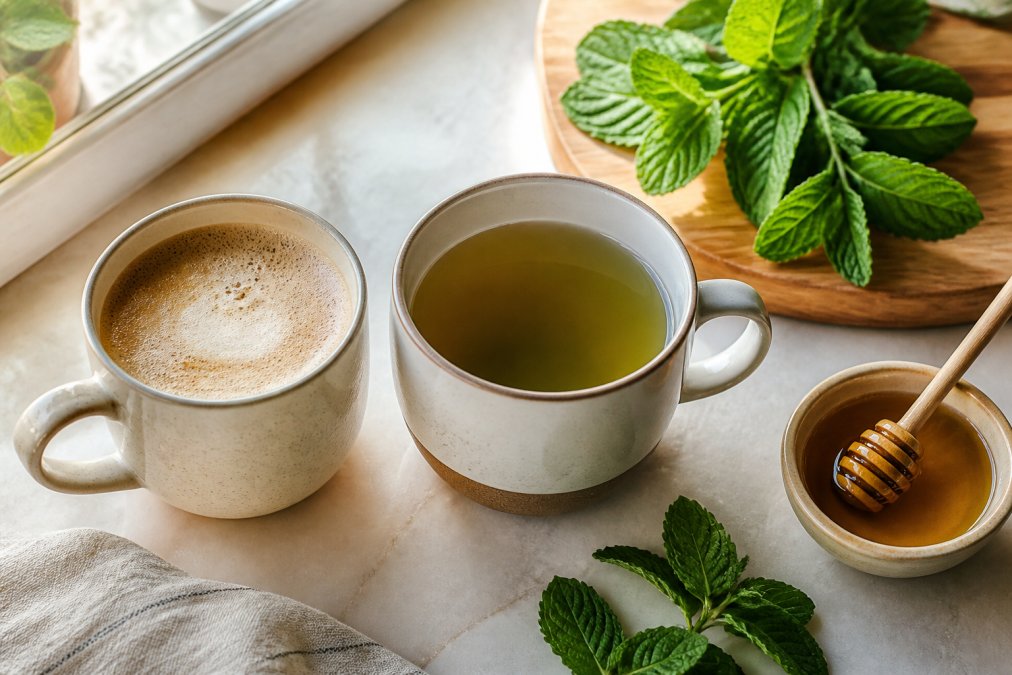
A Four-Week Taper Plan
| Week | What to Change | Target |
|---|---|---|
| Week 1 | Cut sweetener by half in every drink | Same drink, less sugar |
| Week 2 | Swap one daily latte for a flavored no-sugar coffee | One clean swap |
| Week 3 | Reduce milk or creamer volume by half | Lighter, less sweet |
| Week 4 | Replace remaining sugary drinks with tea or black coffee | Full transition |
The taper works because you never lose the ritual, the warm mug, the smell, the pause. You just change what's inside.
The Cost-Per-Cup Math Nobody Runs
Most guides stop at the monthly subscription price. The number that answers "is this worth it" is cost per cup versus what you spend now.
A typical coffee-shop flavored latte runs roughly $5 to $7, or about $150 to $210 a month at one a day. A bag of freshly roasted no-sugar flavored coffee brews 30 to 40 cups, putting the per-cup cost at $0.50 to $1.00 before milk or creamer, under $1.50 even with a splash of oat milk or half-and-half.

That gap, roughly $4 to $5 per cup, is the real argument for the swap. It's not just sugar you're cutting. It's a recurring line item.
Pause, Skip, or Cancel: What to Check Before You Subscribe
Subscription fatigue is real, and its biggest source is friction at cancellation. Before signing up for any coffee or tea subscription, confirm three things:
- Can you skip a shipment? A good subscription lets you skip any month without penalty, which matters if you travel or fall behind on drinking.
- Can you pause instead of cancel? Pausing preserves your grandfathered pricing and any loyalty perks; canceling usually doesn't.
- Is cancellation self-serve? If you have to call or email during business hours to cancel, that's a red flag. Self-serve cancellation in your account dashboard is the standard to expect.
A common pattern is a subscription that's easy to start and hard to stop. Read the cancellation policy before your first order, not your third.
Storage and Freshness: Making the Last Cup as Good as the First
If you're buying a month's worth of coffee at once, freshness becomes a logistics problem.
Waste: What Monthly Shipments Actually Generate
The Best Water Temperature for Brewing Green Tea (and Why It Changes Everything)
Mushroom Coffee and Flavored Roasts: A Smarter Swap for Sugar
How Mushroom Coffee Actually Works
A few things worth knowing before you buy:
Flavored Roasts Without Added Sugar
Sourcing and Ingredient Quality: What to Look For
Comparing Your Options
| Option | Caffeine | Added Sugar | Best For |
|---|---|---|---|
| No-sugar flavored coffee | Standard | None | Keeping the latte ritual |
| Mushroom coffee blend | Standard | None | Focus without the crash |
| Ceremonial matcha | Moderate | None | Slow, steady energy |
| Herbal tea | None | None | Evening or caffeine-free mornings |
Brewing Guides and Getting the Most from a Blend
Common Mistakes When Cutting Sugar from Your Morning Cup
Conclusion
Frequently Asked Questions
What are the healthiest alternatives to sugary coffee drinks?
The healthiest swaps keep the ritual but drop the sugar. Options include ceremonial matcha, which provides calm, sustained energy without a crash; hojicha powder, a roasted green tea with a naturally sweet, toasted flavor; and mushroom coffee blends that combine specialty-grade arabica with lion's mane, cordyceps, and reishi for a functional cup. Herbal teas like hibiscus berry or peach blends are caffeine-free choices. Each alternative delivers flavor and ritual without the added sugar and calories of a flavored latte.
How can I stop drinking sugary coffee in the morning?
Taper gradually rather than quitting abruptly. Week one, cut your usual sugar by half. Week two, swap in a naturally sweetened alternative like a cinnamon roll flavored coffee that has no added sugar. Week three, try alternating between coffee and a tea like jasmine or matcha. Week four, make the new drink your default. Pair the transition with a consistent morning routine so the habit shift feels intentional rather than restrictive. Most people adjust their palate within two to three weeks.
Is tea a better morning alternative than coffee?
It depends on what you need from your morning cup. Green tea and matcha deliver caffeine more gradually, which can mean steadier energy and fewer jitters. Herbal teas like hibiscus berry or peach paradise are caffeine-free, making them ideal if you want the ritual without the stimulant. Coffee still works, especially if you choose a roast without added sugar. The best choice is the one you will actually drink consistently, whether that is a lightly flavored coffee or a ceremonial matcha.
What can I add to my morning drink for energy without sugar?
Natural energy boosters for mornings include functional mushrooms like lion's mane and cordyceps, which are traditionally associated with focus and stamina. A mushroom coffee blend delivers these alongside caffeine in one cup. Cinnamon adds warmth and a perception of sweetness without sugar. A small amount of unsweetened oat or almond milk can make a drink feel richer. If you want a caffeine-free option, hojicha powder offers a roasted, naturally sweet flavor that satisfies without any stimulant.
Are there natural sweeteners for coffee that are healthy?
Cinnamon is the simplest starting point because it adds warmth and a hint of sweetness without calories. Unsweetened vanilla extract or a dash of nutmeg can round out flavor. If you want a sweetener, monk fruit and stevia are common low-calorie options, though some people notice an aftertaste. The most sustainable approach is retraining your palate: choose a flavored coffee like pecan pie or cinnamon roll that is made with natural flavoring and no added sugar, so the flavor comes from the roast rather than the sweetener.