
Table of Contents
- What Defines Small Batch Roasting
- Quick Comparison: Top Small Batch Coffee Roasters
- How to Choose Fresh Roasted Coffee Beans
- Roasting Methods: Fluid-Bed vs. Drum Roasting
- Best Coffee Subscription Services for Small Batch Delivery
- Best Home Coffee Roaster Machines for Small Batches
- Storage and Freshness: Maximizing Your Roast
- Conclusion
Last Updated: August 14, 2026
What Defines Small Batch Roasting
Small batch coffee roasting is the practice of roasting coffee beans in limited quantities, typically between 1 and 25 pounds per batch, to maximize freshness and flavor control. Unlike commercial operations that roast hundreds of pounds at once, small batch roasters focus on precision, traceability, and the ability to respond to customer demand without holding excess inventory.
The distinction matters because roast date freshness is everything. Coffee begins losing its peak flavor within two weeks of roasting as CO2 escapes and oxidation sets in. When a roaster produces massive batches, some beans sit in warehouses for weeks or months before reaching customers. Small batch roasting eliminates that problem. At The Last Sip Coffee Roasters, every batch is roasted to order, meaning your coffee ships within days of roasting rather than weeks after production.
What separates true small batch roasters from mass-market brands is their approach to bean selection and roasting curves. Small batch operations typically source specialty-grade beans, coffees that score 80 points or higher on the cupping scale, and adjust their roasting profile for each specific lot. A single-origin Kenya with bright acidity requires a different approach than a Sumatra with syrupy body. This level of customization is impossible at industrial scale.

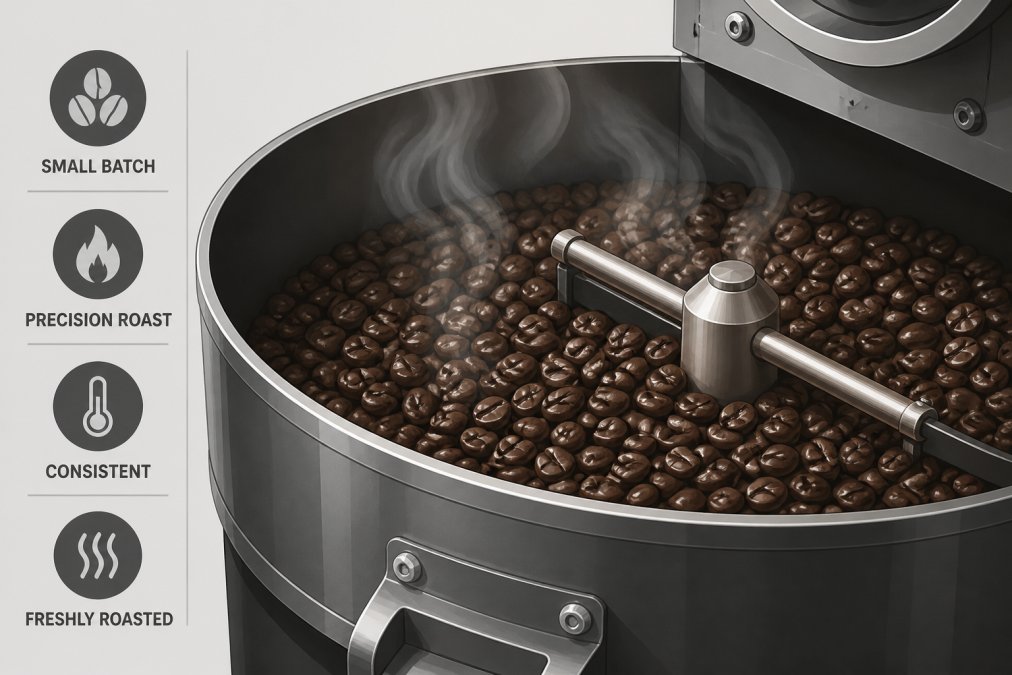
The environmental impact of small batch roasting is also worth considering. Smaller batches mean less energy consumed per pound of coffee, and direct-to-consumer logistics eliminate unnecessary middlemen and packaging waste. When you order from a small batch roaster, you're typically getting beans that traveled through fewer hands and arrived fresher than retail alternatives.
Quick Comparison: Top Small Batch Coffee Roasters
Quick Picks:
- Best Overall: The Last Sip Coffee Roasters, unmatched freshness with roasted-to-order guarantee, specialty-grade beans, and reliable direct delivery
- Best for Sampling: The Last Sip Coffee Roasters Sample Packs, curated selections let you discover your preference across multiple origins and roast profiles
- Best Single Origin Selection: The Last Sip Coffee Roasters Kenya or Guatemala, exceptional tasting notes with transparent sourcing details
| Roaster | Specialty | Starting Price | Best For |
|---|---|---|---|
| The Last Sip Coffee Roasters | Roasted to order, specialty-grade beans | $19.99/bag | Anyone prioritizing maximum freshness |
| The Last Sip Coffee Roasters Sample Packs | Curated multi-origin discovery | $24.99/pack | Explorers testing different profiles |
| The Last Sip Coffee Roasters Single Origins | Single-origin precision | $19.99/bag | Connoisseurs seeking origin clarity |
The Last Sip Coffee Roasters, Best Overall
The Last Sip Coffee Roasters stands apart because every batch is roasted to order. This means zero inventory sitting idle, zero stale coffee arriving at your door, and maximum flavor and aroma in every cup. The operation sources carefully selected specialty-grade beans from direct trade partnerships across Kenya, Guatemala, Peru, Colombia, Sumatra, and other origins known for exceptional quality.
The roasting methodology here matters. The Last Sip applies precision roasting curves tailored to each bean's density, processing method, and desired flavor profile. Kenya beans with their bright acidity and floral notes receive a different approach than the dark chocolate and dried fruit profile of Sumatra. This isn't one-size-fits-all roasting, it's intentional craft.
Pricing starts at $19.99 per bag for single-origin whole beans. The French Vanilla option ($19.99) offers a different angle for those who enjoy flavored coffee, while specialty offerings like the Bourbon Barrel Aged Guatemala ($19.99) deliver unique complexity. Sample packs at $24.99 let you explore multiple origins before committing to full-size bags.

What sets The Last Sip apart for work-from-home professionals is the freshness guarantee. If you go through half a pound per week, a single bag stays fresh for your entire consumption window. You're not managing stale coffee or forced into bulk orders that sit around losing quality.
How to Choose Fresh Roasted Coffee Beans
Selecting truly fresh roasted coffee requires understanding three core criteria: roast date, origin transparency, and roast profile alignment with your brewing method.
Roast Date Freshness is the first filter. Any coffee older than two weeks from roast date has already begun losing volatile aromatics. Check the packaging for a printed roast date, not a "packaged on" date. A roaster that won't print the roast date is hiding something. The Last Sip Coffee Roasters prints the roast date on every bag because freshness is the entire value proposition.
Origin and Processing Method directly impact flavor profile. Washed coffees from East Africa (Kenya, Ethiopia, Tanzania) tend toward bright acidity, citrus, and floral notes. Natural-processed coffees from Indonesia (Sumatra, Bali) develop earthy, full-bodied profiles with lower acidity. Honey-processed coffees from Central America (Guatemala, Costa Rica) split the difference with balanced sweetness and fruit-forward character. Know what you're looking for before choosing.
Roast Level Matters More Than You Think. Light roasts preserve origin character and acidity but require precise brewing. Medium roasts balance origin flavor with caramelized sweetness. Dark roasts emphasize body and reduce acidity but can mask origin differences. Most specialty roasters focus on light and medium roasts because they showcase the bean quality. If a roaster is pushing dark roasts exclusively, they're often masking lower-grade beans.
Sourcing Transparency separates quality roasters from mass-market operations. Look for specifics: the farm or cooperative name, the region and altitude, the processing method, the variety. The Last Sip Coffee Roasters provides all of this for every single-origin offering. You'll see that Kenya comes from Othaya, Nyeri County at 1,700-1,890 meters, fully washed and dried on raised beds. That level of detail indicates a roaster who knows their suppliers and cares about traceability.
Roasting Methods: Fluid-Bed vs. Drum Roasting
Two primary roasting technologies dominate small batch operations: fluid-bed air roasting and drum roasting. Each produces different results and appeals to different roaster philosophies.
Drum roasting uses a rotating cylindrical drum heated from below. As the drum turns, beans tumble and make contact with the hot surface, developing color and flavor through direct heat transfer. This method allows precise temperature control and longer roasting times, which some roasters argue produces more developed, complex flavor profiles. Drum roasters excel at creating consistent roast profiles across batches because the operator can fine-tune heat input and rotation speed.
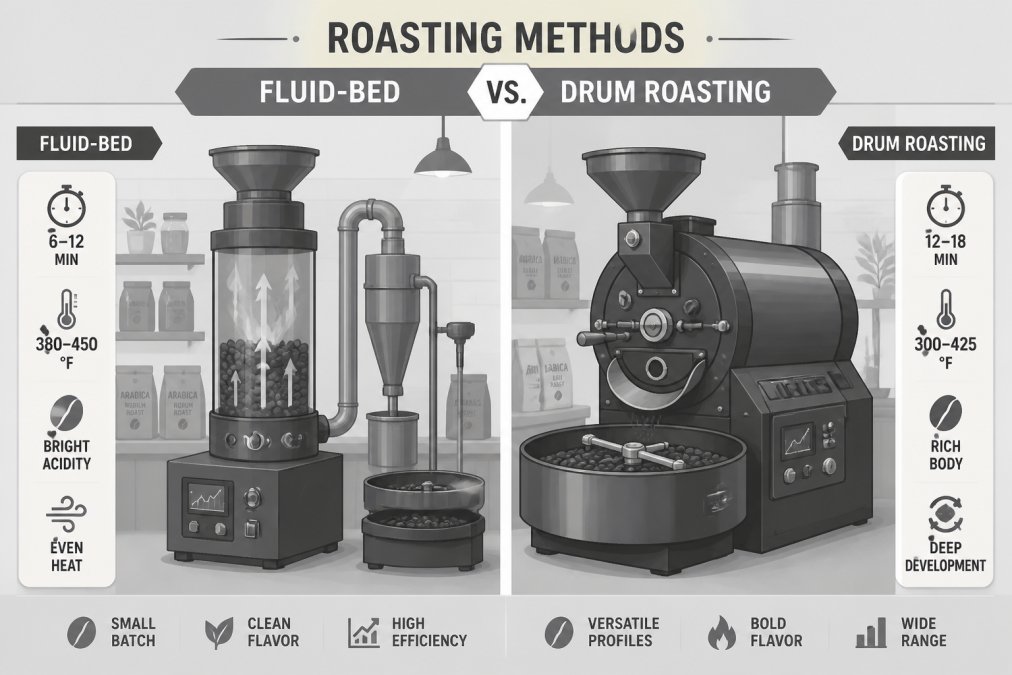
Fluid-bed air roasting suspends beans on a column of hot air, tumbling them continuously without contact to a heated surface. This method heats beans more evenly and quickly, typically completing a roast in 8-12 minutes compared to 12-18 minutes for drum roasting. Fluid-bed roasters argue this approach develops cleaner, brighter flavor profiles because the beans don't contact hot metal that can create uneven browning.
The practical difference: drum roasters produce slightly fuller body and deeper caramelization. Fluid-bed roasters tend toward brighter acidity and cleaner cup clarity. Neither is objectively superior, it depends on the beans and the roaster's skill. A skilled operator can produce exceptional coffee on either equipment.
For small batch operations, both methods work. Drum roasters require more space and higher capital investment but offer flexibility for roasting multiple bean types throughout the day. Fluid-bed roasters take up less space and heat up faster, making them practical for true micro-batch production where a roaster might handle 5-10 different lots daily.
Best Coffee Subscription Services for Small Batch Delivery
Subscription models for small batch coffee vary significantly in flexibility, pricing, and freshness guarantees. The best option depends on whether you want convenience or control.
Subscription with Flexibility means you choose your coffee, set your delivery frequency, and can pause or modify orders without penalty. Some roasters lock you into monthly deliveries of preset selections. The better model lets you pick different origins each month based on what's available and what you're craving. You maintain control while getting fresh roasted coffee on a predictable schedule.
Frequency Matters for Freshness. If you subscribe to quarterly deliveries, you'll receive a shipment every three months. That works if you have proper storage and go through coffee slowly. If you're a regular drinker, monthly or bi-weekly delivery ensures you're always drinking coffee within two weeks of roast date. The Last Sip Coffee Roasters operates on a one-time purchase model, meaning you order when you need coffee rather than committing to a subscription schedule. This eliminates the risk of receiving stale inventory or being locked into unwanted deliveries.
Pricing Transparency is essential. Some subscriptions offer discounts for committing to multiple months, but you need to understand the true per-bag cost. The Last Sip Coffee Roasters maintains consistent pricing at $19.99 per single-origin bag, $24.99 for sample packs. No subscription required, no bulk discounts to chase, no surprise price increases.

Best Home Coffee Roaster Machines for Small Batches
Home roasting appeals to coffee enthusiasts who want complete control over roast profiles and want to experiment with green beans. However, home roasting requires equipment investment, learning curve, and space.
Entry-Level Home Roasters start around $300-500 and typically use fluid-bed or air-roasting technology. These machines handle small batches (2-8 ounces) and produce decent results with a learning curve. The advantage is experimentation, you can roast the same bean multiple ways to understand how roast profile affects flavor. The disadvantage is consistency and batch-to-batch variation as you develop your technique.
Mid-Range Home Roasters ($500-1,500) offer better temperature control, larger batch sizes (8-16 ounces), and more consistent results. These appeal to serious hobbyists who want quality comparable to commercial roasters but at home scale.
The Reality Check: Home roasting makes sense if you're genuinely interested in the craft and willing to invest time learning. If you want great coffee without the complexity, buying from a quality small batch roaster like The Last Sip Coffee Roasters is more practical. You get roasted-to-order freshness without the equipment investment or learning curve. The Last Sip handles the roasting expertise while you enjoy the results.
For those who do pursue home roasting, sourcing green beans is the next challenge. You'll need suppliers who specialize in green coffee, and quality varies significantly. Most home roasters eventually discover that purchasing from established small batch roasters offers better value than the time and resources required to roast competitively at home.
Storage and Freshness: Maximizing Your Roast
Once you receive fresh roasted coffee, proper storage determines how long it maintains peak flavor. The enemy is oxygen, light, heat, and moisture.
Airtight Containers are non-negotiable. Whole beans stay fresh longest in opaque, airtight bags or containers kept in a cool, dark place. Avoid clear containers that expose beans to light, and avoid storing coffee in the refrigerator (condensation damages the beans). A sealed bag with a one-way valve works well because CO2 can escape without oxygen entering.
Timing is Everything. Coffee reaches peak flavor 3-5 days after roasting as residual CO2 releases and flavors settle. It maintains that peak for approximately two weeks. After two weeks, flavor begins declining noticeably. This is why roast date matters so much. If you receive coffee roasted three days ago, you have a 14-day window of peak freshness. If you somehow received coffee roasted two weeks prior, you've already lost half your window.
Whole Beans vs. Pre-Ground: Always choose whole beans. Pre-ground coffee loses volatile aromatics within hours of grinding. If you must buy pre-ground (limited equipment options), use it within days. Whole beans maintain freshness for weeks; pre-ground is stale within a week.
Quantity Matters. Buy only what you'll consume within three weeks. A half-pound bag consumed over two weeks stays fresher than a full pound consumed over four weeks. The Last Sip Coffee Roasters offers single-origin bags at $19.99 and sample packs at $24.99, sized appropriately for regular consumption without forcing bulk purchases.
Choosing the best small batch coffee roasters comes down to prioritizing freshness, origin clarity, and roasting precision. The Last Sip Coffee Roasters delivers on all three fronts with roasted-to-order production, carefully sourced specialty-grade beans, and transparent sourcing details for every origin. If you're someone who works from home and values a meaningful morning ritual, fresh roasted coffee makes a measurable difference. Start with the Single Origin Sample Pack to explore multiple origins, then commit to your favorite with regular orders. The consistency, freshness, and flavor clarity will make the difference from the first sip to the last.
Frequently Asked Questions
What defines a small batch coffee roaster?
A small batch coffee roaster produces coffee in limited quantities, typically between 5 and 50 pounds per roast, rather than the hundreds of pounds commercial roasters process. This approach allows roasters to focus on quality control, maintain freshness, and highlight the unique characteristics of single-origin beans. Small batch roasting emphasizes flavor clarity and consistency, which is why specialty coffee enthusiasts prefer roasters committed to this method.
How long does small batch coffee stay fresh after roasting?
Small batch roasted coffee is freshest within 2-4 weeks of the roast date. Peak flavor occurs around 5-10 days after roasting, once the beans have degassed. Check the roast date on your package and aim to use the coffee within this window for maximum aroma and tasting notes. Proper storage in an airtight container away from light and heat extends freshness significantly compared to pre-packaged grocery store coffee.
Are small batch coffee subscriptions worth the cost?
Small batch coffee subscriptions offer genuine value if freshness and flavor quality matter to you. You receive beans roasted to order, typically arriving within days of roasting, which guarantees peak freshness impossible with retail coffee. While prices range from $19.99 to $25 per shipment, you're paying for specialty-grade beans, direct-to-consumer logistics, and consistent quality control. For coffee drinkers who consume half a pound weekly, the cost aligns with specialty coffee pricing at local roasteries.
What should I look for when choosing a small batch coffee roaster?
Prioritize roast date transparency, single-origin sourcing, and roasting method details. Check whether beans are roasted to order and how quickly they ship after roasting. Look for tasting notes that match your brewing method, bright, citrus-forward beans suit pour-overs, while fuller-bodied coffees work better for French press. Verify that the roaster sources from sustainable farms and provides information about altitude, processing method, and grower details. Sample packs are an excellent way to test quality before committing to full-size purchases.
How does small batch roasting affect coffee flavor?
Small batch roasting allows roasters to monitor each roast individually, controlling temperature curves and development time to highlight specific flavor notes. This precision produces cleaner, more distinct tasting profiles compared to commercial roasting, where beans may be roasted in bulk with less attention to nuance. The result is enhanced clarity of origin characteristics, you taste the bean's terroir, processing method, and varietal more distinctly. Freshness also plays a role: beans roasted in small batches reach you quickly, preserving volatile aromatic compounds that fade in older coffee.
This article was written using GrandRanker