
Table of Contents
- Why Airtight Containers Matter for Coffee Freshness
- How Long Does Coffee Stay Fresh in an Airtight Container
- Stainless Steel vs Glass Coffee Storage: Which Material Wins
- Key Features of High-Quality Coffee Storage Containers
- Coffee Storage Best Practices for Maximum Flavor
- Light Exposure and Bean Degradation: The Science Behind Storage
- Maintaining Your Container: Cleaning and Seal Integrity
- Frequently Asked Questions
Last Updated: September 26, 2026
Why Airtight Containers Matter for Coffee Freshness
Coffee begins to deteriorate the moment it's roasted. Exposure to oxygen, light, and moisture accelerates this degradation, stripping away the complex flavors and aromas that make freshly roasted beans worth the investment. Among the best airtight containers for coffee storage, a quality option creates a barrier against these elements, preserving the bean's integrity far longer than standard storage methods.
At The Last Sip Coffee Roasters, we understand how storage choices dramatically impact the final cup. The difference isn't subtle, it's the gap between a coffee that tastes alive and one that tastes flat.
The science is straightforward: oxygen causes oxidation, which breaks down the oils and compounds responsible for flavor. A proper seal prevents this chemical reaction from accelerating. Light exposure degrades chlorogenic acid and other beneficial compounds in the bean. Moisture invites mold and promotes staling. The best airtight containers address all three threats simultaneously.
How Long Does Coffee Stay Fresh in an Airtight Container
Coffee stored in a quality airtight container stays fresh for 2-4 weeks, with flavor remaining noticeably vibrant for the first 14 days. After that window, the beans don't spoil, they simply lose aromatic complexity and develop a flatter taste profile.
The timeline depends on several factors: roast date, bean origin, roast level, and how consistently you maintain the seal. Light roasts tend to remain fresher longer than dark roasts because they contain more of the volatile compounds that oxidize. Darker roasts have already lost some of these compounds during the roasting process, so they decline more rapidly once exposed to oxygen.
Temperature stability matters too. Beans stored in a cool, consistent environment (65-70°F) stay fresher longer than those exposed to temperature fluctuations. Each time you open the container, you introduce fresh oxygen and moisture, which slightly accelerates staling. Minimizing these openings extends the usable window.
Many coffee enthusiasts make the mistake of buying large quantities to save money, only to find themselves drinking mediocre coffee by week three. A smaller order of fresher beans, like those roasted to order from The Last Sip Coffee Roasters, often delivers better flavor than a bulk purchase stored for weeks. The math shifts when you're comparing freshness against price.
Stainless Steel vs Glass Coffee Storage: Which Material Wins
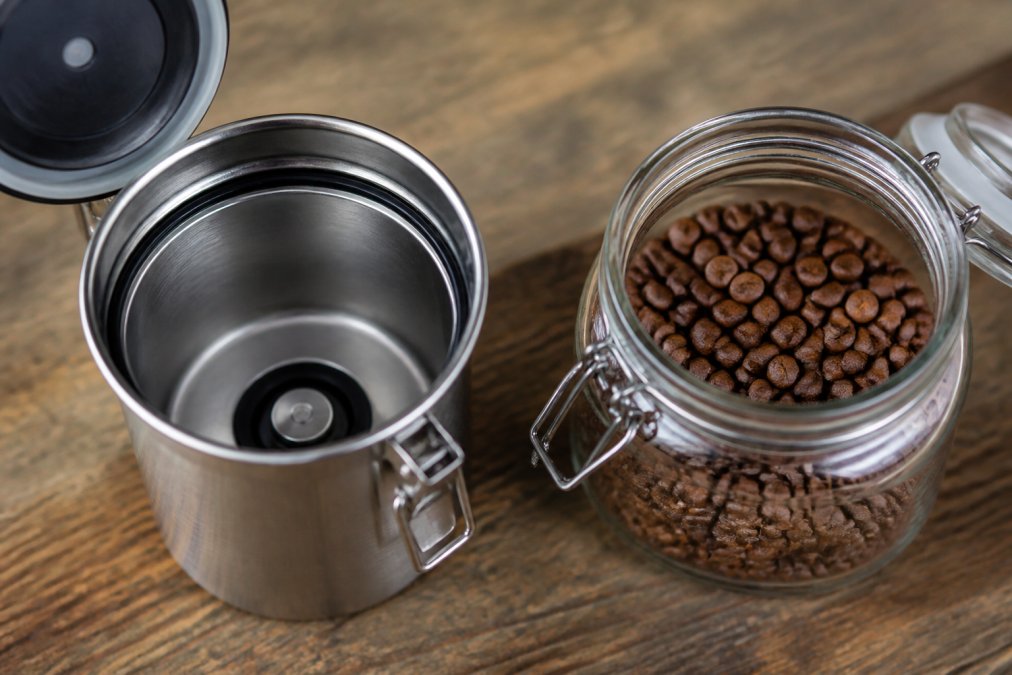
Both materials offer distinct advantages, and the best choice depends on your priorities and usage patterns. Stainless steel and glass each excel in different scenarios, and understanding these differences prevents buyer's remorse.
Stainless Steel Advantages
Stainless steel containers provide superior oxygen barrier performance. The material is non-porous and completely opaque, eliminating light exposure entirely. This matters significantly for long-term storage because light penetration is one of the fastest degradation pathways. Steel containers also resist physical damage, they won't crack if dropped, and they're more portable for travel or camping without worry.
Stainless steel typically features more strong vacuum seals and degassing valves because the material can withstand tighter mechanical pressure. A quality steel container with a proper gasket creates a nearly airtight environment that slows oxidation more effectively than glass alternatives. The trade-off is that you can't see the bean level or condition without opening the lid, which means you might use stale beans without realizing it.
Durability is another steel advantage. These containers last years with minimal maintenance. The material doesn't degrade, doesn't absorb odors permanently, and cleans easily with standard soap and water. For frequent travelers or anyone who prioritizes longevity, steel wins decisively.
Glass Advantages
Glass containers let you see exactly what's inside without opening the lid. This visibility prevents the common mistake of brewing with beans that have been sitting longer than you realized. You can monitor bean condition, spot any moisture accumulation, and gauge when you're running low, all without breaking the seal.
Glass is chemically inert, meaning it won't interact with coffee oils or absorb flavors over time. Some people claim this preserves flavor purity, though the difference is subtle if the seal is equally effective. Glass feels premium and looks attractive on a countertop, which matters if your coffee storage is part of your kitchen aesthetic.
The downside is that glass is fragile and allows light penetration unless the container is tinted or opaque. Clear glass containers offer no protection against light degradation, which is a significant limitation for serious coffee storage. Tinted glass solves this problem but costs more and still doesn't match steel's opacity. Glass also requires gentler handling and won't survive a drop intact.
| Feature | Stainless Steel | Glass |
|---|---|---|
| Light Protection | Complete opacity | Requires tinting |
| Durability | Highly resistant to damage | Fragile if dropped |
| Seal Integrity | Superior vacuum capability | Good with proper gasket |
| Visibility | No bean visibility | Full visibility |
| Portability | Travel-friendly | Requires careful handling |
| Aesthetic Appeal | Professional, minimal | Premium, decorative |
| Maintenance | Simple cleaning | Simple cleaning |
| Long-term Freshness | Excellent (4+ weeks) | Good (3-4 weeks) |
Key Features of High-Quality Coffee Storage Containers
Not all of the best airtight containers for coffee storage perform equally. Understanding what separates effective storage from mediocre options helps you make a choice aligned with your actual needs.
Vacuum Seals and Degassing Valves
A vacuum seal removes air from the container after closing, creating negative pressure that keeps the lid firmly seated. This mechanism dramatically slows oxidation compared to a simple snap-fit lid. Quality vacuum containers include a hand pump or lever mechanism that lets you extract air after each use, maintaining the seal integrity over weeks.
Degassing valves solve a specific problem: freshly roasted beans release carbon dioxide for several days post-roast. Without a valve, pressure builds inside the container, eventually forcing the seal open or causing the lid to pop. A one-way degassing valve allows CO2 to escape while preventing oxygen from entering. This is essential for storage immediately after roasting. After 7-10 days, the degassing phase largely concludes, and the valve's role becomes less critical.
The best containers feature both mechanisms: a vacuum seal for long-term oxygen exclusion and a degassing valve for the critical first week. This combination addresses the full lifecycle of coffee storage.
Capacity and Portability
Container size should match your consumption rate. A 32-ounce container suits someone who drinks half a pound per week. Buying a 64-ounce container to save money often backfires because beans begin losing flavor noticeably after 2-3 weeks. A smaller container filled more frequently keeps beans fresher overall.
Portability matters if you travel, work from different locations, or bring beans to a friend's house. Lightweight stainless steel containers under 16 ounces are practical for commuting. Glass containers are heavier and more fragile, making them less ideal for frequent transport. Consider your actual usage pattern, if the container sits on your kitchen counter 90% of the time, portability is less relevant than seal quality.
Coffee Storage Best Practices for Maximum Flavor
Proper storage extends freshness, but technique matters as much as equipment. A premium container used incorrectly won't deliver the results you expect.
Store your container in a cool, dark place away from direct sunlight and heat sources. A kitchen cabinet away from the stove is ideal. Countertop storage is acceptable if the container is opaque or tinted. Never store beans in a window, above an oven, or near appliances that generate heat. Temperature fluctuations cause condensation inside the container, which accelerates staling.
Minimize air exposure by using the vacuum pump after each use if your container supports it.
Light Exposure and Bean Degradation: The Science Behind Storage
Light accelerates the breakdown of chlorogenic acid and other polyphenolic compounds in coffee beans. These compounds contribute to flavor complexity, body, and the subtle notes that distinguish a quality bean from a commodity product. UV light is particularly damaging, but even visible light causes measurable degradation over time.
Maintaining Your Container: Cleaning and Seal Integrity
A well-maintained container performs reliably for years. Neglected containers develop seal problems that undermine their entire purpose.
Frequently Asked Questions
Should coffee be stored in an airtight container?
Yes. Airtight containers protect coffee beans from oxygen exposure, moisture, and light, the three factors that cause staling. Once roasted, coffee begins to oxidize and lose flavor compounds. An airtight seal dramatically slows this process, preserving the aroma and flavor profile for weeks longer than open storage. For freshly roasted coffee, an airtight container is essential to maintain the quality you paid for.
How long does coffee stay fresh in an airtight container?
Whole beans in a properly sealed, opaque airtight container stay fresh for 2-4 weeks. Peak flavor occurs within the first 1-2 weeks after roasting, when CO2 release is highest and flavor compounds are most vibrant. Ground coffee degrades faster, use within 1 week for best results. Storage temperature matters: cool, dark conditions extend freshness significantly compared to warm or light-exposed locations.
Is it better to store coffee in plastic or glass?
Glass and stainless steel are superior to plastic for coffee storage. Glass allows visual inspection and doesn't absorb odors, but offers no UV protection unless tinted or opaque. Stainless steel provides complete light blocking and superior insulation, preventing temperature fluctuations that accelerate oxidation. For maximum freshness, choose opaque stainless steel or dark borosilicate glass with a vacuum seal and degassing valve.
Does an airtight container prevent coffee from going stale?
An airtight container slows staling dramatically but doesn't stop it entirely. Oxidation still occurs slowly even in sealed containers; the vacuum seal simply removes most oxygen and prevents new oxygen from entering. Combined with cool storage and light protection, an airtight container can keep beans fresh 4-6 times longer than open storage. For optimal freshness, buy smaller quantities more frequently rather than storing large amounts long-term.